New York-New Jersey Watershed Protection Act
Summary
What This Bill Does
The bill defines key terms for the Act including Watershed (all land draining into NY-NJ Harbor plus associated waters and estuaries), approved plan (federally/state/regionally approved management plans), environmental justice, establishes the New York-New Jersey Watershed Restoration Program, a nonregulatory federal coordination program to coordinate restoration and protection activities across the NY-NJ watershed, including fish and wildlife, and establishes the NY-NJ Watershed Restoration Grant Program providing competitive matching grants to state, tribal, and local governments, nonprofits, and institutions of higher education for coordinated restoration. It relies on grants, appropriations, definition changes, and reporting requirements. The main policy areas are Environment and Education.
Who Benefits and How
National Fish and Wildlife Foundation would be affected, Hudson River Estuary Program could gain revenue opportunities, and Sustainable Raritan River Initiative would be affected.
Who Bears the Burden and How
U.S. Fish and Wildlife Service would be affected, Federal appropriators could face higher costs, and Standard grant recipients (50% match requirement) could face higher costs.
Key Provisions
- Defines key terms for the Act including Watershed (all land draining into NY-NJ Harbor plus associated waters and estuaries), approved plan (federally/state/regionally approved management plans), environmental justice...
- Establishes the New York-New Jersey Watershed Restoration Program, a nonregulatory federal coordination program to coordinate restoration and protection activities across the NY-NJ watershed, including fish and wildlife...
- Establishes the NY-NJ Watershed Restoration Grant Program providing competitive matching grants to state, tribal, and local governments, nonprofits, and institutions of higher education for coordinated restoration...
- Requires the Secretary to submit annual reports to Congress on the implementation of the Act, including descriptions of each activity that has received funding in the preceding fiscal year, beginning not later than 180...
- Authorizes $20,000,000 annually for fiscal years 2026-2031 ($120M total) to carry out the Act, with a 5% cap on administrative costs, a requirement that at least 75% of funding go to the grant program, and a...
Evidence Chain:
This summary is generated from the full bill text using AI analysis. Expand "Detailed Analysis" below for identified beneficiaries/burden bearers with clause-level evidence links.
At a Glance
What This Bill Does
The bill defines key terms for the Act including Watershed (all land draining into NY-NJ Harbor plus associated waters and estuaries), approved plan (federally/state/regionally approved management plans), environmental justice, establishes the New York-New Jersey Watershed Restoration Program, a nonregulatory federal coordination program to coordinate restoration and protection activities across the NY-NJ watershed, including fish and wildlife, and establishes the NY-NJ Watershed Restoration Grant Program providing competitive matching grants to state, tribal, and local governments, nonprofits, and institutions of higher education for coordinated restoration.
Key Policy Areas
Environment, Education
Primary Purpose
The bill defines key terms for the Act including Watershed (all land draining into NY-NJ Harbor plus associated waters and estuaries), approved plan (federally/state/regionally approved management plans), environmental justice, establishes the New York-New Jersey Watershed Restoration Program, a nonregulatory federal coordination program to coordinate restoration and protection activities across the NY-NJ watershed, including fish and wildlife, and establishes the NY-NJ Watershed Restoration Grant Program providing competitive matching grants to state, tribal, and local governments, nonprofits, and institutions of higher education for coordinated restoration.
Policy Domains
Whole bill
Identified Gains
- National Fish and Wildlife Foundation
- Hudson River Estuary Program
- Sustainable Raritan River Initiative
- Mohawk River Basin Program
- Watershed restoration grant recipients
Identified Costs
- U.S. Fish and Wildlife Service
- Federal appropriators
- Standard grant recipients (50% match requirement)
Sponsors
Legislative Progress
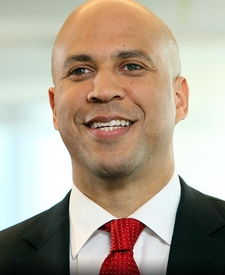
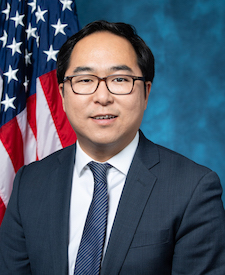
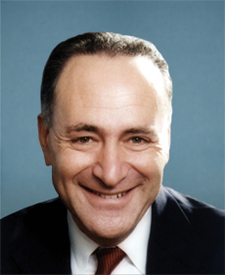
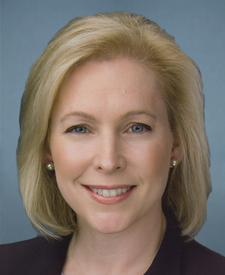
In CommitteeMr. Booker (for himself, Mrs. Gillibrand, Mr. Kim, and Mr. …
Read twice and referred to the Committee on Environment and …
Introduced in Senate
Stakeholder Effects
cui bono?How this legislation distributes effects. Mention counts reflect frequency, not effect magnitude.
Conservation and environmental nonprofits, Conservation nonprofits in NY-NJ watershed, Green infrastructure and ecological restoration firms
Positive-direction: Conservation and environmental nonprofits, Conservation nonprofits in NY-NJ watershed, Green infrastructure and ecological restoration firms, Hudson River Estuary Program, Mohawk River Basin Program, NY-NJ Harbor & Estuary Program, National Fish and Wildlife Foundation, Sustainable Raritan River Initiative, Watershed restoration grant recipients
Negative-direction: Standard grant recipients (50% match requirement)
Congress, Federal appropriators, Local governments in NY-NJ watershed
U.S. Fish and Wildlife Service faces effects in multiple directions
Positive-direction: Congress, Local governments in NY-NJ watershed, State governments in NY-NJ watershed, State, tribal, and local governments in NY-NJ watershed, Tribal governments in NY-NJ watershed
Negative-direction: Federal appropriators
Environmental justice communities in NY-NJ watershed, Small, rural, and disadvantaged communities in NY-NJ watershed
Institutions of higher education in NY-NJ watershed region
Bill Structure & Actor Mappings
Who is "The Secretary" in each section?
We use a combination of our own taxonomy and classification in addition to large language models to assess meaning and potential beneficiaries. High confidence means strong textual evidence. Always verify with the original bill text.
Learn more about our methodology