Great Lakes Mass Marking Program Act of 2025
Analysis under review: This bill has generated analysis that may be too generic or incomplete. Clause-level evidence remains available below.
Summary
What This Bill Does
The Great Lakes Mass Marking Program Act of 2025 formally establishes a program within the U.S. Fish and Wildlife Service (USFWS) to mass-mark hatchery-produced fish that are stocked in the Great Lakes basin. The program uses automated tagging technology to distinguish hatchery fish from wild fish, producing data that helps Federal, State, and Tribal agencies make better fishery management decisions about stocking rates, species rehabilitation, and habitat restoration.
Who Benefits and How
State and Tribal fish management agencies in the eight Great Lakes states (Illinois, Indiana, Michigan, Minnesota, Ohio, Pennsylvania, New York, Wisconsin) and associated Indian Tribes benefit from reliable, standardized data on hatchery vs. wild fish populations, enabling better-informed management decisions.
The recreational and commercial fishing industries benefit indirectly, as the Great Lakes fishery supports a regional economy valued at over $7 billion. Better management of fish stocking helps maintain sustainable fish populations that support these industries.
U.S. Fish and Wildlife Service receives authorized funding and personnel authority to expand and sustain the program, which has operated on a limited scale since 2010.
Who Bears the Burden and How
Federal taxpayers bear the cost through $5 million per year in authorized appropriations for fiscal years 2026-2030 ($25 million total). No new regulatory requirements or compliance burdens are imposed on any private sector actors.
Key Provisions
- Program establishment: Formally creates the Great Lakes Mass Marking Program within USFWS (Section 4)
- Equipment and personnel: Authorizes purchase of tagging equipment, fish tags, and data processing tools, plus hiring additional personnel (Section 4)
- Collaborative mandate: Requires the Director to collaborate with Federal, State, and Tribal agencies and the Great Lakes Fishery Commission (Section 4)
- Data sharing: Requires collected data to be made available to management agencies for species restoration, predator-prey balancing, and habitat restoration evaluation (Section 4)
- Funding: Authorizes $5 million per year for FY2026-2030 (Section 5)
Evidence Chain:
This summary is generated from the full bill text using AI analysis. Expand "Detailed Analysis" below for identified beneficiaries/burden bearers.
At a Glance
What This Bill Does
Establishes and authorizes funding for the Great Lakes Mass Marking Program within the U.S. Fish and Wildlife Service to tag hatchery-produced fish stocked in the Great Lakes, enabling science-based fishery management decisions.
Key Policy Areas
Environment, Natural Resources, Government Operations
Primary Purpose
Establishes and authorizes funding for the Great Lakes Mass Marking Program within the U.S. Fish and Wildlife Service to tag hatchery-produced fish stocked in the Great Lakes, enabling science-based fishery management decisions.
Policy Domains
Great Lakes Mass Marking Program
Identified Gains
Contextual inference, no direct clause citation- State and Tribal fish management agencies
- Recreational fishing industry
- Commercial fishing industry
- U.S. Fish and Wildlife Service
Contextual inference, no direct clause citation
Identified Costs
Contextual inference, no direct clause citation- Federal taxpayers
Contextual inference, no direct clause citation
Sponsors
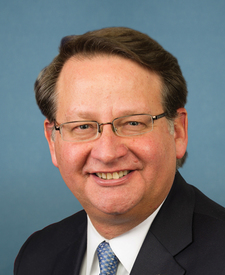
Gary C. Peters
D-MI | Primary Sponsor

Legislative Progress
In CommitteeMr. Peters (for himself and Mr. Husted) introduced the following …
Read twice and referred to the Committee on Environment and …
Introduced in Senate
Stakeholder Effects
cui bono?How this legislation distributes effects. Mention counts reflect frequency, not effect magnitude.
Tribal fish management agencies, U.S. Fish and Wildlife Service
Commercial fishing industry, Great Lakes fishery stakeholders, Recreational fishing industry
Bill Structure & Actor Mappings
Who is "The Secretary" in each section?
- "the_director"
- → Director of the United States Fish and Wildlife Service
Key Definitions
Terms defined in this bill
The Director of the United States Fish and Wildlife Service.
The Great Lakes Mass Marking Program established by section 4(a).
We use a combination of our own taxonomy and classification in addition to large language models to assess meaning and potential beneficiaries. High confidence means strong textual evidence. Always verify with the original bill text.
Learn more about our methodology