Great Lakes Fishery Research Reauthorization Act
Summary
What This Bill Does
Extends through fiscal year 2030 the authorization of appropriations for Great Lakes Basin fishery monitoring, assessment, and research by replacing the current 2025 end year.
Who Benefits and How
Great Lakes fishery researchers, federal and state resource managers, and communities that rely on Great Lakes fisheries gain continued authorization for existing monitoring and research activity.
Who Bears the Burden and How
Federal taxpayers remain responsible for supporting the reauthorized research framework, though the bill does not otherwise change program structure.
Federal grant administrators and Great Lakes Fishery Commission program staff must manage the reauthorized research awards, reporting, and project oversight.
Key Provisions
- Amends section 201(d) of title II of division P of the Further Consolidated Appropriations Act, 2020.
- Replaces the authorization end year of 2025 with 2030.
- Continues federal authority to fund monitoring, assessment, and research concerning the Great Lakes Basin fishery system.
- Requires federal grant administrators and commission staff to manage the reauthorized fishery research program.
Evidence Chain:
This summary is generated from the full bill text using AI analysis. Expand "Detailed Analysis" below for identified beneficiaries/burden bearers with clause-level evidence links.
At a Glance
What This Bill Does
Extends through fiscal year 2030 the authorization of appropriations for Great Lakes Basin fishery monitoring, assessment, and research by replacing the current 2025 end year.
Key Policy Areas
Environment, Natural Resources, Fisheries
Primary Purpose
Extends through fiscal year 2030 the authorization of appropriations for Great Lakes Basin fishery monitoring, assessment, and research by replacing the current 2025 end year.
Policy Domains
whole_bill
Identified Gains
- Great Lakes Fishery Commission
- Great Lakes researchers
- Fishery managers
Identified Costs
- Federal grant administrators
- Great Lakes Fishery Commission program staff
Sponsors
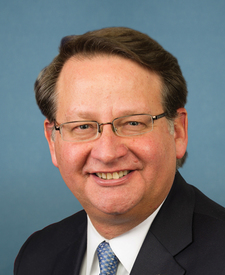
Gary C. Peters
D-MI | Primary Sponsor

Legislative Progress
Signed into LawBecame Public Law No: 119-67.
Signed by President.
Presented to President.
Motion to reconsider laid on the table Agreed to without …
On motion to suspend the rules and pass the bill …
Passed/agreed to in House: On motion to suspend the rules …
DEBATE - The House proceeded with forty minutes of debate …
Considered under suspension of the rules. (consideration: CR H5878-5879)
Mr. Stauber moved to suspend the rules and pass the …
Held at the desk.
Stakeholder Effects
cui bono?How this legislation distributes effects. Mention counts reflect frequency, not effect magnitude.
NOAA Great Lakes Environmental Research Laboratory, U.S. Geological Survey Great Lakes programs
Great Lakes research institutions and laboratories
Environmental monitoring and consulting firms specializing in Great Lakes
Great Lakes fisheries management agencies
Bill Structure & Actor Mappings
Who is "The Secretary" in each section?
We use a combination of our own taxonomy and classification in addition to large language models to assess meaning and potential beneficiaries. High confidence means strong textual evidence. Always verify with the original bill text.
Learn more about our methodology