To improve the customer experience of the Federal Government, ensure that Federal services are simple, seamless, and secure, and for other purposes.
Analysis under review: This bill has generated analysis that may be too generic or incomplete. Clause-level evidence remains available below.
Summary
What This Bill Does
This bill requires federal agencies to create annual plans to improve how they serve the public. The Director of the Office of Management and Budget (OMB) will designate which agencies must participate and oversee their compliance. Agencies must adopt human-centered design practices and report on service metrics like wait times and backlog issues.
Who Benefits and How
- The general public benefits from streamlined government services, reduced wait times for passports, Social Security benefits, veterans services, and tax processing
- Businesses and organizations that interact with federal agencies benefit from simplified processes and better coordination between agencies
- People with disabilities and limited English proficiency benefit from required accessibility improvements in forms and digital services
- Government consulting firms may benefit from increased demand for customer experience expertise and human-centered design services
Who Bears the Burden and How
- Federal agencies (designated as high-impact service providers) must develop comprehensive CX Action Plans annually, adding administrative workload
- Agency employees must complete additional training on customer service and update guidance materials
- Federal IT contractors may face pressure to meet new digital service standards and fraud prevention requirements
Key Provisions
- Requires annual Customer Experience (CX) Action Plans from designated federal agencies
- Mandates tracking and reporting of service metrics including wait times, processing times, and customer feedback
- Requires agencies to disclose when customers are interacting with AI chatbots or automated systems
- Establishes medium-term (3-5 year) and long-term (5-10 year) customer experience strategies
Evidence Chain:
This summary is generated from the full bill text using AI analysis. Expand "Detailed Analysis" below for identified beneficiaries/burden bearers with clause-level evidence links.
At a Glance
What This Bill Does
Requires federal agencies to develop annual customer experience action plans using human-centered design to improve government service delivery to citizens
Key Policy Areas
Government Operations, Administrative Law, Consumer Protection
Primary Purpose
Requires federal agencies to develop annual customer experience action plans using human-centered design to improve government service delivery to citizens
Policy Domains
Improving Government Services Act
Identified Gains
- General public using federal services
- Businesses interacting with federal agencies
- Veterans seeking services
- Government consulting firms
Identified Costs
- Federal agencies
- Agency employees
- High-impact service providers
Sponsors


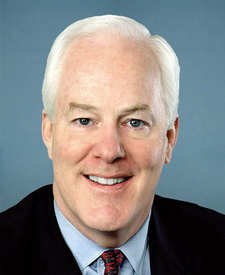
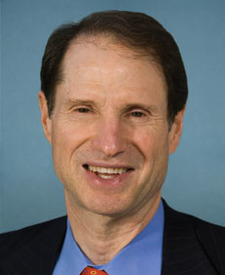
Legislative Progress
ReportedReported by Mr. Peters, with an amendment
Mr. Peters (for himself, Mr. Lankford, and Mr. Cornyn) introduced …
Mr. Peters (for himself, Mr. Lankford, Mr. Cornyn, and Mr. …
Stakeholder Effects
cui bono?How this legislation distributes effects. Mention counts reflect frequency, not effect magnitude.
Congressional oversight committees (Senate HSGAC, House Oversight), Designated federal agencies subject to CX requirements, Federal agencies subject to customer experience requirements
Positive-direction: Congressional oversight committees (Senate HSGAC, House Oversight)
Negative-direction: Designated federal agencies subject to CX requirements, Office of Management and Budget
General public using federal government services, People with disabilities using federal services, People with limited English proficiency
Government consulting firms specializing in customer experience and human-centered design
Bill Structure & Actor Mappings
Who is "The Secretary" in each section?
- "the_director"
- → Director of the Office of Management and Budget
- "designated_entity"
- → Agency or high-impact service provider designated by the Director
Key Definitions
Terms defined in this bill
The general perception of and the overall satisfaction with interactions with an agency or a product or service of the agency
Any actions by the Federal Government relating to the provision of a benefit or service to a customer of an agency during each stage of the process
An interdisciplinary methodology of putting individuals who will use or be impacted by a product or service at the center of any process to solve challenging problems
A Federal entity that provides or funds customer-facing services that have a high impact on the public, whether because of a large customer base or a critical effect on those served
Has the meaning given the term Executive agency in section 105 of title 5, United States Code
Any individual, business, or organization, including a grantee and a State, local, or Tribal entity, that interacts with an agency or program
We use a combination of our own taxonomy and classification in addition to large language models to assess meaning and potential beneficiaries. High confidence means strong textual evidence. Always verify with the original bill text.
Learn more about our methodology