RRLEF Act of 2025
Analysis under review: This bill has generated analysis that may be too generic or incomplete. Clause-level evidence remains available below.
Summary
What This Bill Does
The Responsible Retirement of Law Enforcement Firearms Act of 2025 (RRLEF Act) restricts state and local law enforcement agencies that receive federal Byrne Justice Assistance Grants from doing business with firearms dealers who have a pattern of selling guns that quickly end up being used in crimes. It requires the ATF to publicly identify these "problem" dealers and notify police departments when guns they transferred are later used in crimes.
Who Benefits and How
Gun violence prevention advocates and communities affected by gun crime benefit from increased transparency about which firearms dealers have guns frequently traced to crimes. Responsible gun dealers who do not have high rates of "short time-to-crime" guns may gain a competitive advantage, as law enforcement agencies will be steered away from their problematic competitors. The bill also empowers the ATF to better track and publish gun tracing data by repealing several appropriations riders that had restricted this activity.
Who Bears the Burden and How
Firearms dealers who have had 25 or more guns with "short time-to-crime" (recovered within 3 years of sale) traced back to their business in 2 out of the last 3 years will be placed on a public list and lose the ability to sell to or buy from law enforcement agencies receiving federal grants. State and local law enforcement agencies face new compliance requirements to verify dealers are not on the ATF list before doing business with them. The ATF faces additional workload to maintain the dealer list and notify agencies about traced firearms.
Key Provisions
- Creates a new grant eligibility requirement: agencies receiving Byrne JAG funds cannot do business with "covered licensed dealers"
- Defines "covered licensed dealer" as one with 25+ short time-to-crime guns traced in 2 of 3 years
- Requires ATF to publish and annually update a public list of covered dealers
- Mandates ATF notify law enforcement when firearms they transferred are traced to crimes
- Repeals appropriations riders from 2003-2012 that restricted ATF gun tracing data publication
Evidence Chain:
This summary is generated from the full bill text using AI analysis. Expand "Detailed Analysis" below for identified beneficiaries/burden bearers.
At a Glance
What This Bill Does
Restricts state and local law enforcement agencies receiving federal Byrne Justice Assistance Grants from doing business with firearms dealers who have a high rate of 'short time-to-crime' guns traced back to their sales, and requires ATF to publish a list of such dealers.
Who Benefits
- Gun violence prevention advocates
- Communities affected by gun crime
- Responsible firearms dealers not on the covered list
Who Bears Costs
- Firearms dealers with high short time-to-crime rates
- State and local law enforcement agencies (reduced vendor options)
- Bureau of Alcohol, Tobacco, Firearms and Explosives (additional tracking and publication requirements)
Key Policy Areas
Criminal Justice, Firearms Regulation, Federal Grants, Law Enforcement
Primary Purpose
Restricts state and local law enforcement agencies receiving federal Byrne Justice Assistance Grants from doing business with firearms dealers who have a high rate of 'short time-to-crime' guns traced back to their sales, and requires ATF to publish a list of such dealers.
Policy Domains
Legislative Strategy
"Use federal grant eligibility requirements as leverage to prevent law enforcement agencies from doing business with firearms dealers linked to guns used in crimes, while also enabling ATF to track and publish data on such dealers by repealing restrictions from past appropriations acts."
Identified Gains
- Gun violence prevention advocates
- Communities affected by gun crime
- Responsible firearms dealers not on the covered list
Identified Costs
- Firearms dealers with high short time-to-crime rates
- State and local law enforcement agencies (reduced vendor options)
- Bureau of Alcohol, Tobacco, Firearms and Explosives (additional tracking and publication requirements)
Sponsors

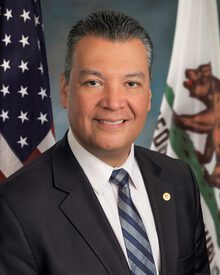
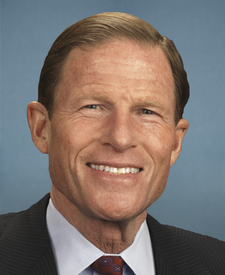
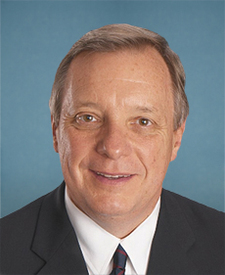
Legislative Progress
In CommitteeRead twice and referred to the Committee on the Judiciary.
Introduced in Senate
Stakeholder Effects
cui bono?How this legislation distributes effects. Mention counts reflect frequency, not effect magnitude.
Licensed firearms dealers with high short time-to-crime rates (25+ traced guns in 2 of 3 years), Licensed firearms dealers with low short time-to-crime rates (compliant dealers)
Positive-direction: Licensed firearms dealers with low short time-to-crime rates (compliant dealers)
Negative-direction: Licensed firearms dealers with high short time-to-crime rates (25+ traced guns in 2 of 3 years)
Bureau of Alcohol, Tobacco, Firearms and Explosives, State and local law enforcement agencies receiving Byrne JAG grants
Gun violence prevention advocacy organizations
Bill Structure & Actor Mappings
Who is "The Secretary" in each section?
- "the_director"
- → Director of the Bureau of Alcohol, Tobacco, Firearms and Explosives
- "the_applicant"
- → State or local government applying for Byrne JAG grants
- "the_attorney_general"
- → Attorney General of the United States
Key Definitions
Terms defined in this bill
A licensed dealer with respect to whom, in not less than two of the three calendar years prior to publication of the ATF list, the National Tracing Center has traced to the firearms business of such dealer not less than 25 firearms that had a short time-to-crime.
Have the meaning given such terms in section 921(a) of title 18, United States Code.
A period of not more than three calendar years between the date of the last known retail sale of a firearm and the date on which a law enforcement agency recovers such firearm as a result of such firearm being purchased for, possessed during, or used in, an actual or suspected criminal offense.
We use a combination of our own taxonomy and classification in addition to large language models to assess meaning and potential beneficiaries. High confidence means strong textual evidence. Always verify with the original bill text.
Learn more about our methodology