Protecting Free Vaccines Act of 2025
Analysis under review: This bill has generated analysis that may be too generic or incomplete. Clause-level evidence remains available below.
Summary
What This Bill Does
The Protecting Free Vaccines Act of 2025 requires group health plans and health insurers to continue covering (without cost-sharing) all immunizations that had an active recommendation from the CDC Advisory Committee on Immunization Practices (ACIP) as of October 25, 2024, regardless of whether those recommendations are subsequently revoked. This protection runs through December 31, 2029. The bill amends multiple federal statutes -- the Public Health Service Act, ERISA, the Internal Revenue Code, Medicare Part D, Medicaid, CHIP, and the ACA -- to lock in this coverage across all insurance types. It also prevents the Medicaid Vaccines for Children program from removing pediatric vaccines from its list if they were recommended as of October 25, 2024.
Who Benefits and How
Patients and families benefit from guaranteed cost-free access to recommended vaccines regardless of future ACIP recommendation changes. Vaccine manufacturers benefit because demand for their products is protected against recommendation revocations that could reduce coverage mandates. Health care providers who administer vaccines benefit from continued reimbursement. Public health agencies benefit from maintaining population-level immunization rates. Children enrolled in Medicaid and CHIP are specifically protected through the Vaccines for Children program provisions.
Who Bears the Burden and How
Private health insurers and group health plan sponsors bear the cost of continuing to cover vaccines without cost-sharing even if ACIP revokes its recommendation. Medicare Part D plans must continue covering vaccines that lose ACIP recommendation. State Medicaid programs must continue covering and paying for vaccines that may no longer be recommended. The federal government bears increased costs through Medicaid and CHIP federal matching funds.
Key Provisions
- Locks in coverage (without cost-sharing) for all ACIP-recommended immunizations as of October 25, 2024, through January 1, 2030
- Applies across group health plans, individual insurance, ERISA plans, Medicare Part D, Medicaid, CHIP, and benchmark Medicaid plans
- Protects against recommendation revocations -- if ACIP revokes after October 25, 2024, the most recent prior recommendation controls
- Prevents removal of pediatric vaccines from the Vaccines for Children program
- Requires Medicaid benchmark plans to cover vaccines without cost-sharing
Evidence Chain:
This summary is generated from the full bill text using AI analysis. Expand "Detailed Analysis" below for identified beneficiaries/burden bearers.
At a Glance
What This Bill Does
Locks in cost-free coverage of all immunizations recommended by the CDC ACIP as of October 25, 2024, across all insurance types through December 31, 2029, regardless of subsequent recommendation changes or revocations.
Key Policy Areas
Healthcare, Insurance
Primary Purpose
Locks in cost-free coverage of all immunizations recommended by the CDC ACIP as of October 25, 2024, across all insurance types through December 31, 2029, regardless of subsequent recommendation changes or revocations.
Policy Domains
Immunization coverage lock-in across all insurance types
Identified Gains
Contextual inference, no direct clause citation- Patients and families (guaranteed cost-free vaccine access)
- Vaccine manufacturers (demand protected against revocations)
- Healthcare providers administering vaccines (continued reimbursement)
- Public health agencies (maintained immunization rates)
- Children enrolled in Medicaid/CHIP (VFC protections)
Contextual inference, no direct clause citation
Identified Costs
Contextual inference, no direct clause citation- Private health insurers and group health plan sponsors
- Medicare Part D plans
- State Medicaid programs
- Federal government (Medicaid/CHIP federal share)
- Secretary of HHS (prohibited from removing VFC vaccines)
Contextual inference, no direct clause citation
Sponsors
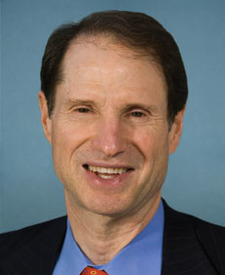

Legislative Progress
In CommitteeMr. Wyden (for himself and Mr. Sanders) introduced the following …
Read twice and referred to the Committee on Health, Education, …
Introduced in Senate
Stakeholder Effects
cui bono?How this legislation distributes effects. Mention counts reflect frequency, not effect magnitude.
Employer-sponsored group health plans, Employer-sponsored group health plans (ERISA plans), Group health plans (IRC-governed)
Employees and dependents under ERISA plans, Participants in IRC-governed group health plans, Patients and families
Bill Structure & Actor Mappings
Who is "The Secretary" in each section?
- "the_secretary"
- → Secretary of Health and Human Services
Key Definitions
Terms defined in this bill
From date of enactment through January 1, 2030
October 25, 2024 -- the date as of which immunization recommendations are locked in for coverage purposes
We use a combination of our own taxonomy and classification in addition to large language models to assess meaning and potential beneficiaries. High confidence means strong textual evidence. Always verify with the original bill text.
Learn more about our methodology