To provide for the perpetuation, administration, and funding of Federal Executive Boards, and for other purposes.
Analysis under review: This bill has generated analysis that may be too generic or incomplete. Clause-level evidence remains available below.
Summary
What This Bill Does
This bill creates a permanent legal foundation for Federal Executive Boards (FEBs), which are regional coordination bodies that bring together senior federal officials in metropolitan areas outside Washington, DC. It establishes a dedicated fund of at least $15 million annually to support their operations and requires agencies to contribute based on their employee counts.
Who Benefits and How
Federal employees outside the DC area benefit from improved coordination, training opportunities, and emergency preparedness planning. Educational institutions and workforce development organizations gain formal partnership channels with federal agencies. Veterans transitioning to civilian employment benefit from coordinated federal job placement assistance through FEBs.
Who Bears the Burden and How
Federal agencies must contribute financially to the FEB Fund based on their employee numbers, creating a new mandatory expenditure. The Office of Personnel Management takes on expanded administrative and oversight responsibilities for managing FEBs nationwide.
Key Provisions
- Establishes a minimum $15 million annual Federal Executive Board Fund, with contributions from participating agencies
- Requires biennial reports to Congress on FEB outcomes and budgets
- Mandates semi-annual program assessments by each FEB
- Creates formal partnerships with workforce development boards, colleges, and nonprofits
Evidence Chain:
This summary is generated from the full bill text using AI analysis. Expand "Detailed Analysis" below for identified beneficiaries/burden bearers.
At a Glance
What This Bill Does
Codifies Federal Executive Boards (FEBs) as statutory interagency coordination bodies outside Washington DC, establishes stable funding mechanisms, and expands their workforce development and emergency preparedness mandates.
Key Policy Areas
Government Operations, Workforce Development, Emergency Preparedness
Primary Purpose
Codifies Federal Executive Boards (FEBs) as statutory interagency coordination bodies outside Washington DC, establishes stable funding mechanisms, and expands their workforce development and emergency preparedness mandates.
Policy Domains
Federal Executive Boards Act
Identified Gains
Contextual inference, no direct clause citation- Federal employees outside DC
- Educational institutions
- Veterans transitioning to federal employment
- State and local governments
- Workforce development organizations
Contextual inference, no direct clause citation
Identified Costs
Contextual inference, no direct clause citation- Federal agencies (financial contributions)
- Office of Personnel Management (administrative burden)
Contextual inference, no direct clause citation
Sponsors
Legislative Progress
ReportedReported by Mr. Peters, with an amendment
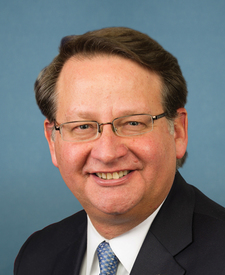
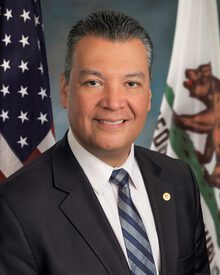
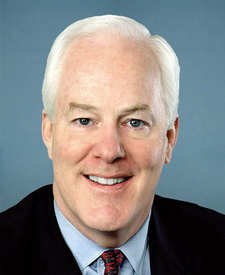
Mr. Peters (for himself, Mr. Cornyn, and Mr. Padilla) introduced …
Stakeholder Effects
cui bono?How this legislation distributes effects. Mention counts reflect frequency, not effect magnitude.
Federal Executive Boards, Federal Executive Boards (interagency coordination bodies), Federal agencies participating in FEBs
Positive-direction: Federal Executive Boards, Federal Executive Boards (interagency coordination bodies), Federal employees outside Washington DC
Negative-direction: Federal agencies participating in FEBs, Federal agencies with employees outside DC, Office of Personnel Management
Technology training providers
Colleges and universities partnering with federal agencies
State and local workforce development boards
Veterans transitioning to civilian federal employment
Bill Structure & Actor Mappings
Who is "The Secretary" in each section?
- "the_director"
- → Director of the Office of Personnel Management
- "the_secretary"
- → Secretary of Labor (for apprenticeship consultations)
- "the_administrator"
- → Administrator of General Services
Key Definitions
Terms defined in this bill
An Executive agency as defined in section 105 of title 5, excluding the Government Accountability Office
The Director of the Office of Personnel Management
An interagency entity established by the Director in geographic areas with high concentrations of federal employees outside the Washington, DC metropolitan area, focused on strengthening management and coordination among local federal officers
Has the meaning given in section 101(a) of the Higher Education Act of 1965 (20 U.S.C. 1001(a))
Has the meaning given in section 29.2 of title 29, Code of Federal Regulations
We use a combination of our own taxonomy and classification in addition to large language models to assess meaning and potential beneficiaries. High confidence means strong textual evidence. Always verify with the original bill text.
Learn more about our methodology