Child Care Modernization Act of 2025
Summary
What This Bill Does
The bill amends the purposes section of the Child Care and Development Block Grant Act to emphasize mixed delivery systems, parental choice, quality improvement, workforce development, and increasing access for low-income, expands definitions of eligible activities and eligible children for child care subsidies, and provides inserts a new title heading "Child care services" and establishes section 658B authorizing appropriations for fiscal years 2026 through 2030. It relies on appropriations, compliance mandates, grants, and definition changes. The main policy areas are Child Care, Social Welfare, and Housing.
Who Benefits and How
Child care providers could gain revenue opportunities, Child care workers could gain revenue opportunities, and State child care programs could gain revenue opportunities.
Who Bears the Burden and How
State governments administering CCDBG would take on compliance duties, State governments would take on compliance duties, and State lead agencies administering CCDBG would take on compliance duties.
Key Provisions
- Amends the purposes section of the Child Care and Development Block Grant Act to emphasize mixed delivery systems, parental choice, quality improvement, workforce development, and increasing access for low-income...
- Expands definitions of eligible activities and eligible children for child care subsidies.
- Provides inserts a new title heading "Child care services" and establishes section 658B authorizing appropriations for fiscal years 2026 through 2030.
- Authorizes "such sums as may be necessary" for the Child Care and Development Block Grant program (excluding section 658T) for fiscal years 2026 through 2030.
- Requires state lead agencies to develop child care plans in meaningful consultation with parents, eligible child care providers, employers, local governments, and Tribal organizations.
Evidence Chain:
This summary is generated from the full bill text using AI analysis. Expand "Detailed Analysis" below for identified beneficiaries/burden bearers with clause-level evidence links.
At a Glance
What This Bill Does
The bill amends the purposes section of the Child Care and Development Block Grant Act to emphasize mixed delivery systems, parental choice, quality improvement, workforce development, and increasing access for low-income, expands definitions of eligible activities and eligible children for child care subsidies, and provides inserts a new title heading "Child care services" and establishes section 658B authorizing appropriations for fiscal years 2026 through 2030.
Key Policy Areas
Child Care, Social Welfare, Housing
Primary Purpose
The bill amends the purposes section of the Child Care and Development Block Grant Act to emphasize mixed delivery systems, parental choice, quality improvement, workforce development, and increasing access for low-income, expands definitions of eligible activities and eligible children for child care subsidies, and provides inserts a new title heading "Child care services" and establishes section 658B authorizing appropriations for fiscal years 2026 through 2030.
Policy Domains
Child Care and Development Block Grant Amendments
Identified Gains
- Child care providers
- Child care workers
- State child care programs
- Rural child care providers
- Child care providers seeking to expand capacity
Identified Costs
- State governments administering CCDBG
- State governments
- State lead agencies administering CCDBG
- HHS/Secretary
- HHS
Sponsors
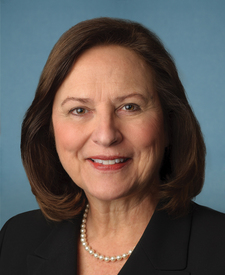


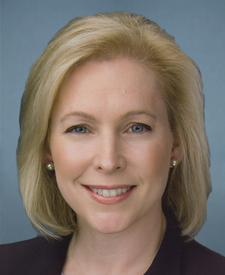
Legislative Progress
In CommitteeCommittee on Health, Education, Labor, and Pensions. Hearings held.
Mrs. Fischer (for herself, Mrs. Gillibrand, Ms. Collins, and Mr. …
Read twice and referred to the Committee on Health, Education, …
Introduced in Senate
Stakeholder Effects
cui bono?How this legislation distributes effects. Mention counts reflect frequency, not effect magnitude.
Child care providers, Child care providers seeking to expand capacity, Child care workers
State child care programs, State governments, State governments administering CCDBG
State governments faces effects in multiple directions
Positive-direction: State child care programs
Negative-direction: State governments administering CCDBG, State lead agencies administering CCDBG
Children in underserved/rural areas, Homeless children and children in foster/kinship care, Moderate-income families above current eligibility thresholds
HHS, HHS/Secretary
HHS/Secretary faces effects in multiple directions
Bill Structure & Actor Mappings
Who is "The Secretary" in each section?
- "lead_agency"
- → State lead agency designated to administer CCDBG funds
- "the_secretary"
- → Secretary of Health and Human Services
Key Definitions
Terms defined in this bill
Full-time or part-time employment, self-employment, job search, job training, secondary/postsecondary/adult education, health treatment (including mental health), child abuse prevention activities, SNAP employment activities, WIOA activities, TANF work activities, or FMLA leave
Individual under 13 years of age whose family income does not exceed 85% of state median income (or higher with waiver) and whose family assets do not exceed $1,000,000, and who resides with parents participating in an eligible activity, is homeless/in kinship care/receiving child protective services, or resides with a parent over 65
System of child care services that promotes parental choice, delivers services through combination of programs in various settings (family child care homes, centers, Head Start, schools), and may be supported with public and private funds
We use a combination of our own taxonomy and classification in addition to large language models to assess meaning and potential beneficiaries. High confidence means strong textual evidence. Always verify with the original bill text.
Learn more about our methodology