Health Access Innovation Act of 2025
Analysis under review: This bill has generated analysis that may be too generic or incomplete. Clause-level evidence remains available below.
Summary
What This Bill Does
This bill creates the Health Equity Innovation Grant Program, authorizing the Secretary of Health and Human Services to award grants to faith-based and community-based organizations. The goal is to address health inequities and chronic disease challenges in underserved communities by expanding access to culturally appropriate healthcare services.
Who Benefits and How
Faith-based and community-based organizations are the primary beneficiaries, as they can receive grant funding totaling $300 million over five years (fiscal years 2026-2030) to expand their healthcare programs. Community health workers, health navigators, peer support specialists, and similar professionals also benefit through increased job opportunities and support. Underserved communities in medically underserved areas and health professional shortage areas benefit from expanded access to culturally and linguistically appropriate care.
Who Bears the Burden and How
The Department of Health and Human Services (HHS) bears the administrative burden of implementing and overseeing this grant program, though administrative costs are capped at 5% of appropriated funds. Taxpayers bear the financial cost of the $300 million in authorized appropriations over five years. Organizations not meeting eligibility criteria (i.e., those not located in underserved areas or without demonstrated ability to address health disparities) are excluded from the funding.
Key Provisions
- Authorizes $50-70 million annually (increasing each year) from fiscal years 2026-2030 for grants to eligible organizations
- Eligible entities must be faith- or community-based organizations located in medically underserved areas or health professional shortage areas
- Grants can fund medical services, health screenings, preventive services, and programs addressing social determinants of health
- Priority given to organizations that operated health workforce or healthcare access programs during public health emergencies
- Administrative costs capped at 5% of appropriated funds
Evidence Chain:
This summary is generated from the full bill text using AI analysis. Expand "Detailed Analysis" below for identified beneficiaries/burden bearers.
At a Glance
What This Bill Does
The bill aims to address health inequities and chronic disease challenges by authorizing the Secretary of Health and Human Services to award grants to faith- or community-based organizations, promoting culturally appropriate care and innovation.
Key Policy Areas
Healthcare
Primary Purpose
The bill aims to address health inequities and chronic disease challenges by authorizing the Secretary of Health and Human Services to award grants to faith- or community-based organizations, promoting culturally appropriate care and innovation.
Policy Domains
Sponsors
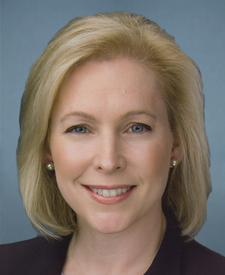
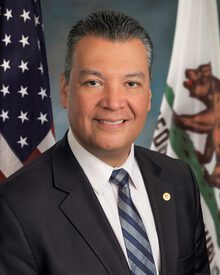

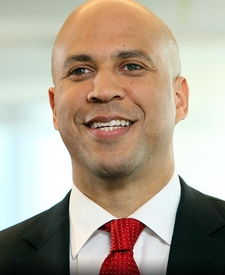
Legislative Progress
In CommitteeMrs. Gillibrand (for herself, Mr. Booker, and Mr. Padilla) introduced …
Read twice and referred to the Committee on Health, Education, …
Introduced in Senate
Stakeholder Effects
cui bono?How this legislation distributes effects. Mention counts reflect frequency, not effect magnitude.
Faith- or community-based organizations in medically underserved communities, Faith- or community-based organizations in medically underserved communities or health professional shortage areas
Bill Structure & Actor Mappings
Who is "The Secretary" in each section?
- "the_secretary"
- → Secretary of Health and Human Services
Key Definitions
Terms defined in this bill
A program authorizing the Secretary to award grants to eligible entities, primarily faith- or community-based organizations, to improve access to culturally appropriate care and address health inequities.
An entity defined by section 8101 of the Elementary and Secondary Education Act of 1965, eligible for grants if located in underserved areas and addressing chronic health disparities.
We use a combination of our own taxonomy and classification in addition to large language models to assess meaning and potential beneficiaries. High confidence means strong textual evidence. Always verify with the original bill text.
Learn more about our methodology