To provide paid family and medical leave benefits to certain individuals, and for other purposes.
Summary
What This Bill Does
The bill establishes comprehensive definitions for the paid family and medical leave program including qualified caregiving, caregiving hours, qualifying reasons (FMLA reasons plus domestic violence), qualified family members, establishes the Office of Paid Family and Medical Leave within the Social Security Administration, headed by a Deputy Commissioner, and creates the family and medical leave insurance benefit program with eligibility requirements (min 2000 dollars wages over 8 quarters), progressive benefit formula (85%/69%/50% of average monthly earnings), max benefit. It relies on reporting requirements, compliance mandates, grants, and definition changes. The main policy areas are Labor and Employment, Labor, and Finance.
Who Benefits and How
Self-employed individuals would be affected, States with existing paid leave programs (CA, NY, WA, NJ, etc.) could gain revenue opportunities, and Low-income workers could gain revenue opportunities.
Who Bears the Burden and How
Social Security Administration could face higher costs, Federal government (Commissioner) could face higher costs, and Employers (all sizes) could face higher costs.
Key Provisions
- Establishes comprehensive definitions for the paid family and medical leave program including qualified caregiving, caregiving hours, qualifying reasons (FMLA reasons plus domestic violence), qualified family members...
- Establishes the Office of Paid Family and Medical Leave within the Social Security Administration, headed by a Deputy Commissioner.
- Creates the family and medical leave insurance benefit program with eligibility requirements (min 2000 dollars wages over 8 quarters), progressive benefit formula (85%/69%/50% of average monthly earnings), max benefit...
- Establishes federal grant program for legacy States (states with pre-existing paid family and medical leave laws enacted before this Act).
- Requires GAO to submit reports to Congress on the paid family and medical leave program starting after calendar year 2026 and every 5 years thereafter.
Evidence Chain:
This summary is generated from the full bill text using AI analysis. Expand "Detailed Analysis" below for identified beneficiaries/burden bearers with clause-level evidence links.
At a Glance
What This Bill Does
The bill establishes comprehensive definitions for the paid family and medical leave program including qualified caregiving, caregiving hours, qualifying reasons (FMLA reasons plus domestic violence), qualified family members, establishes the Office of Paid Family and Medical Leave within the Social Security Administration, headed by a Deputy Commissioner, and creates the family and medical leave insurance benefit program with eligibility requirements (min 2000 dollars wages over 8 quarters), progressive benefit formula (85%/69%/50% of average monthly earnings), max benefit.
Key Policy Areas
Labor and Employment, Labor, Finance
Primary Purpose
The bill establishes comprehensive definitions for the paid family and medical leave program including qualified caregiving, caregiving hours, qualifying reasons (FMLA reasons plus domestic violence), qualified family members, establishes the Office of Paid Family and Medical Leave within the Social Security Administration, headed by a Deputy Commissioner, and creates the family and medical leave insurance benefit program with eligibility requirements (min 2000 dollars wages over 8 quarters), progressive benefit formula (85%/69%/50% of average monthly earnings), max benefit.
Policy Domains
Whole bill
Identified Gains
- Self-employed individuals
- States with existing paid leave programs (CA, NY, WA, NJ, etc.)
- Low-income workers
- Workers with caregiving responsibilities
- Moderate-income workers
Identified Costs
- Social Security Administration
- Federal government (Commissioner)
- Employers (all sizes)
- Government Accountability Office
Sponsors
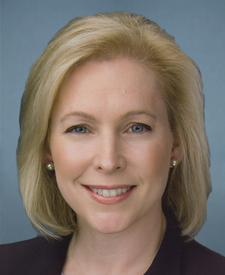
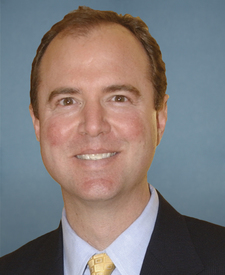
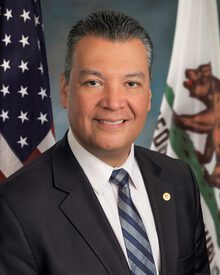
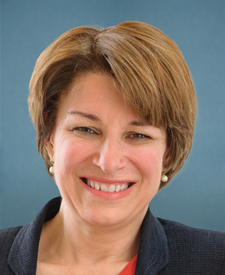
Legislative Progress
IntroducedMrs. Gillibrand (for herself, Mr. Wyden, Ms. Alsobrooks, Ms. Baldwin, …
Stakeholder Effects
cui bono?How this legislation distributes effects. Mention counts reflect frequency, not effect magnitude.
Benefit claimants (accountability for processing delays), Eligible workers seeking benefits, Higher-income workers
Congress, Federal government (Commissioner), Federal workforce (new hires for the Office)
Positive-direction: Federal workforce (new hires for the Office)
Negative-direction: Federal government (Commissioner), Government Accountability Office, Social Security Administration
Employers (all sizes), Employers in legacy states providing benefits under state law
Positive-direction: Employers in legacy states providing benefits under state law
Negative-direction: Employers (all sizes)
Domestic partners and non-traditional families, Domestic violence survivors
States with existing paid leave programs (CA, NY, WA, NJ, etc.)
Bill Structure & Actor Mappings
Who is "The Secretary" in each section?
We use a combination of our own taxonomy and classification in addition to large language models to assess meaning and potential beneficiaries. High confidence means strong textual evidence. Always verify with the original bill text.
Learn more about our methodology