To amend the Head Start Act to improve the Act.
Sponsors
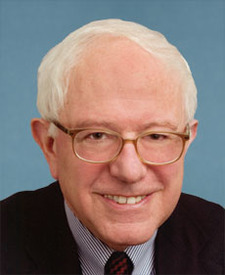
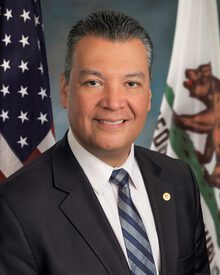
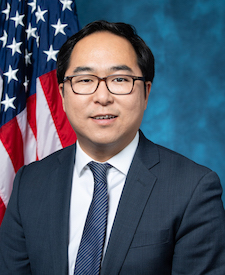
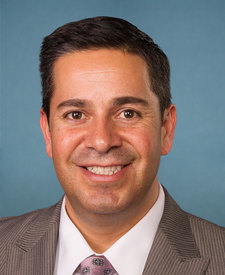
Legislative Progress
IntroducedMr. Sanders (for himself, Mr. Blumenthal, Mrs. Gillibrand, Mr. Fetterman, …
Summary
What This Bill Does
The Head Start for America's Children Act dramatically expands and modernizes the Head Start early childhood education program. It authorizes $144.9 billion for fiscal year 2026 (roughly ten times the current funding level) and guarantees automatic annual increases tied to inflation. The bill also requires Head Start programs to operate on a full calendar year schedule (at least 1,380 hours) and significantly raises staff wages to at least $60,000 annually.
Who Benefits and How
- Head Start program staff (teachers, coordinators, aides) benefit from a new minimum salary of $60,000 per year, wage parity with local public school teachers, and mandatory competitive benefits including health coverage and paid leave.
- Low-income families with young children benefit from expanded eligibility (now including families at 60% of state median income, children in kinship care, and children of Head Start staff), longer operating hours, and new mental health services.
- Child care providers and higher education institutions gain access to over $2 billion in new grant programs for partnerships with Head Start agencies. HBCUs, Tribal Colleges, and other minority-serving institutions receive priority for $500 million in campus-based program grants.
- Mental health service providers benefit from new requirements that every Head Start agency hire or contract with mental health consultants and provide comprehensive screening and referral services.
- Native American and Native Hawaiian communities receive special provisions including dedicated program offices, culturally appropriate standards, and exemptions from certain requirements.
Who Bears the Burden and How
- Federal taxpayers fund this expansion through over $150 billion in new appropriations over five years.
- Head Start agencies face new compliance burdens including mandatory full calendar year operation by 2027, new mental health program requirements, enhanced reporting obligations, and updated quality standards.
- Department of Health and Human Services must significantly expand oversight, maintain at least 12 regional/program offices, and produce extensive new reports to Congress on program outcomes, staff wages, and eligibility data.
Key Provisions
- Authorizes $144.9 billion for FY2026 with automatic annual inflation adjustments
- Establishes minimum $60,000 salary for Head Start educational staff with parity to local elementary school teachers
- Requires full calendar year operation (1,380+ hours) for center-based programs by September 2027
- Creates $5 billion for facility improvements, $1.625 billion for child care partnerships, and $500 million for college campus programs
- Adds comprehensive mental health requirements including staff and child screening, consultation services, and wellness breaks
- Expands eligibility to families at 60% of state median income and adds categorical eligibility for foster/kinship care, public assistance recipients, and staff children
- Creates community eligibility pilot allowing 10 high-poverty areas to serve all children regardless of income
Evidence Chain:
This summary is derived from the structured analysis below. See "Detailed Analysis" for per-title beneficiaries/burden bearers with clause-level evidence links.
Primary Purpose
To reauthorize and substantially expand the Head Start Act by increasing funding to $144.9 billion for FY2026, raising staff wages to at least $60,000 annually, requiring full calendar year operation, expanding eligibility, adding mental health requirements, and creating new grant programs for extended operations and partnerships with child care providers and higher education institutions.
Policy Domains
Legislative Strategy
"Massive expansion and modernization of Head Start through increased funding, higher staff wages, extended operating hours, and expanded eligibility to reach more low-income families and children."
Likely Beneficiaries
- Head Start and Early Head Start agencies
- Head Start program staff (teachers, coordinators)
- Low-income families with children ages 0-5
- Native American and Native Hawaiian communities
- Children with disabilities
- Migrant and seasonal worker families
- Student parents at colleges and universities
- Child care providers partnering with Head Start
- Higher education institutions (especially minority-serving institutions)
- Mental health service providers and consultants
Likely Burden Bearers
- Federal taxpayers ($144.9B+ in new appropriations)
- Head Start agencies (new compliance requirements for full calendar year operation, mental health standards, reporting)
- Department of Health and Human Services (expanded oversight, monitoring, and technical assistance responsibilities)
Bill Structure & Actor Mappings
Who is "The Secretary" in each section?
- "the_secretary"
- → Secretary of Health and Human Services
Note: The bill consistently uses "The Secretary" to refer to the Secretary of Health and Human Services throughout.
Key Definitions
Terms defined in this bill
With respect to the provision of Head Start (including Early Head Start) center-based services in a year, a minimum of 1,380 hours during that year.
A city, county, or multicity/multicounty unit within a State; an Indian reservation; an area served by a Native Hawaiian organization; or a neighborhood or other area.
An individual who is a parent, is enrolled in a program of postsecondary education, and whose child is eligible for a Head Start program.
A drug or medication used on a student to control behavior or restrict freedom of movement that is not prescribed by a licensed physician for standard treatment.
Has the meaning given in section 3 of the Assistive Technology Act of 1998.
Has the meaning given in section 1141 of the Education Amendments of 1978.
The estimated percentage increase in the Consumer Price Index For All Urban Consumers occurring in the most recent fiscal year ending prior to the determination fiscal year.
A child who was not born in the US or whose native language is not English; who is Native American or a native resident of US territories; and who comes from an environment where a language other than English has had a significant impact on the child's English proficiency.
We use a combination of our own taxonomy and classification in addition to large language models to assess meaning and potential beneficiaries. High confidence means strong textual evidence. Always verify with the original bill text.
Learn more about our methodology