RESPECT Act of 2025
Summary
What This Bill Does
The bill is a targeted national-cemetery eligibility and reconsideration measure. It changes title 38 so VA's authority to reconsider certain decisions to inter remains or honor the memory of a person in a national cemetery applies to decisions made on or after June 18, 1973. It also replaces repeated phrasing about being a tier III sex offender for purposes of SORNA with language about meeting the definition of a tier III sex offender under section 111 of SORNA. Finally, it removes subsection (c) of the Alicia Dawn Koehl Respect for National Cemeteries Act.
Who Benefits and How
National cemetery administrators benefit from clearer authority to revisit covered interment or memorial-honor decisions dating back to June 18, 1973. Veteran families benefit from a clearer statutory process for reconsidering whether certain remains or memorial honors belong in national cemeteries. Survivors of serious sex offenses benefit from tighter statutory language around tier III sex-offender definitions in national cemetery decisions. VA legal offices benefit from cross-references that point directly to the SORNA definition rather than older wording repeated across title 38.
Who Bears the Burden and How
VA cemetery officials must apply the expanded reconsideration authority to older decisions. Persons meeting the SORNA tier III sex-offender definition face a clearer basis for national-cemetery interment or honor restrictions. VA legal offices must update title 38 references and apply the repeal of the Alicia Dawn Koehl Act subsection. National cemetery records staff may need to review older interment or memorial-honor decisions dating back to 1973.
Key Provisions
- Expands VA reconsideration authority to decisions made on or after June 18, 1973.
- Amends multiple title 38 references to use the SORNA section 111 tier III sex-offender definition.
- Repeals subsection (c) of the Alicia Dawn Koehl Respect for National Cemeteries Act.
- Provides clearer statutory language for national-cemetery interment and memorial-honor decisions involving tier III sex-offender status.
Evidence Chain:
This summary is generated from the full bill text using AI analysis. Expand "Detailed Analysis" below for identified beneficiaries/burden bearers.
At a Glance
What This Bill Does
Expands VA authority to reconsider national-cemetery interment or memorial-honor decisions made on or after June 18, 1973, updates tier III sex-offender cross-references in title 38, and repeals a limiting subsection from the Alicia Dawn Koehl Respect for National Cemeteries Act.
Key Policy Areas
Veterans, Public Safety
Primary Purpose
Expands VA authority to reconsider national-cemetery interment or memorial-honor decisions made on or after June 18, 1973, updates tier III sex-offender cross-references in title 38, and repeals a limiting subsection from the Alicia Dawn Koehl Respect for National Cemeteries Act.
Policy Domains
Bill provisions
Identified Gains
Contextual inference, no direct clause citation- National cemetery administrators
- Veteran families
- Survivors of serious sex offenses
- VA legal offices
Contextual inference, no direct clause citation
Identified Costs
Contextual inference, no direct clause citation- VA cemetery officials
- Persons meeting the SORNA tier III sex-offender definition
- VA legal offices
- National cemetery records staff
Contextual inference, no direct clause citation
Sponsors




Legislative Progress
ReportedCommittee on Veterans' Affairs. Ordered to be reported with an …
Committee on Veterans' Affairs. Hearings held.
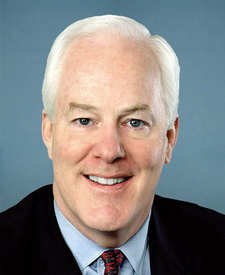
Mr. Cornyn (for himself, Ms. Hirono, Ms. Murkowski, Mr. Fetterman, …
Read twice and referred to the Committee on Veterans' Affairs.
Introduced in Senate
Bill Structure & Actor Mappings
Who is "The Secretary" in each section?
- "secretary"
- → Secretary of Veterans Affairs
We use a combination of our own taxonomy and classification in addition to large language models to assess meaning and potential beneficiaries. High confidence means strong textual evidence. Always verify with the original bill text.
Learn more about our methodology