To gradually raise the Federal minimum wage, to permanently establish the E-Verify employment eligibility verification system, to mandate the use of E-Verify by all employers, and for other purposes.
Analysis under review: This bill has generated analysis that may be too generic or incomplete. Clause-level evidence remains available below.
Summary
What This Bill Does
This bill combines two major policy changes: it gradually raises the federal minimum wage from $7.25 to $11.00 per hour over five years (with lower rates for small businesses and youth workers), and it makes the E-Verify employment eligibility verification system permanent and mandatory for all employers. The bill aims to increase wages for low-income workers while reducing unauthorized employment in the United States.
Who Benefits and How
Low-wage workers benefit from higher minimum wages that rise to $11/hour over five years. Authorized workers may face less competition from unauthorized workers as E-Verify becomes mandatory. Large employers already using E-Verify benefit from a level playing field as competitors must now also verify workers. Federal government agencies receive $100 million annually to operate E-Verify.
Who Bears the Burden and How
All employers face new compliance requirements to use E-Verify when hiring, with staggered deadlines based on company size (6-18 months). Small businesses must pay higher minimum wages and implement E-Verify systems. Employers face dramatically increased penalties for hiring violations (up to $25,000 per unauthorized worker vs. current $10,000 maximum). States that refuse to share DMV data lose federal economic development and housing grants. Unauthorized workers face greater barriers to employment.
Key Provisions
- Raises minimum wage gradually from $7.25 to $11.00/hour over 5 years, indexed to inflation thereafter
- Makes E-Verify permanent and mandatory for all employers on phased timeline (6-18 months based on size)
- Increases civil penalties for hiring violations 2.5x-5x (up to $25,000 per violation)
- Conditions federal grants on states sharing DMV photo data with DHS for identity verification
Evidence Chain:
This summary is generated from the full bill text using AI analysis. Expand "Detailed Analysis" below for identified beneficiaries/burden bearers.
At a Glance
What This Bill Does
Gradually increases the federal minimum wage while mandating E-Verify for all employers to prevent unauthorized employment
Key Policy Areas
Labor, Immigration, Employment Verification, Wages
Primary Purpose
Gradually increases the federal minimum wage while mandating E-Verify for all employers to prevent unauthorized employment
Policy Domains
Section 4 - Minimum Wage Increases
Identified Gains
Contextual inference, no direct clause citation- Low-wage workers
- Minimum wage earners
Contextual inference, no direct clause citation
Identified Costs
Contextual inference, no direct clause citation- Small businesses
- Retail and food service employers
- Employers using minimum wage labor
Contextual inference, no direct clause citation
Section 6-12 - Mandatory E-Verify and Penalties
Identified Gains
Contextual inference, no direct clause citation- Authorized workers
- Large employers already using E-Verify
- Immigration enforcement agencies
Contextual inference, no direct clause citation
Identified Costs
Contextual inference, no direct clause citation- All employers
- Small businesses
- Employers who currently hire unauthorized workers
- Staffing agencies
Contextual inference, no direct clause citation
Sections 14-17 - Fraud Prevention and Enforcement
Identified Gains
Contextual inference, no direct clause citation- Identity theft victims
- Social Security Administration
- Parents of minors
Contextual inference, no direct clause citation
Identified Costs
Contextual inference, no direct clause citation- Individuals using fraudulent documents
- Identity thieves
Contextual inference, no direct clause citation
Section 13 - Access to Information
Identified Gains
Contextual inference, no direct clause citation- DHS immigration enforcement
- E-Verify program
Contextual inference, no direct clause citation
Identified Costs
Contextual inference, no direct clause citation- States that decline to share DMV data
- State residents in non-compliant states
- Privacy advocates
Contextual inference, no direct clause citation
Section 5 - Establishment of Permanent E-Verify
Identified Gains
Contextual inference, no direct clause citation- Department of Homeland Security
- E-Verify system administrators
- Authorized workers
Contextual inference, no direct clause citation
Identified Costs
Contextual inference, no direct clause citation- Unauthorized workers
- Workers with documentation issues
Contextual inference, no direct clause citation
Sponsors
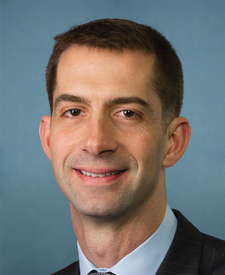
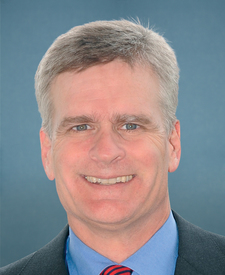

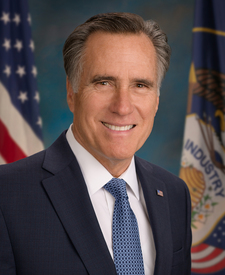
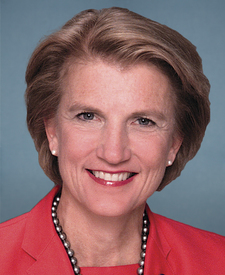
Legislative Progress
IntroducedMr. Cotton (for himself, Mr. Romney, Mrs. Capito, Mr. Cassidy, …
Stakeholder Effects
cui bono?How this legislation distributes effects. Mention counts reflect frequency, not effect magnitude.
All employers hiring in the United States, Employers operating in multiple states, Employers using identity authentication technology
Positive-direction: Employers operating in multiple states, Employers using identity authentication technology, Employers who use E-Verify in good faith
Negative-direction: All employers hiring in the United States, Employers who fail to use E-Verify, Employers who hire unauthorized workers, Employers who knowingly hire unauthorized workers, Employers with existing workforce, Employers with high rates of SSN mismatches, Large employers with 10,000+ employees, Mid-size employers (20-9,999 employees)
Authorized workers, Low-wage workers earning at or near minimum wage, Unauthorized workers
Positive-direction: Authorized workers, Low-wage workers earning at or near minimum wage, Workers who want to verify their own eligibility, Workers with errors in their records, Youth workers under 20 years old
Negative-direction: Unauthorized workers, Union hiring halls, Workers with limited work authorization
Department of Homeland Security, Immigration enforcement agencies, SSA Inspector General
Social Security Administration faces effects in multiple directions
Positive-direction: Department of Homeland Security, Immigration enforcement agencies
Negative-direction: SSA Inspector General
State and local governments with stricter immigration enforcement, States that refuse to share DMV data, States that share DMV data with DHS
Positive-direction: State and local governments with stricter immigration enforcement, States that share DMV data with DHS
Negative-direction: States that refuse to share DMV data, States with sanctuary policies
Document forgers and sellers, Identity thieves using stolen SSNs, Individuals using fraudulent SSNs
Small businesses with fewer than 20 employees, Small employers with fewer than 20 employees
Staffing agencies and employment recruiters, Staffing agencies and recruiters
Bill Structure & Actor Mappings
Who is "The Secretary" in each section?
- "the_secretary"
- → Secretary of Labor
- "the_secretary"
- → Secretary of Homeland Security
- "the_commissioner"
- → Commissioner of Social Security
- "the_secretary"
- → Secretary of Homeland Security
- "the_attorney_general"
- → Attorney General
- "the_secretary"
- → Secretary of Homeland Security
- "the_secretary"
- → Secretary of Homeland Security
- "the_commissioner"
- → Commissioner of Social Security
Note: The Secretary refers to Secretary of Labor in Section 4 (minimum wage) but Secretary of Homeland Security in Sections 5-18 (E-Verify and immigration enforcement)
Key Definitions
Terms defined in this bill
An alien who is not lawfully admitted for permanent residence or otherwise authorized to be employed
Has the meaning given by the Secretary of Agriculture, including agricultural labor under IRC 3121(g), agriculture under FLSA 3(f), and handling/processing of agricultural commodities
The date of commencement of employment for wages or other remuneration
The act of soliciting a person in the US to refer to another for employment, applies to union hiring halls and labor service agencies
The act of sending or directing a person in the US to another for employment purposes
We use a combination of our own taxonomy and classification in addition to large language models to assess meaning and potential beneficiaries. High confidence means strong textual evidence. Always verify with the original bill text.
Learn more about our methodology