To amend the Truth in Lending Act to establish a national usury rate for consumer credit transactions.
Analysis under review: This bill has generated analysis that may be too generic or incomplete. Clause-level evidence remains available below.
Summary
What This Bill Does
This bill, To amend the Truth in Lending Act to establish a national usury rate for consumer credit transactions., changes federal law or congressional policy affecting financial institutions, investors, and borrowers. The main policy domain is Finance, Defense, Criminal Justice.
Who Benefits and How
financial institutions, investors, and borrowers may benefit from new authority, funding, eligibility, regulatory clarity, or reduced risk created by the bill.
Who Bears the Burden and How
federal implementing agencies, financial institutions, investors, and borrowers may take on implementation duties, reporting obligations, compliance costs, or oversight responsibilities.
Key Provisions
- Section S1: 1. Short title This Act may be cited as the Protecting Consumers from Unreasonable Credit Rates Act of 2025.
- Section ID641ec0e4af2e4094bbc2701c3e28b607: 2. Findings Congress finds that— attempts have been made to prohibit usurious interest rates in America since colonial times; at the Federal level, in 2006,...
- Section IDe03947963c414cb2bbad6f3ab8094770: 3. National maximum interest rate Chapter 2 of the Truth in Lending Act (15 U.S.C. 1631 et seq.) is amended by adding at the end the following: Notwithstanding...
- Section ID61c0acb8e2524ac9bf671137ab419658: 140B. Maximum rates of interest Notwithstanding any other provision of law, no creditor may make an extension of credit to a consumer with respect to which the...
- Section idA70A9F868176480EBE05C542A8CA1E54: 4. Disclosure of fee and interest rate for open end credit plans Section 127(b)(6) of the Truth in Lending Act (15 U.S.C. 1637(b)(6)) is amended by striking...
Evidence Chain:
This summary is generated from the full bill text using AI analysis. Expand "Detailed Analysis" below for identified beneficiaries/burden bearers with clause-level evidence links.
At a Glance
What This Bill Does
This bill, To amend the Truth in Lending Act to establish a national usury rate for consumer credit transactions., changes federal law or congressional policy affecting financial institutions, investors, and borrowers.
Key Policy Areas
Finance, Defense, Criminal Justice
Primary Purpose
This bill, To amend the Truth in Lending Act to establish a national usury rate for consumer credit transactions., changes federal law or congressional policy affecting financial institutions, investors, and borrowers.
Policy Domains
Whole bill
Identified Gains
- financial institutions, investors, and borrowers
Identified Costs
- federal implementing agencies
- financial institutions, investors, and borrowers
Sponsors


Legislative Progress
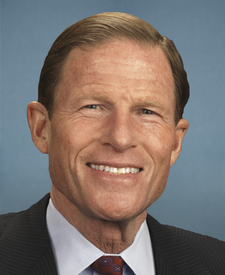
IntroducedMr. Durbin (for himself, Mr. Blumenthal, and Mr. Whitehouse) introduced …
Stakeholder Effects
cui bono?How this legislation distributes effects. Mention counts reflect frequency, not effect magnitude.
Banks (overdraft services), Credit card issuers, Credit card issuers (high-fee products)
Consumers (low-income borrowers), Consumers with open-end credit, Low-income and subprime borrowers
Community Development Financial Institutions (CDFIs)
Bill Structure & Actor Mappings
Who is "The Secretary" in each section?
- "federal_implementing_agencies"
- → Federal agencies assigned duties by the bill
We use a combination of our own taxonomy and classification in addition to large language models to assess meaning and potential beneficiaries. High confidence means strong textual evidence. Always verify with the original bill text.
Learn more about our methodology