Personalized Care Act of 2025
Analysis under review: This bill has generated analysis that may be too generic or incomplete. Clause-level evidence remains available below.
Summary
What This Bill Does
The Personalized Care Act of 2025 overhauls Health Savings Accounts (HSAs) by removing the current requirement that only people with high-deductible health plans can open an HSA. Under this bill, anyone with health insurance—including Medicare, Medicaid, CHIP, TRICARE, VA health care, FEHB, or a health care sharing ministry—would qualify. The bill also raises annual HSA contribution limits from $4,150/$8,300 (self/family) to $10,800/$29,500, allows HSA funds to pay health insurance premiums, and expands qualified medical expenses to include direct primary care arrangements and health care sharing ministry fees. The penalty for using HSA funds for non-medical purposes is cut from 20% to 10%.
Who Benefits and How
- High-income individuals and families: Massive contribution limit increases create a powerful tax shelter; those who can afford to maximize contributions benefit most from tax-free growth and withdrawals
- HSA custodians and financial services firms: Dramatically larger account balances and broader eligible population grow assets under management and fee revenue
- Direct primary care physicians: Concierge/retainer fees become HSA-eligible expenses, making DPC practices more financially accessible to patients
- Health care sharing ministries: Ministry fees become tax-deductible as medical expenses and HSA-eligible, boosting enrollment appeal
- Medicare beneficiaries: Currently barred from HSA contributions; this bill opens eligibility
Who Bears the Burden and How
- Federal Treasury / taxpayers: Higher contribution limits and broader eligibility substantially reduce income tax revenue through larger tax deductions
- Traditional health insurers: Competing with direct primary care and sharing ministries that gain tax-favored status
- Lower-income individuals: Benefit less because they have less discretionary income to contribute; HSA tax advantages are regressive (worth more to higher-bracket taxpayers)
Key Provisions
- Removes high-deductible health plan (HDHP) requirement for HSA eligibility (Sec. 2)
- Raises HSA contribution limits to $10,800 individual / $29,500 family (Sec. 3)
- Allows HSA funds to pay health plan and insurance premiums (Sec. 4)
- Makes direct primary care / concierge medicine fees HSA-eligible expenses (Secs. 5-6)
- Reduces penalty on nonqualified HSA distributions from 20% to 10% (Sec. 7)
- Makes health care sharing ministry fees HSA-eligible and deductible as medical care (Secs. 8-9)
- Effective date: taxable years beginning after December 31, 2025
Evidence Chain:
This summary is generated from the full bill text using AI analysis. Expand "Detailed Analysis" below for identified beneficiaries/burden bearers.
At a Glance
What This Bill Does
Dramatically expands Health Savings Account (HSA) eligibility and contribution limits by removing the requirement for a high-deductible health plan, raising annual contribution caps nearly fivefold, allowing HSA funds to pay health insurance premiums, accommodating direct primary care and health care sharing ministries, and reducing the penalty for nonqualified distributions.
Key Policy Areas
Healthcare, Tax Policy
Primary Purpose
Dramatically expands Health Savings Account (HSA) eligibility and contribution limits by removing the requirement for a high-deductible health plan, raising annual contribution caps nearly fivefold, allowing HSA funds to pay health insurance premiums, accommodating direct primary care and health care sharing ministries, and reducing the penalty for nonqualified distributions.
Policy Domains
HSA Contribution Limit Increases (Sec. 3)
Identified Gains
Contextual inference, no direct clause citation- High-income individuals
- Financial services industry
Contextual inference, no direct clause citation
Identified Costs
Contextual inference, no direct clause citation- Federal Treasury
Contextual inference, no direct clause citation
Direct Primary Care / Medical Care Service Arrangements (Secs. 5-6)
Identified Gains
Contextual inference, no direct clause citation- Direct primary care physicians
- Patients using concierge medicine
Contextual inference, no direct clause citation
Identified Costs
Contextual inference, no direct clause citation- Traditional health insurers
Contextual inference, no direct clause citation
Health Care Sharing Ministry Integration (Secs. 8-9)
Identified Gains
Contextual inference, no direct clause citation- Health care sharing ministries
- Ministry members
Contextual inference, no direct clause citation
Identified Costs
Contextual inference, no direct clause citation- Traditional health insurers
- Federal Treasury
Contextual inference, no direct clause citation
HSA Eligibility Expansion (Sec. 2)
Identified Gains
Contextual inference, no direct clause citation- Medicare beneficiaries
- Government-insured individuals
- HSA custodians
Contextual inference, no direct clause citation
Identified Costs
Contextual inference, no direct clause citation- Federal Treasury
Contextual inference, no direct clause citation
Sponsors
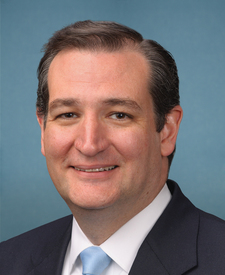


Legislative Progress
In CommitteeMr. Cruz (for himself and Mr. Marshall) introduced the following …
Read twice and referred to the Committee on Finance.
Introduced in Senate
Stakeholder Effects
cui bono?How this legislation distributes effects. Mention counts reflect frequency, not effect magnitude.
HSA account holders, HSA account holders making nonqualified withdrawals, Health care sharing ministries
HSA custodians and financial services firms, Health insurers
Bill Structure & Actor Mappings
Who is "The Secretary" in each section?
Key Definitions
Terms defined in this bill
Any individual covered under a group or individual health plan, health insurance, government plan (Medicare, Medicaid, CHIP, TRICARE, VA, IHS, FEHB), or a participant in a health care sharing ministry
An arrangement under which an individual is provided medical services in exchange for a fixed periodic fee or payment; not treated as a health plan for HSA purposes
We use a combination of our own taxonomy and classification in addition to large language models to assess meaning and potential beneficiaries. High confidence means strong textual evidence. Always verify with the original bill text.
Learn more about our methodology