To require the Director of the Office of Science and Technology Policy to establish a Federal regulatory sandbox program for artificial intelligence, and for other purposes.
Analysis under review: This bill has generated analysis that may be too generic or incomplete. Clause-level evidence remains available below.
Summary
What This Bill Does
The bill amends the National Science and Technology Policy Act of 1976 to add Title VII establishing an AI Regulatory Sandbox Program, defines key terms for the AI Regulatory Sandbox Program: agency (5 USC 551), applicable agency, artificial intelligence and AI system (per National AI Initiative Act), AI development method, AI product or service, and requires detailed operational provisions for the AI Regulatory Sandbox Program: OSTP establishes program within 1 year; standardized application process; Director can also submit applications on own initiative; 14-day. It relies on exemptions, compliance mandates, reporting requirements, and definition changes. The main policy areas are Artificial Intelligence and Technology.
Who Benefits and How
AI Companies and Startups could face fewer barriers, AI Industry (Seeking Permanent Deregulation) could face fewer barriers, and Large Incumbent Companies could face fewer barriers.
Who Bears the Burden and How
Federal Regulatory Agencies would take on compliance duties, OSTP would take on compliance duties, and Office of Science and Technology Policy (OSTP) would take on compliance duties.
Key Provisions
- Amends the National Science and Technology Policy Act of 1976 to add Title VII establishing an AI Regulatory Sandbox Program.
- Defines key terms for the AI Regulatory Sandbox Program: agency (5 USC 551), applicable agency, artificial intelligence and AI system (per National AI Initiative Act), AI development method, AI product or service...
- Requires detailed operational provisions for the AI Regulatory Sandbox Program: OSTP establishes program within 1 year; standardized application process; Director can also submit applications on own initiative; 14-day...
- Creates an annual fast-track Congressional review process: OSTP must submit a special message to Congress by May 1 each year recommending regulations to amend or repeal based on sandbox experience.
Evidence Chain:
This summary is generated from the full bill text using AI analysis. Expand "Detailed Analysis" below for identified beneficiaries/burden bearers with clause-level evidence links.
At a Glance
What This Bill Does
The bill amends the National Science and Technology Policy Act of 1976 to add Title VII establishing an AI Regulatory Sandbox Program, defines key terms for the AI Regulatory Sandbox Program: agency (5 USC 551), applicable agency, artificial intelligence and AI system (per National AI Initiative Act), AI development method, AI product or service, and requires detailed operational provisions for the AI Regulatory Sandbox Program: OSTP establishes program within 1 year; standardized application process; Director can also submit applications on own initiative; 14-day.
Key Policy Areas
Artificial Intelligence, Technology
Primary Purpose
The bill amends the National Science and Technology Policy Act of 1976 to add Title VII establishing an AI Regulatory Sandbox Program, defines key terms for the AI Regulatory Sandbox Program: agency (5 USC 551), applicable agency, artificial intelligence and AI system (per National AI Initiative Act), AI development method, AI product or service, and requires detailed operational provisions for the AI Regulatory Sandbox Program: OSTP establishes program within 1 year; standardized application process; Director can also submit applications on own initiative; 14-day.
Policy Domains
AI Regulatory Sandbox Program (Title VII, Sections 701-702)
Identified Gains
- AI Companies and Startups
- AI Industry (Seeking Permanent Deregulation)
- Large Incumbent Companies
Identified Costs
- Federal Regulatory Agencies
- OSTP
- Office of Science and Technology Policy (OSTP)
- Federal Trade Commission
Sponsors
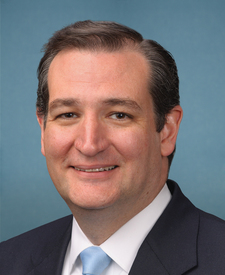
Legislative Progress
IntroducedMr. Cruz introduced the following bill; which was read twice …
Stakeholder Effects
cui bono?How this legislation distributes effects. Mention counts reflect frequency, not effect magnitude.
Congress, Federal Regulatory Agencies, Federal Trade Commission
AI Companies and Startups, AI Industry (Seeking Permanent Deregulation), Large Incumbent Companies
Bill Structure & Actor Mappings
Who is "The Secretary" in each section?
- "the_director"
- → Director of the Office of Science and Technology Policy (OSTP)
- "applicable_agency"
- → Head of any federal agency with jurisdiction over waived regulations
- "congress"
- → Both chambers of Congress
- "the_director"
- → Director of the Office of Science and Technology Policy
Key Definitions
Terms defined in this bill
As defined in 5 USC 551
Agency with jurisdiction over the enforcement or implementation of a covered provision for which an applicant seeks a waiver
As defined in section 5002 of the National AI Initiative Act of 2020 (15 USC 9401)
Any rule as defined in 5 USC 804(3), including associated guidance, FAQs, bulletins, and derivative material, and any rule required by statute
Risk likely to cause bodily harm, loss of life, or substantial adverse health effect to a human (including before birth)
Likely to cause tangible, physical harm to property or assets of a consumer
As defined per FTC Act Section 5 and FTC Policy Statements on Deception (1983) and Unfairness (1980)
We use a combination of our own taxonomy and classification in addition to large language models to assess meaning and potential beneficiaries. High confidence means strong textual evidence. Always verify with the original bill text.
Learn more about our methodology