Veterans’ Assuring Critical Care Expansions to Support Servicemembers (ACCESS) Act of 2025
Summary
What This Bill Does
The bill rewrites several operational rules for VA care access. It codifies distance and wait-time standards for Veterans Community Care Program eligibility, requires written eligibility notices within two business days, requires VA to consider veteran preference, continuity of care, and caregiver or attendant needs, requires written denial notices and clinical-appeal instructions within two business days, requires VA to discuss available and appropriate telehealth options, and extends provider claim-submission deadlines from 180 days to one year. It also requires standardized screening and admission timing for certain mental health residential programs, performance metrics for VA facilities and Veterans Integrated Service Networks, transportation support for admitted veterans, a plan for an interactive online self-service module for appointments, referrals, reminders, and appeals, modernization of the Center for Innovation for Care and Payment, and recurring reports on appeals and community-care use.
Who Benefits and How
Veterans eligible for community care benefit from statutory travel and wait-time access standards and faster written eligibility notices. Veterans denied care benefit from a two-business-day written explanation and instructions for the Veterans Health Administration clinical appeals process. Veterans with mental health treatment needs benefit from standardized screening, priority-admission criteria, 48-hour screening and admission timelines, and residential-treatment placement lists. Veteran caregivers benefit because VA must consider caregiver or attendant needs when community-care options are discussed. Community care providers benefit from a one-year claims submission deadline instead of 180 days. Veterans service organizations benefit from consultation and recurring reports on appeals, eligibility, referrals, no-shows, and outcomes.
Who Bears the Burden and How
The Secretary of Veterans Affairs must implement access standards, notifications, denial appeals, telehealth discussions, screening processes, metrics, online tools, and recurring reports. VA medical centers must track community-care eligibility, referral timeliness, mental-health screening, residential-treatment admissions, quality metrics, and transportation support. Veterans Integrated Service Networks must be measured on screening and timely admission performance for covered treatment programs. Third Party Administrators must help design and implement the online self-service module for appointment requests, referral tracking, reminders, and appeals. VA appeals staff must process more transparent clinical appeals and report timeliness, outcomes, and fairness recommendations. Community care providers must comply with documentation and claims rules under an expanded one-year submission window.
Key Provisions
- Codifies VA community-care access standards using 30-minute and 60-minute driving thresholds and 20-day and 28-day wait-time thresholds.
- Requires written eligibility notices, periodic reminders, denial explanations, and appeal instructions within two business days where applicable.
- Directs VA to consider veteran preference, continuity of care, caregiver or attendant needs, and appropriate telehealth options.
- Extends the prompt-payment claim submission deadline for health care entities and providers from 180 days to one year.
- Requires standardized mental-health residential treatment screening, priority-admission criteria, 48-hour timelines, performance metrics, provider-quality assessments, placement lists, transportation support, and admission-request policies.
- Requires an online self-service module plan for appointments, referrals, reminders, and appeals and recurring reports on community-care eligibility, use, referrals, no-shows, appeals, timeliness, and outcomes.
Evidence Chain:
This summary is generated from the full bill text using AI analysis. Expand "Detailed Analysis" below for identified beneficiaries/burden bearers with clause-level evidence links.
At a Glance
What This Bill Does
Expands and tightens VA community care, mental health residential treatment, online self-service, innovation-center, and reporting rules by codifying access standards, veteran notifications, denial appeals, telehealth discussions, longer provider claim deadlines, standardized mental-health screening, residential-treatment metrics, transportation support, an online module, and recurring appeals and community-care reports.
Key Policy Areas
Veterans, Health Care, Government Oversight
Primary Purpose
Expands and tightens VA community care, mental health residential treatment, online self-service, innovation-center, and reporting rules by codifying access standards, veteran notifications, denial appeals, telehealth discussions, longer provider claim deadlines, standardized mental-health screening, residential-treatment metrics, transportation support, an online module, and recurring appeals and community-care reports.
Policy Domains
Bill provisions
Identified Gains
- Veterans eligible for community care
- Veterans denied care
- Veterans with mental health treatment needs
- Veteran caregivers
- Community care providers
- Veterans service organizations
Identified Costs
- Secretary of Veterans Affairs
- VA medical centers
- Veterans Integrated Service Networks
- Third Party Administrators
- VA appeals staff
- Community care providers
Sponsors




Legislative Progress
ReportedCommittee on Veterans' Affairs. Ordered to be reported with an …
Committee on Veterans' Affairs. Hearings held.
Committee on Veterans' Affairs. Hearings held. Hearings printed: S.Hrg. 119-35.
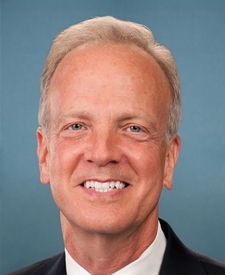
Mr. Moran introduced the following bill; which was read twice …
Read twice and referred to the Committee on Veterans' Affairs.
Introduced in Senate
Stakeholder Effects
cui bono?How this legislation distributes effects. Mention counts reflect frequency, not effect magnitude.
Veterans eligible for community care, Veterans with mental health treatment needs
Secretary of Veterans Affairs, VA medical centers
Bill Structure & Actor Mappings
Who is "The Secretary" in each section?
- "secretary"
- → Secretary of Veterans Affairs
- "third_party_administrators"
- → Third Party Administrators
We use a combination of our own taxonomy and classification in addition to large language models to assess meaning and potential beneficiaries. High confidence means strong textual evidence. Always verify with the original bill text.
Learn more about our methodology