To require the Federal Communications Commission to establish a vetting process for prospective applicants for high-cost universal service program funding.
Analysis under review: This bill has generated analysis that may be too generic or incomplete. Clause-level evidence remains available below.
Summary
What This Bill Does
This bill requires the FCC to create a vetting process within 180 days for companies seeking federal rural broadband funding. Applicants must demonstrate technical, financial, and operational capabilities plus a reasonable business plan before receiving awards. The FCC must evaluate applicants against their compliance history with prior broadband programs.
Who Benefits and How
Rural communities benefit from better screening of broadband providers, reducing risk of failed deployments. Legitimate broadband providers benefit from clearer qualification standards. Taxpayers benefit from better accountability for federal broadband subsidies.
Who Bears the Burden and How
Broadband companies seeking USF funding must meet new qualification requirements and submit detailed capability documentation. Companies that default face minimum penalties of $9,000 per violation and at least 30% of total support. The FCC bears administrative burden of the new vetting process.
Key Provisions
- Requires FCC rulemaking within 180 days to establish applicant vetting
- Applicants must demonstrate technical, financial, and operational capabilities
- FCC must evaluate applicant compliance history with prior broadband programs
- Minimum penalty for defaults: $9,000 per violation
- Base forfeiture must be at least 30% of total support unless FCC demonstrates need for lower penalty
Evidence Chain:
This summary is generated from the full bill text using AI analysis. Expand "Detailed Analysis" below for identified beneficiaries/burden bearers.
At a Glance
What This Bill Does
Requires the FCC to establish a vetting process for applicants seeking high-cost universal service fund (USF) awards for rural broadband deployment, including minimum penalties for defaults.
Who Benefits
- Rural communities
- Legitimate broadband providers
- Taxpayers
Who Bears Costs
- Broadband companies seeking USF funding
- FCC
- Companies that default on commitments
Key Policy Areas
Telecommunications, Broadband, Rural Development, Federal Grants
Primary Purpose
Requires the FCC to establish a vetting process for applicants seeking high-cost universal service fund (USF) awards for rural broadband deployment, including minimum penalties for defaults.
Policy Domains
Legislative Strategy
"Strengthen accountability for federal broadband subsidies following failures of prior award recipients"
Sponsors
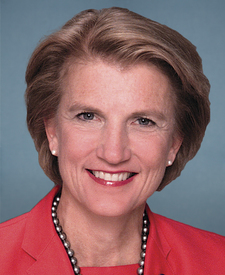
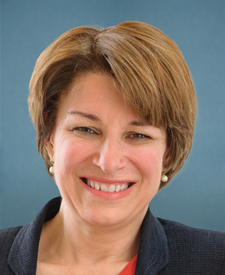
Legislative Progress
Passed SenateReported by Ms. Cantwell, with an amendment
Mrs. Capito (for herself and Ms. Klobuchar) introduced the following …
Passed Senate (inferred from es version)
Stakeholder Effects
cui bono?How this legislation distributes effects. Mention counts reflect frequency, not effect magnitude.
Broadband providers applying for USF funding, Broadband providers seeking USF funding, Communications providers and spectrum users
Rural broadband consumers, Rural communities awaiting broadband
Bill Structure & Actor Mappings
Who is "The Secretary" in each section?
- "commission"
- → Federal Communications Commission
Key Definitions
Terms defined in this bill
Any new offer of high-cost universal service program funding for broadband-capable network deployment
Award of covered funding based on application submitted after rules are promulgated
We use a combination of our own taxonomy and classification in addition to large language models to assess meaning and potential beneficiaries. High confidence means strong textual evidence. Always verify with the original bill text.
Learn more about our methodology