Beautifying Federal Civic Architecture Act of 2025
Analysis under review: This bill has generated analysis that may be too generic or incomplete. Clause-level evidence remains available below.
Summary
What This Bill Does
The bill establishes U.S. policy that federal public buildings should uplift and beautify public spaces, with classical and traditional architecture as preferred styles. In D.C., classical architecture is the default, defines key terms including applicable Federal public building (courthouses, agency HQs, D.C. buildings, buildings over M), classical architecture, traditional architecture, Brutalist architecture, Deconstructivist, and establishes Guiding Principles requiring all federal agencies to use classical and traditional architecture for applicable buildings, with emphasis on regional traditions, living American artists, sound construction. It relies on product standards, compliance mandates, definition changes, and procurement rules. The main policy areas are Trade, Federal Buildings, and Technology.
Who Benefits and How
Classical and traditional architecture firms could gain revenue opportunities, Architects with classical/traditional architecture training could gain revenue opportunities, and Living American fine artists could gain revenue opportunities.
Who Bears the Burden and How
General Services Administration would take on compliance duties, Modernist and contemporary architecture firms could lose revenue opportunities, and Firms specializing in Brutalist or Deconstructivist architecture could face higher barriers.
Key Provisions
- Establishes U.S. policy that federal public buildings should uplift and beautify public spaces, with classical and traditional architecture as preferred styles. In D.C., classical architecture is the default....
- Defines key terms including applicable Federal public building (courthouses, agency HQs, D.C. buildings, buildings over M), classical architecture, traditional architecture, Brutalist architecture, Deconstructivist...
- Establishes Guiding Principles requiring all federal agencies to use classical and traditional architecture for applicable buildings, with emphasis on regional traditions, living American artists, sound construction...
- Requires GSA to update policies, hire architects with classical/traditional training, create a Senior Advisor for Architectural Design position, weight classical experience in design-build competitions, and submit...
- Creates standard savings clause preserving existing agency authority, requiring implementation consistent with applicable law and available appropriations, and disclaiming any enforceable right or benefit.
Evidence Chain:
This summary is generated from the full bill text using AI analysis. Expand "Detailed Analysis" below for identified beneficiaries/burden bearers with clause-level evidence links.
At a Glance
What This Bill Does
The bill establishes U.S. policy that federal public buildings should uplift and beautify public spaces, with classical and traditional architecture as preferred styles. In D.C., classical architecture is the default, defines key terms including applicable Federal public building (courthouses, agency HQs, D.C. buildings, buildings over M), classical architecture, traditional architecture, Brutalist architecture, Deconstructivist, and establishes Guiding Principles requiring all federal agencies to use classical and traditional architecture for applicable buildings, with emphasis on regional traditions, living American artists, sound construction.
Key Policy Areas
Trade, Federal Buildings, Technology
Primary Purpose
The bill establishes U.S. policy that federal public buildings should uplift and beautify public spaces, with classical and traditional architecture as preferred styles. In D.C., classical architecture is the default, defines key terms including applicable Federal public building (courthouses, agency HQs, D.C. buildings, buildings over M), classical architecture, traditional architecture, Brutalist architecture, Deconstructivist, and establishes Guiding Principles requiring all federal agencies to use classical and traditional architecture for applicable buildings, with emphasis on regional traditions, living American artists, sound construction.
Policy Domains
Beautifying Federal Civic Architecture Act of 2025
Identified Gains
- Classical and traditional architecture firms
- Architects with classical/traditional architecture training
- Living American fine artists
Identified Costs
- General Services Administration
- Modernist and contemporary architecture firms
- Firms specializing in Brutalist or Deconstructivist architecture
- Modernist architecture firms competing for federal contracts
- Federal agencies with building programs
Sponsors

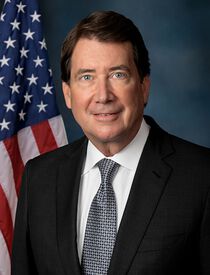



Legislative Progress
In CommitteeMr. Banks (for himself, Mr. Marshall, Mrs. Blackburn, and Mrs. …
Read twice and referred to the Committee on Environment and …
Introduced in Senate
Stakeholder Effects
cui bono?How this legislation distributes effects. Mention counts reflect frequency, not effect magnitude.
Architects with classical/traditional architecture training, Classical and traditional architecture firms, Firms specializing in Brutalist or Deconstructivist architecture
Positive-direction: Architects with classical/traditional architecture training, Classical and traditional architecture firms
Negative-direction: Firms specializing in Brutalist or Deconstructivist architecture, Modernist and contemporary architecture firms, Modernist architecture firms competing for federal contracts
Federal agencies with building programs, General Services Administration
Living American fine artists
Bill Structure & Actor Mappings
Who is "The Secretary" in each section?
- "the_administrator"
- → Administrator of General Services
Key Definitions
Terms defined in this bill
Members of the public who are not artists, architects, engineers, art/architecture critics, professors, or members of the building industry, or affiliated with any organization financially affected by design decisions.
Style characterized by massive block-like appearance, rigid geometric style, and large-scale use of exposed poured concrete.
Architectural tradition derived from Greek and Roman antiquity, including Neoclassical, Georgian, Federal, Greek Revival, Beaux-Arts, and Art Deco styles.
Includes classical architecture and historic humanistic architecture such as Gothic, Romanesque, Second Empire, Pueblo Revival, Spanish Colonial, and other Mediterranean styles historically rooted in U.S. regions.
Style featuring fragmentation, disorder, discontinuity, distortion, skewed geometry, and the appearance of instability.
Any Federal courthouse, Federal agency headquarters, public building in the National Capital region, or other public building costing more than $50,000,000 in 2025 dollars. Excludes infrastructure projects and land ports of entry.
We use a combination of our own taxonomy and classification in addition to large language models to assess meaning and potential beneficiaries. High confidence means strong textual evidence. Always verify with the original bill text.
Learn more about our methodology