To amend the Omnibus Crime Control and Safe Streets Act of 1968 to modify the provisions relating to treatment courts.
Analysis under review: This bill has generated analysis that may be too generic or incomplete. Clause-level evidence remains available below.
Summary
What This Bill Does
This bill overhauls the federal drug court grant program by replacing Part EE of the Omnibus Crime Control and Safe Streets Act with a new Treatment Court Discretionary Grant Program. It authorizes the Attorney General to make grants to states, local governments, tribal governments, and courts to establish or enhance six types of treatment courts: juvenile drug courts, family treatment courts, tribal healing to wellness courts, impaired driving courts, adult drug treatment courts, and any other courts following national best practice standards. The program authorizes $100 million per year for fiscal years 2024 through 2028.
Who Benefits and How
Adults and juveniles with substance use disorders benefit from alternatives to incarceration through evidence-based treatment, including FDA-approved medication for addiction treatment. Substance abuse treatment providers and behavioral health organizations gain a substantial new funding stream. State and local court systems receive up to 75% federal matching funds to establish or expand treatment court programs. Tribal governments gain dedicated support for healing-to-wellness courts. The National Association of Drug Court Professionals has its best practice standards enshrined as the benchmark for grant eligibility.
Who Bears the Burden and How
Grant recipients face detailed compliance requirements: evidence-based clinical assessments, anti-discrimination certifications, equity monitoring (tracking racial/ethnic/gender disparities in access and outcomes), licensed treatment providers, and annual reporting to the Attorney General. State and local governments must provide at least 25% matching funds (with waiver possibility). The Department of Justice must conduct a national multi-site evaluation within three years and provide ongoing technical assistance.
Key Provisions
- Authorizes $100 million annually (FY2024-2028) for treatment court grants across six court types
- Requires evidence-based substance use disorder treatment including medication for addiction treatment (FDA-approved medications)
- Mandates equity monitoring: programs must collect and examine access/retention data by race, ethnicity, and gender to ensure no unfair disparities
- Limits federal share to 75% of costs and caps administrative costs at 10% of the grant
Evidence Chain:
This summary is generated from the full bill text using AI analysis. Expand "Detailed Analysis" below for identified beneficiaries/burden bearers.
At a Glance
What This Bill Does
Replaces the existing federal drug court grant program with an expanded treatment court discretionary grant program authorizing the Attorney General to fund six types of treatment courts (juvenile, family, tribal, impaired driving, adult drug, and others) with $100 million annually for FY2024-2028, requiring evidence-based treatment including medication for addiction treatment.
Key Policy Areas
Criminal Justice, Substance Abuse Treatment, Public Health, Tribal Affairs
Primary Purpose
Replaces the existing federal drug court grant program with an expanded treatment court discretionary grant program authorizing the Attorney General to fund six types of treatment courts (juvenile, family, tribal, impaired driving, adult drug, and others) with $100 million annually for FY2024-2028, requiring evidence-based treatment including medication for addiction treatment.
Policy Domains
Treatment Court, Rehabilitation, and Recovery Act of 2025
Identified Gains
Contextual inference, no direct clause citation- Adults and juveniles with substance use disorders in the criminal justice system
- Substance abuse treatment providers
- State and local court systems operating treatment courts
- Tribal governments and tribal courts
- National Association of Drug Court Professionals
- Behavioral health workforce (case managers, counselors, social workers)
Contextual inference, no direct clause citation
Identified Costs
Contextual inference, no direct clause citation- Department of Justice (grant administration and evaluation)
- State and local governments (25% matching requirement)
- Grant recipients (compliance, reporting, equity monitoring)
Contextual inference, no direct clause citation
Sponsors
Legislative Progress
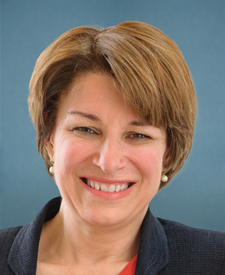
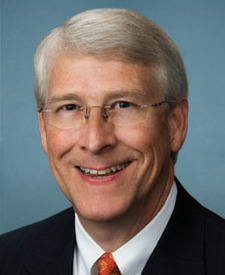
IntroducedMs. Klobuchar (for herself and Mr. Wicker) introduced the following …
Stakeholder Effects
cui bono?How this legislation distributes effects. Mention counts reflect frequency, not effect magnitude.
Grant applicants (states, local governments, tribal governments), Grant recipients operating treatment courts, State and local court systems
National Association of Drug Court Professionals
Adults and juveniles with substance use disorders in the justice system, Persons charged with sex offenses, child exploitation, or murder (excluded from eligibility), Treatment court participants (adults and juveniles with substance use disorders)
Positive-direction: Adults and juveniles with substance use disorders in the justice system, Treatment court participants (adults and juveniles with substance use disorders)
Negative-direction: Persons charged with sex offenses, child exploitation, or murder (excluded from eligibility)
Bureau of Justice Assistance, Department of Justice, Tribal governments and tribal courts
Positive-direction: Tribal governments and tribal courts
Negative-direction: Bureau of Justice Assistance, Department of Justice
Substance abuse treatment providers (must be licensed/accredited), Substance abuse treatment providers and behavioral health organizations
Pharmaceutical companies producing FDA-approved addiction treatment medications
Training and technical assistance providers in criminal justice and substance abuse treatment
Bill Structure & Actor Mappings
Who is "The Secretary" in each section?
- "the_secretary"
- → Secretary of Health and Human Services
- "the_attorney_general"
- → Attorney General of the United States
Key Definitions
Terms defined in this bill
The use of medications approved by the Food and Drug Administration for the treatment of substance use disorder
The State agency responsible for administering the Substance Abuse Prevention and Treatment Block Grant under subpart II of part B of title XIX of the Public Health Service Act (42 U.S.C. 300x-21 et seq.)
An adult or juvenile in the court system diagnosed with a substance use disorder or co-occurring mental illness, meeting eligibility criteria, posing no violence risk, and not charged with sex offenses, child exploitation, or murder
We use a combination of our own taxonomy and classification in addition to large language models to assess meaning and potential beneficiaries. High confidence means strong textual evidence. Always verify with the original bill text.
Learn more about our methodology