S2721-119

In Committee

Prevent Government Shutdowns Act of 2025

119th Congress Introduced Sep 4, 2025

Analysis under review: This bill has generated analysis that may be too generic or incomplete. Clause-level evidence remains available below.

Summary

What This Bill Does

The Prevent Government Shutdowns Act of 2025 creates an automatic continuing resolution mechanism that prevents government shutdowns by automatically funding federal programs at prior-year levels when Congress fails to pass appropriation bills. When a lapse in appropriations occurs, funding automatically continues in 14-day increments at the rate of operations from the most recent appropriation act. The bill also imposes severe restrictions on Congress and the executive branch during periods of automatic continuing appropriations: official travel is banned for Members of Congress and OMB employees, campaign funds cannot be used for official travel, and the Senate and House are restricted to considering only appropriation bills, debt ceiling measures, and emergency legislation. Recesses of more than 23 hours are prohibited, and daily quorum calls are required.

Who Benefits and How

Federal employees benefit most directly by avoiding furloughs and pay disruptions during funding gaps. Federal contractors benefit from continued funding for existing contracts. Beneficiaries of federal programs (Social Security, SNAP, Medicare, veterans benefits, etc.) benefit from uninterrupted services. The general public benefits from continued government operations. Entitlement programs and Food and Nutrition Act activities are funded at rates necessary to maintain current program levels.

Who Bears the Burden and How

Members of Congress bear significant operational restrictions: travel bans, prohibition on considering non-appropriation legislation, mandatory attendance (quorum calls, no recesses longer than 23 hours). OMB employees face the same travel restrictions. Congress loses leverage to use shutdown threats as negotiating tools. The executive branch retains limited ability to transfer funds (up to 5% between accounts with OMB approval and congressional notification). Programs with high initial funding rates (like state grants) face restrictions on front-loading appropriations. The bill requires that only the most limited funding actions be taken, which could constrain agencies below prior-year levels in practice.

Key Provisions

  • Automatic continuing appropriations at prior-year rates in 14-day renewable increments during any lapse
  • Entitlements and SNAP funded at rates necessary to maintain current program levels
  • Travel ban for Members of Congress and OMB employees during automatic funding periods
  • Campaign funds cannot be used for official travel during automatic funding periods
  • Senate and House restricted to appropriation bills, debt ceiling measures, and emergency legislation
  • No recesses longer than 23 hours; daily quorum calls required
  • After 30 days, nominations for Cabinet-level positions and Supreme Court justices may proceed
  • Agency heads may transfer up to 5% between accounts with OMB approval
  • High initial rate programs (state grants) cannot front-load funding
  • Effective September 30, 2025

Evidence Chain:

This summary is generated from the full bill text using AI analysis. Expand "Detailed Analysis" below for identified beneficiaries/burden bearers.

At a Glance

What This Bill Does

Creates an automatic continuing resolution mechanism that prevents government shutdowns by funding federal programs at prior-year levels during appropriation lapses, while imposing severe operational restrictions on Congress and the executive branch to incentivize timely passage of appropriation bills.

Key Policy Areas

Government Operations, Budget and Appropriations

Primary Purpose

Creates an automatic continuing resolution mechanism that prevents government shutdowns by funding federal programs at prior-year levels during appropriation lapses, while imposing severe operational restrictions on Congress and the executive branch to incentivize timely passage of appropriation bills.

Policy Domains

Government Operations Budget and Appropriations

Automatic Continuing Appropriations (Sec. 2)

Identified Gains
Contextual inference, no direct clause citation
  • Federal employees (no furloughs)
  • Federal contractors (continued funding)
  • Beneficiaries of federal programs (uninterrupted services)
  • General public (continued government operations)
Model: claude-opus-4 | Version: bill_summary_v2 | Source: is

Contextual inference, no direct clause citation

Identified Costs
Contextual inference, no direct clause citation
  • Congress (loses shutdown leverage)
  • Federal agencies (most limited funding constraint)
  • Programs with high initial rates (cannot front-load)
Model: claude-opus-4 | Version: bill_summary_v2 | Source: is

Contextual inference, no direct clause citation

Budgetary Effects (Sec. 4)

Identified Gains
Contextual inference, no direct clause citation
  • Budget scorekeepers (clear integration rules)
Model: claude-opus-4 | Version: bill_summary_v2 | Source: is

Contextual inference, no direct clause citation

Identified Costs
Contextual inference, no direct clause citation
  • CBO and OMB (baseline calculation adjustments)
Model: claude-opus-4 | Version: bill_summary_v2 | Source: is

Contextual inference, no direct clause citation

Congressional and Executive Restrictions (Sec. 3)

Identified Gains
Contextual inference, no direct clause citation
  • Taxpayers (reduced travel spending during funding gaps)
  • The appropriations process (increased pressure to complete on time)
Model: claude-opus-4 | Version: bill_summary_v2 | Source: is

Contextual inference, no direct clause citation

Identified Costs
Contextual inference, no direct clause citation
  • Members of Congress (travel ban, restricted legislative agenda, mandatory attendance)
  • OMB employees (travel ban)
  • Congressional staff (travel ban)
  • Political parties (campaign fund restrictions)
Model: claude-opus-4 | Version: bill_summary_v2 | Source: is

Contextual inference, no direct clause citation

Legislative Progress

In Committee
Introduced Committee Passed
Sep 4, 2025

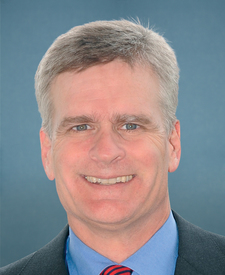
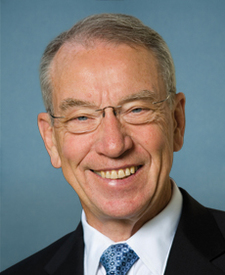
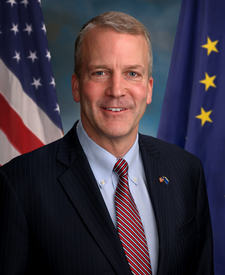
Mr. Lankford (for himself, Mr. Barrasso, Mr. Daines, Mr. Cornyn, …

Sep 4, 2025

Read twice and referred to the Committee on Homeland Security …

Sep 4, 2025

Introduced in Senate

Stakeholder Effects

cui bono?

How this legislation distributes effects. Mention counts reflect frequency, not effect magnitude.

Government
10 mentions across 4 clauses
+4 positive -5 negative

Budget enforcement process, CBO and OMB, Congress

Positive-direction: Federal contractors, Federal employees, The appropriations process

Negative-direction: CBO and OMB, Congress, Congressional staff, Members of Congress, OMB employees

General Public
1 mention across 1 clause
+1 positive

Federal program beneficiaries

4/6
sections analyzed
Full impact breakdown

Bill Structure & Actor Mappings

Who is "The Secretary" in each section?

Domains
Government Operations Budget and Appropriations
Actor Mappings
"omb"
→ Office of Management and Budget
"agency_heads"
→ Heads of federal agencies
Domains
Government Operations
Actor Mappings
"omb_employees"
→ Officers and employees of OMB
"members_of_congress"
→ Members of Congress and their staff
Domains
Budget and Appropriations

Key Definitions

Terms defined in this bill

2 terms
"" §2

"" §3

We use a combination of our own taxonomy and classification in addition to large language models to assess meaning and potential beneficiaries. High confidence means strong textual evidence. Always verify with the original bill text.

Learn more about our methodology