Yes in God's Backyard Act
Analysis under review: This bill has generated analysis that may be too generic or incomplete. Clause-level evidence remains available below.
Summary
What This Bill Does
The Yes in God s Backyard Act (YIGBY Act) creates two federal programs to encourage the development of affordable rental housing on property owned by faith-based organizations and institutions of higher education. First, it establishes a technical assistance program (authorized at $25 million for FY2026 and $10 million per year for FY2027-2031) providing resources to faith-based organizations, universities, and local governments on how to develop excess property into affordable rental housing, navigate federal housing programs, and remove local policy barriers. Second, it creates a Challenge Grant program (authorized at $50 million per year for FY2026-2031) providing competitive grants to state and local governments that have policies designed to remove barriers to affordable housing development on faith-based and university-owned land. Grants can be used to assess and remove local barriers, provide outreach and technical assistance, and fund affordable housing projects directly.
Who Benefits and How
Faith-based organizations with excess property benefit from technical assistance, reduced development barriers, and potential grant funding flowing to their communities. Institutions of higher education with excess property benefit similarly. Low-income households (at or below 100% of area median income) benefit from new affordable rental housing with rents capped at 30% of household income. Extremely low-income families, homeless individuals, veterans, people with disabilities, and intergenerational families receive priority. State and local governments benefit from federal funding to remove housing barriers and produce affordable housing. Affordable housing developers benefit from reduced regulatory barriers and new project opportunities on faith-based and university land.
Who Bears the Burden and How
Federal taxpayers bear the cost of up to $65 million in FY2026 and $60 million per year for FY2027-2031 in authorized appropriations. Up to 10% of Challenge Grant funds may be used for federal administrative costs. Grantees bear reporting and compliance requirements. Local governments that do not have barrier-removal policies in effect are ineligible for Challenge Grants, which may incentivize regulatory changes but also imposes a policy prerequisite.
Key Provisions
- $25 million (FY2026) then $10 million/year (FY2027-2031) for technical assistance program
- $50 million/year (FY2026-2031) for competitive Challenge Grants to state and local governments
- Affordable rental housing defined as rent not exceeding 30% of household income for households at or below 100% AMI
- Preference for projects serving families below 60% AMI, extremely low-income families, homeless individuals, veterans, and people with disabilities
- Grantees must demonstrate policies in effect to remove barriers to affordable housing on faith-based and university property
- Challenge Grants can fund grants and loans directly to affordable housing projects
- Secretary of HUD must consult with Partnership Center and other federal agencies
Evidence Chain:
This summary is generated from the full bill text using AI analysis. Expand "Detailed Analysis" below for identified beneficiaries/burden bearers.
At a Glance
What This Bill Does
Creates a technical assistance program and competitive Challenge Grant program to encourage development of affordable rental housing on property owned by faith-based organizations and institutions of higher education, authorizing up to $65 million in FY2026 and $60 million per year for FY2027-2031.
Key Policy Areas
Housing, Religion, Education
Primary Purpose
Creates a technical assistance program and competitive Challenge Grant program to encourage development of affordable rental housing on property owned by faith-based organizations and institutions of higher education, authorizing up to $65 million in FY2026 and $60 million per year for FY2027-2031.
Policy Domains
Challenge Grant Program (Sec. 292)
Identified Gains
Contextual inference, no direct clause citation- Low-income households below 60% AMI
- Homeless individuals and families
- Veterans
- People with disabilities
- Faith-based organizations and universities (barrier removal)
- State and local governments (federal funding)
- Affordable housing developers (new project pipeline)
Contextual inference, no direct clause citation
Identified Costs
Contextual inference, no direct clause citation- Federal taxpayers ($50M/yr FY2026-2031)
- Local governments that must change policies to qualify
- Grantees (reporting requirements)
Contextual inference, no direct clause citation
Technical Assistance Program (Sec. 291)
Identified Gains
Contextual inference, no direct clause citation- Faith-based organizations with excess property
- Institutions of higher education with excess property
- Local governments seeking to increase affordable housing
- Low-income households seeking affordable rental housing
Contextual inference, no direct clause citation
Identified Costs
Contextual inference, no direct clause citation- Federal taxpayers ($25M in FY2026, $10M/yr FY2027-2031)
- HUD (administration and consultation requirements)
Contextual inference, no direct clause citation
Sponsors
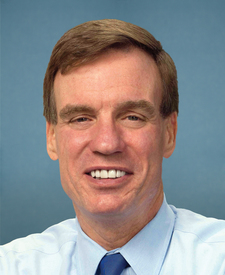
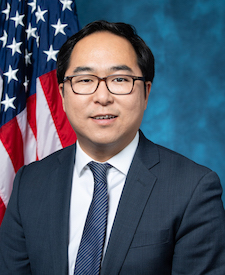

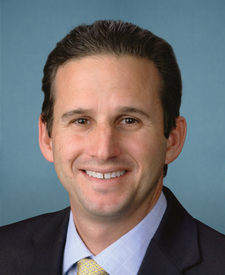
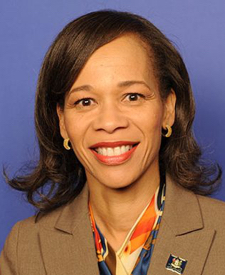
Legislative Progress
In CommitteeMr. Warner (for himself, Ms. Blunt Rochester, Mr. Kim, and …
Read twice and referred to the Committee on Banking, Housing, …
Introduced in Senate
Stakeholder Effects
cui bono?How this legislation distributes effects. Mention counts reflect frequency, not effect magnitude.
Homeless individuals and families, Households at or below 100% AMI, Low-income households
Positive-direction: Homeless individuals and families, Households at or below 100% AMI, Low-income households, Low-income households below 60% AMI, Veterans
Negative-direction: Taxpayers
HUD, Local governments, State and local governments
Positive-direction: Local governments, State and local governments, State and local governments with barrier-removal policies
Negative-direction: HUD
Faith-based organizations, Faith-based organizations with excess property
Bill Structure & Actor Mappings
Who is "The Secretary" in each section?
- "the_secretary"
- → Secretary of Housing and Urban Development
- "partnership_center"
- → Center for Faith-Based and Neighborhood Partnerships
- "the_secretary"
- → Secretary of Housing and Urban Development
- "eligible_grantee"
- → Units of local government, states, metropolitan planning organizations, multi-jurisdiction entities
Note: {'term': 'The Secretary', 'resolution': 'Refers to the Secretary of Housing and Urban Development throughout'}
Key Definitions
Terms defined in this bill
We use a combination of our own taxonomy and classification in addition to large language models to assess meaning and potential beneficiaries. High confidence means strong textual evidence. Always verify with the original bill text.
Learn more about our methodology