Fulfilling Promises to Afghan Allies Act
Analysis under review: This bill has generated analysis that may be too generic or incomplete. Clause-level evidence remains available below.
Summary
What This Bill Does
The bill defines key terms including special immigrant status, specified application, Secretary (DHS), and lists congressional committees with oversight jurisdiction, requires State Department to respond to congressional inquiries about Afghan visa applications and designate offices to process applications, conduct interviews, and issue visas while there is no U.S. embassy, and exempts allows Afghan nationals who were admitted or paroled into the U.S. between July 30, 2021 and enactment to apply for adjustment to conditional permanent resident status. It relies on exemptions, reporting requirements, definition changes, and compliance mandates. The main policy areas are Immigration, Defense, Social Welfare, and Finance.
Who Benefits and How
Female Afghan military and government officials could face lower compliance burdens, Family members of U.S. service members from Afghanistan could face lower compliance burdens, and Afghan special forces and military personnel could face lower compliance burdens.
Who Bears the Burden and How
Department of Homeland Security would take on compliance duties, Department of State would take on compliance duties, and DHS and State Department fee collection could lose revenue opportunities.
Key Provisions
- Defines key terms including special immigrant status, specified application, Secretary (DHS), and lists congressional committees with oversight jurisdiction.
- Requires State Department to respond to congressional inquiries about Afghan visa applications and designate offices to process applications, conduct interviews, and issue visas while there is no U.S. embassy...
- Exempts allows Afghan nationals who were admitted or paroled into the U.S. between July 30, 2021 and enactment to apply for adjustment to conditional permanent resident status.
- Establishes expedited refugee processing for at-risk Afghan allies including special forces, Afghan Air Force, female military members, counterintelligence personnel, judges, prosecutors, and those who worked...
- Exempts allows DHS to accept biometric data collected by international organizations, NGOs, contractors, or other agencies to speed visa processing for Afghan applicants.
Evidence Chain:
This summary is generated from the full bill text using AI analysis. Expand "Detailed Analysis" below for identified beneficiaries/burden bearers with clause-level evidence links.
At a Glance
What This Bill Does
The bill defines key terms including special immigrant status, specified application, Secretary (DHS), and lists congressional committees with oversight jurisdiction, requires State Department to respond to congressional inquiries about Afghan visa applications and designate offices to process applications, conduct interviews, and issue visas while there is no U.S. embassy, and exempts allows Afghan nationals who were admitted or paroled into the U.S. between July 30, 2021 and enactment to apply for adjustment to conditional permanent resident status.
Key Policy Areas
Immigration, Defense, Social Welfare, Finance
Primary Purpose
The bill defines key terms including special immigrant status, specified application, Secretary (DHS), and lists congressional committees with oversight jurisdiction, requires State Department to respond to congressional inquiries about Afghan visa applications and designate offices to process applications, conduct interviews, and issue visas while there is no U.S. embassy, and exempts allows Afghan nationals who were admitted or paroled into the U.S. between July 30, 2021 and enactment to apply for adjustment to conditional permanent resident status.
Policy Domains
Fulfilling Promises to Afghan Allies Act
Identified Gains
- Female Afghan military and government officials
- Family members of U.S. service members from Afghanistan
- Afghan special forces and military personnel
- Afghan nationals applying for family immigrant visas
- Afghan judges, prosecutors, and investigators
Identified Costs
- Department of Homeland Security
- Department of State
- DHS and State Department fee collection
- U.S. Refugee Admissions Program
- USCIS visa processing
Sponsors




Legislative Progress
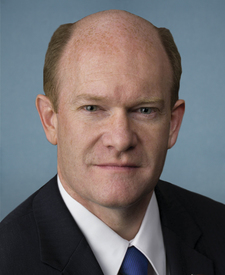
In CommitteeMs. Klobuchar (for herself, Ms. Murkowski, Mr. Coons, Mr. Graham, …
Read twice and referred to the Committee on the Judiciary.
Introduced in Senate
Stakeholder Effects
cui bono?How this legislation distributes effects. Mention counts reflect frequency, not effect magnitude.
DHS and State Department fee collection, Department of Homeland Security, Department of State
Positive-direction: Female Afghan military and government officials
Negative-direction: DHS and State Department fee collection, Department of Homeland Security, Department of State, U.S. Refugee Admissions Program, USCIS visa processing
Afghan evacuees paroled into the U.S. after 2021 withdrawal, Afghan nationals applying for family immigrant visas, Afghan nationals seeking immigration benefits
Afghan special forces and military personnel, U.S. military personnel with Afghan family
International organizations processing refugees, Refugee resettlement organizations
Afghan judges, prosecutors, and investigators
Government contractors for biometric collection
Bill Structure & Actor Mappings
Who is "The Secretary" in each section?
- "the_secretary"
- → Secretary of Homeland Security
- "secretary_of_state"
- → Secretary of State
Key Definitions
Terms defined in this bill
Afghan national who served in special forces, Afghan Air Force, female military, counterintelligence, justice sector, or worked for U.S.-funded programs
Afghan national present in U.S., admitted or paroled between July 30, 2021 and enactment, who is admissible
Pending documentarily complete application for special immigrant status or case in USRAP for SIV-eligible individuals
Status under Afghan Allies Protection Act of 2009, NDAA 2006 section 1059, or new subparagraph (N) of INA 101(a)(27)
We use a combination of our own taxonomy and classification in addition to large language models to assess meaning and potential beneficiaries. High confidence means strong textual evidence. Always verify with the original bill text.
Learn more about our methodology