Medication Affordability and Patent Integrity Act
Summary
What This Bill Does
The Medication Affordability and Patent Integrity Act imposes parallel duties on sponsors and holders of new drug applications and biologics license applications. For covered patents, they must certify to FDA that specified regulatory submissions are consistent with information and communications supplied to the Patent and Trademark Office. They must also send USPTO information material to patentability that they give FDA, along with FDA's responses, and certify that the patent-office submission is complete and consistent. Covered material includes chemistry, manufacturing, and controls information and statements characterizing patents, prior art, novelty, nonobviousness, or patent scope, including information added by a regulator. For final reported text, an applicable patent must be issued to, assigned to, or exclusively licensed to the sponsor or holder. The duties apply to new applications and to specified post-enactment communications or patents associated with older applications. USPTO must protect confidential commercial, trade-secret, and financial material, except information it determines the public needs to understand the scope of granted claims. A failure to make the required certification becomes a prohibited act under federal drug law. In patent litigation, an accused infringer receives a defense when the patent owner or predecessor negligently or intentionally failed to make a required disclosure. The final text withholds that defense from a covered foreign person under the Defense Production Act.
Who Benefits and How
Generic-drug and biosimilar applicants gain access to a litigation defense when a patent owner or predecessor failed to disclose required FDA-related information to USPTO. USPTO examiners gain material patentability information and may disclose what the public needs to understand granted-claim scope. FDA gains formal consistency certifications, courts gain a statutory consequence for material nondisclosure, and patients and payers may benefit if invalid or improperly obtained exclusivity is easier to challenge. Patent owners that make complete, consistent submissions gain a clearer compliance record.
Who Bears the Burden and How
Brand-drug and biologic sponsors and application holders must compare regulatory and patent-office records, transmit covered information and FDA responses, certify completeness and consistency, and maintain those duties for later communications and patents. FDA and USPTO must receive, evaluate, protect, and sometimes disclose sensitive submissions. Patent owners face greater infringement-litigation risk when they or predecessor owners negligently or intentionally omit required information. Courts must adjudicate the new defense. Covered foreign persons cannot invoke the defense and therefore face a higher litigation barrier than otherwise eligible domestic defendants.
Key Provisions
- Requires drug and biologic sponsors to certify consistency between specified FDA and USPTO representations.
- Requires submission to USPTO of FDA-provided or FDA-responsive information material to patentability.
- Defines covered regulatory statements, timing rules, and applicable patents, including exclusive licenses in the final text.
- Protects confidential submissions while allowing disclosure needed to explain granted-claim scope.
- Creates a prohibited-act consequence for missing FDA certifications.
- Provides an infringement defense for negligent or intentional disclosure failures by a patent owner or predecessor.
- Limits the defense by excluding covered foreign persons.
Evidence Chain:
This summary is generated from the full bill text using AI analysis. Expand "Detailed Analysis" below for identified beneficiaries/burden bearers with clause-level evidence links.
At a Glance
What This Bill Does
Requires drug and biologic sponsors to keep material FDA and patent-office representations consistent and complete, and creates a patent-infringement defense for qualifying disclosure failures.
Key Policy Areas
Drug Patents, FDA Regulation, Patent Litigation
Primary Purpose
Requires drug and biologic sponsors to keep material FDA and patent-office representations consistent and complete, and creates a patent-infringement defense for qualifying disclosure failures.
Policy Domains
Medication Affordability and Patent Integrity Act
Identified Gains
- Generic-drug applicants
- Biosimilar applicants
- United States Patent and Trademark Office examiners
- Patients and prescription-drug payers
- Patent-litigation defendants
Identified Costs
- Brand-drug application sponsors and holders
- Biologics license sponsors and holders
- Drug and biologic patent owners
- Food and Drug Administration staff
- Patent and Trademark Office confidentiality staff
- Covered foreign persons
Sponsors
Legislative Progress
ReportedPlaced on Senate Legislative Calendar under General Orders. Calendar No. …
Committee on Health, Education, Labor, and Pensions. Reported by Senator …
Reported by Mr. Cassidy, with an amendment
Committee on Health, Education, Labor, and Pensions. Ordered to be …
Committee on Health, Education, Labor, and Pensions. Hearings held.
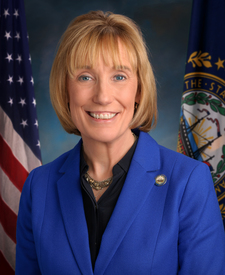
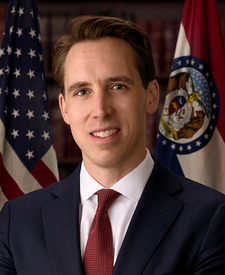
Ms. Hassan (for herself and Mr. Hawley) introduced the following …
Read twice and referred to the Committee on Health, Education, …
Introduced in Senate
Ms. Hassan (for herself and Mr. Hawley) introduced the following …
Stakeholder Effects
cui bono?How this legislation distributes effects. Mention counts reflect frequency, not effect magnitude.
Biologics license sponsors and holders, Brand-drug sponsors and application holders, Covered foreign persons
Positive-direction: Eligible domestic generic and biosimilar defendants, Generic-drug and biosimilar applicants, Generic-drug and biosimilar defendants, Nonexclusive patent licensees
Negative-direction: Biologics license sponsors and holders, Brand-drug sponsors and application holders, Covered foreign persons, Drug and biologic patent owners
Federal courts, Federal legislative records staff, Food and Drug Administration
Members of the public evaluating patent scope, Prescription-drug patients and payers
Legislative compliance counsel, Patent litigation counsel
Bill Structure & Actor Mappings
Who is "The Secretary" in each section?
- "litigants"
- → Patent owners and accused infringers
- "patent_agency"
- → United States Patent and Trademark Office
- "regulatory_agency"
- → Food and Drug Administration
- "excluded_defendants"
- → Covered foreign persons under the Defense Production Act
- "regulated_drug_parties"
- → Sponsors and holders of new drug applications
- "regulated_biologic_parties"
- → Sponsors and holders of biologics license applications
Key Definitions
Terms defined in this bill
We use a combination of our own taxonomy and classification in addition to large language models to assess meaning and potential beneficiaries. High confidence means strong textual evidence. Always verify with the original bill text.
Learn more about our methodology