S2650-119

Introduced

To amend the Immigration and Nationality Act to provide for the reallocation of unused waivers of the foreign residency requirement for certain J-visa holders.

119th Congress Introduced Aug 1, 2025

Analysis under review: This bill has generated analysis that may be too generic or incomplete. Clause-level evidence remains available below.

Summary

What This Bill Does

The DOCTORS Act addresses a gap in the physician shortage by reallocating unused J-1 visa waivers. Currently, each state receives 30 waivers annually to allow foreign medical graduates to stay in the U.S. if they work in underserved areas, but many states do not use all their waivers. This bill requires states to report unused waivers and redistributes one-third of them to states that have demonstrated high demand (those using at least 30 waivers).

Who Benefits and How

Foreign medical graduates benefit from increased opportunities to obtain waivers and remain in the U.S. to practice medicine. Rural and underserved communities benefit from better access to physicians, as 10% of redistributed waivers must support facilities serving medically underserved populations. High-demand states (often populous or with significant rural areas) gain additional waiver slots to recruit more international physicians.

Who Bears the Burden and How

State agencies face new annual reporting requirements to disclose unused waiver counts to the Secretary of State. States that consistently underutilize their waivers will see their unused slots partially redistributed to other states rather than going to waste.

Key Provisions

  • Requires annual reporting of unused J-1 visa waivers by state agencies
  • Redistributes one-third of unused waivers equally among eligible high-demand states
  • Reserves 10% of redistributed waivers for facilities serving medically underserved communities
  • Defines eligible states as those using at least 30 waivers in the preceding fiscal year

Evidence Chain:

This summary is generated from the full bill text using AI analysis. Expand "Detailed Analysis" below for identified beneficiaries/burden bearers.

At a Glance

What This Bill Does

Reallocates unused J-1 visa waivers from underutilizing states to states with higher demand, improving the distribution of foreign medical graduates to underserved areas.

Key Policy Areas

Immigration, Healthcare, Rural Development

Primary Purpose

Reallocates unused J-1 visa waivers from underutilizing states to states with higher demand, improving the distribution of foreign medical graduates to underserved areas.

Policy Domains

Immigration Healthcare Rural Development

DOCTORS Act

Identified Gains
Contextual inference, no direct clause citation
  • Foreign medical graduates (J-1 visa holders)
  • Rural healthcare facilities
  • Medically underserved communities
  • High-demand states
  • Healthcare systems in physician shortage areas
Model: N/A | Version: bill_summary_v2 | Source: is

Contextual inference, no direct clause citation

Identified Costs
Contextual inference, no direct clause citation
  • State agencies (reporting requirements)
  • Low-utilization states (lose unused waivers)
Model: N/A | Version: bill_summary_v2 | Source: is

Contextual inference, no direct clause citation

Legislative Progress

Introduced
Introduced Committee Passed
Aug 1, 2025

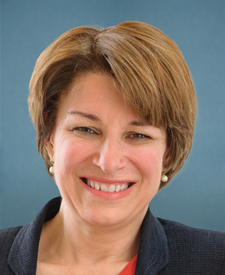
Ms. Ernst (for herself and Ms. Klobuchar) introduced the following …

Impact analysis is available but no clear stakeholder effects identified. View clause-level analysis →

Bill Structure & Actor Mappings

Who is "The Secretary" in each section?

Domains
Immigration Healthcare
Actor Mappings
"state_agencies"
→ State agencies that administer J-1 visa waiver programs
"secretary_of_state"
→ Secretary of State

Key Definitions

Terms defined in this bill

2 terms
"eligible State agency" §2

A State agency that, in the preceding fiscal year, used not fewer than 30 waivers under section 212(e)

"medically underserved communities" §2_medically_underserved

As defined in section 799B of the Public Health Service Act (42 U.S.C. 295p)

We use a combination of our own taxonomy and classification in addition to large language models to assess meaning and potential beneficiaries. High confidence means strong textual evidence. Always verify with the original bill text.

Learn more about our methodology