Cruise Passenger Protection Act of 2025
Analysis under review: This bill has generated analysis that may be too generic or incomplete. Clause-level evidence remains available below.
Summary
What This Bill Does
The bill requires comprehensive section adding Chapter 161 to title 46: establishes Office of Maritime Consumer Protection within DOT, requires contract disclosure standards, creates consumer complaint hotline and database, defines application scope for Chapter 161: applies to passenger vessels and small passenger vessels, excludes federal government vessels and state-owned vessels, and establishes Office of Maritime Consumer Protection within DOT's Office of General Counsel, headed by Assistant General Counsel, with duties including compliance assistance, complaint processing, vessel inspections. It relies on compliance mandates, reporting requirements, definition changes, and product standards. The main policy areas are Consumer Protection, Transportation, Finance, and Public Safety.
Who Benefits and How
Cruise passengers could face reduced risk, Crime victims on cruise ships could face fewer barriers, and US cruise passengers could face reduced risk.
Who Bears the Burden and How
Cruise ship owners would take on compliance duties, Cruise ship owners/operators would take on compliance duties, and Cruise ship owners (liability exposure) could face higher costs.
Key Provisions
- Requires comprehensive section adding Chapter 161 to title 46: establishes Office of Maritime Consumer Protection within DOT, requires contract disclosure standards, creates consumer complaint hotline and database...
- Defines application scope for Chapter 161: applies to passenger vessels and small passenger vessels, excludes federal government vessels and state-owned vessels.
- Establishes Office of Maritime Consumer Protection within DOT's Office of General Counsel, headed by Assistant General Counsel, with duties including compliance assistance, complaint processing, vessel inspections...
- Mandates contract disclosure standards for passage contracts: clear summary of key terms, 3-year minimum statute of limitations, toll-free complaint hotline, monthly updated complaint statistics by vessel name, civil...
- Requires invalidates pre-dispute arbitration clauses in cruise ticket contracts - arbitration only permitted if all parties consent in writing after controversy arises.
Evidence Chain:
This summary is generated from the full bill text using AI analysis. Expand "Detailed Analysis" below for identified beneficiaries/burden bearers with clause-level evidence links.
At a Glance
What This Bill Does
The bill requires comprehensive section adding Chapter 161 to title 46: establishes Office of Maritime Consumer Protection within DOT, requires contract disclosure standards, creates consumer complaint hotline and database, defines application scope for Chapter 161: applies to passenger vessels and small passenger vessels, excludes federal government vessels and state-owned vessels, and establishes Office of Maritime Consumer Protection within DOT's Office of General Counsel, headed by Assistant General Counsel, with duties including compliance assistance, complaint processing, vessel inspections.
Key Policy Areas
Consumer Protection, Transportation, Finance, Public Safety
Primary Purpose
The bill requires comprehensive section adding Chapter 161 to title 46: establishes Office of Maritime Consumer Protection within DOT, requires contract disclosure standards, creates consumer complaint hotline and database, defines application scope for Chapter 161: applies to passenger vessels and small passenger vessels, excludes federal government vessels and state-owned vessels, and establishes Office of Maritime Consumer Protection within DOT's Office of General Counsel, headed by Assistant General Counsel, with duties including compliance assistance, complaint processing, vessel inspections.
Policy Domains
Title I - Consumer Service Improvements
Identified Gains
- Cruise passengers
- Crime victims on cruise ships
- US cruise passengers
- Families of cruise ship wrongful death victims
- Cruise passengers seeking legal recourse
Identified Costs
- Cruise ship owners
- Cruise ship owners/operators
- Cruise ship owners (liability exposure)
- Cruise ship owners (enforcement risk)
- US-calling cruise ships with 250+ capacity
Sponsors
Legislative Progress
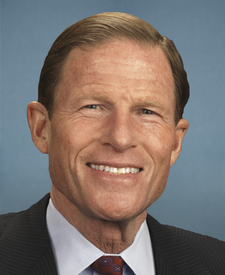
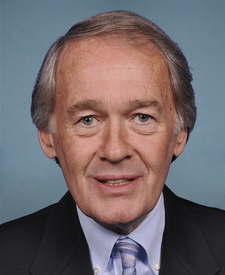
In CommitteeMr. Blumenthal (for himself and Mr. Markey) introduced the following …
Read twice and referred to the Committee on Commerce, Science, …
Introduced in Senate
Stakeholder Effects
cui bono?How this legislation distributes effects. Mention counts reflect frequency, not effect magnitude.
Cruise industry representatives on committee, Cruise lines (reputational risk from public data), Cruise ship owners
Coast Guard, DHS, DHS/Coast Guard (enforcement authority)
Positive-direction: Federal and state government vessels
Negative-direction: Coast Guard, DHS, DHS/Coast Guard (enforcement authority), DOT (advisory committee administration), DOT (implementation), DOT (new office establishment), DOT (standards development and enforcement), DOT (victim services infrastructure), DOT Office of General Counsel, FBI
Crime victims on cruise ships, Cruise passengers, Cruise passengers seeking legal recourse
Arbitration service providers, Class action attorneys, Legal interpreters of maritime law
Positive-direction: Class action attorneys, Plaintiffs' attorneys, Wrongful death attorneys
Negative-direction: Arbitration service providers
Consumer protection organizations, Victim assistance nonprofits
Bill Structure & Actor Mappings
Who is "The Secretary" in each section?
- "the_secretary"
- → Secretary of Transportation
- "the_assistant_general_counsel"
- → Assistant General Counsel for the Office of Maritime Consumer Protection
- "the_secretary"
- → Secretary of Transportation
- "the_director"
- → Director of the FBI
- "the_secretary"
- → Secretary of Transportation
- "the_commandant"
- → Commandant of the Coast Guard
Key Definitions
Terms defined in this bill
A passenger on a covered passenger vessel who is a citizen of the United States
A passenger vessel or small passenger vessel to which Chapter 161 applies
Terms related to undisclosed costs and fees, indemnification, waivers, limitations on liability, notice of claim and actions, time limitations, arbitration, forum, and jurisdiction
A binding agreement for passage on a covered passenger vessel
The owner, charterer, managing operator, master, or other individual in charge of a vessel
We use a combination of our own taxonomy and classification in addition to large language models to assess meaning and potential beneficiaries. High confidence means strong textual evidence. Always verify with the original bill text.
Learn more about our methodology