Strengthening United States Leadership at the IDB Act
Summary
What This Bill Does
The bill defines the IDB Group, PRC entities, and congressional committees, then uses the U.S. voice, vote, and influence at the Inter-American Development Bank to review and oppose risky PRC-linked projects, PRC trust funds, PRC share increases, and projects involving sanctioned or export-control-violating PRC entities. It pushes IDB procurement toward U.S. and allied member-country entities, prioritizing value, transparency, and integrity over lowest upfront cost. It also directs Treasury to encourage IDB collaboration with the U.S. International Development Finance Corporation and requires reports on DFC-IDB collaboration and PRC influence, including project lists, financing amounts, disbursements, beneficial owners, sanctions, debarment, and transparency effects.
Who Benefits and How
United States companies benefit when IDB procurement capacity-building encourages procurement from U.S. entities instead of PRC entities. Partner-country companies benefit from procurement policies that favor allied member-country entities and value-for-money standards. The United States International Development Finance Corporation benefits from a mandated collaboration push with IDB projects, financing, loans, and grants in borrowing member countries. IDB borrowing member countries benefit from financing alternatives tied to transparency, integrity, and reduced PRC coercive influence. Congressional foreign affairs committees benefit from detailed reports on PRC influence, projects, funding, contractors, and risks. Taiwan benefits indirectly because the PRC-influence report must address deliberations around Taiwan's involvement or membership in the IDB.
Who Bears the Burden and How
The Secretary of the Treasury must instruct the U.S. Executive Director to use U.S. voice, vote, and influence against risky PRC-linked IDB activities. The U.S. Executive Director at the IDB must review projects, oppose certain votes, identify risky PRC entities, and advocate procurement reforms. PRC entities face greater scrutiny, possible exclusion, and reduced procurement opportunities in IDB-financed projects. The DFC Chief Executive Officer must report to Congress on past and potential collaboration with the IDB. Treasury and State must compile a broad 180-day report on PRC influence, project-level funding, beneficial owners, sanctions, debarment, and governance effects.
Key Provisions
- Defines IDB institutions, PRC entities, and the congressional committees receiving reports.
- Requires the U.S. Executive Director to use U.S. voice, vote, and influence to reduce PRC influence in IDB operations, activities, projects, financing, and shareholding.
- Requires opposition to risky projects involving PRC trust funds or PRC-linked financing after national or economic security review.
- Directs procurement advocacy favoring U.S. and allied member-country entities and policies prioritizing value, transparency, and integrity.
- Requires DFC-IDB collaboration reporting on investments in Latin America and the Caribbean and possible expansion areas.
- Requires a comprehensive 180-day Treasury report on PRC influence, projects, disbursements, contractors, beneficial owners, sanctions, debarment, Taiwan deliberations, and transparency.
Evidence Chain:
This summary is generated from the full bill text using AI analysis. Expand "Detailed Analysis" below for identified beneficiaries/burden bearers with clause-level evidence links.
At a Glance
What This Bill Does
Directs the Treasury Secretary and U.S. Executive Director at the Inter-American Development Bank to counter PRC influence in IDB projects, procurement, financing, governance, and shareholding while encouraging IDB procurement from U.S. and partner-country entities and expanding IDB collaboration with the U.S. International Development Finance Corporation.
Key Policy Areas
Foreign Affairs, International Finance, Trade
Primary Purpose
Directs the Treasury Secretary and U.S. Executive Director at the Inter-American Development Bank to counter PRC influence in IDB projects, procurement, financing, governance, and shareholding while encouraging IDB procurement from U.S. and partner-country entities and expanding IDB collaboration with the U.S. International Development Finance Corporation.
Policy Domains
Bill provisions
Identified Gains
- United States companies
- Partner-country companies
- United States International Development Finance Corporation
- IDB borrowing member countries
- Congressional foreign affairs committees
- Taiwan
Identified Costs
- Secretary of the Treasury
- U.S. Executive Director at the Inter-American Development Bank
- PRC entities
- DFC Chief Executive Officer
- Treasury Department
- State Department
Sponsors

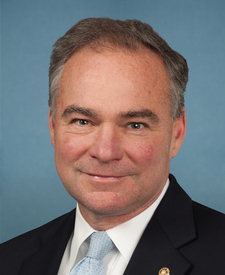
David McCormick
R-PA | Primary Sponsor
Legislative Progress
ReportedReported by Mr. Risch, with an amendment
Placed on Senate Legislative Calendar under General Orders. Calendar No. …
Committee on Foreign Relations. Reported by Senator Risch with an …
Committee on Foreign Relations. Ordered to be reported with an …
Mr. McCormick (for himself and Mr. Kaine) introduced the following …
Mr. McCormick (for himself and Mr. Kaine) introduced the following …
Read twice and referred to the Committee on Foreign Relations.
Introduced in Senate
Stakeholder Effects
cui bono?How this legislation distributes effects. Mention counts reflect frequency, not effect magnitude.
Secretary of the Treasury, U.S. Executive Director at the Inter-American Development Bank, United States International Development Finance Corporation
Positive-direction: United States International Development Finance Corporation
Negative-direction: Secretary of the Treasury, U.S. Executive Director at the Inter-American Development Bank
Partner-country companies, United States companies
Bill Structure & Actor Mappings
Who is "The Secretary" in each section?
- "dfc"
- → United States International Development Finance Corporation
- "idb"
- → Inter-American Development Bank
- "treasury"
- → Secretary of the Treasury
We use a combination of our own taxonomy and classification in addition to large language models to assess meaning and potential beneficiaries. High confidence means strong textual evidence. Always verify with the original bill text.
Learn more about our methodology