Global Investment in American Jobs Act of 2025
Summary
What This Bill Does
The Global Investment in American Jobs Act of 2025 directs the Secretary of Commerce and the Comptroller General to review how competitive the United States is in attracting foreign direct investment from responsible private-sector entities based in trusted countries. It focuses on manufacturing, services, trade, digital trade, jobs, advanced technology, data flows, greenfield investment, mergers and acquisitions, and supply-chain resilience.
The bill frames trusted-country investment as useful for U.S. economic prosperity and security while excluding entities organized under, owned by, controlled by, or influenced by foreign adversaries or countries of concern.
Who Benefits and How
Responsible companies based in trusted countries benefit because the review is designed to identify barriers to foreign direct investment and policies that could make the United States a better destination to invest, hire, innovate, manufacture, and provide services. U.S. workers, U.S. manufacturers, U.S. technology companies, and communities seeking new investment benefit if the review leads to policies that attract more investment and jobs.
The Department of Commerce, Government Accountability Office, Federal Interagency Investment Working Group, and Congress benefit from a formal review of investment trends, digital trade barriers, greenfield investment, merger-related investment, and supply-chain dependence on China or foreign countries of concern.
Who Bears the Burden and How
The Secretary of Commerce, Comptroller General, Department of Commerce, Government Accountability Office, and relevant federal agencies must conduct the interagency review and analyze economic, trade, technology, and supply-chain factors. Companies tied to foreign adversaries or countries of concern are excluded from the bill's preferred investment category and may face less favorable policy treatment.
Federal agencies must devote staff time to the review, consultation, and reporting work even though the bill itself does not directly appropriate new funds.
Key Provisions
- Establishes statutory definitions for responsible private-sector entities, trusted countries, and the federal investment working group.
- Directs Commerce and GAO, in consultation with interagency partners, to review U.S. competitiveness in attracting foreign direct investment.
- Requires the review to examine manufacturing, services, trade, digital trade, jobs, investment trends, data flows, greenfield investment, and mergers and acquisitions.
- Requires analysis of advanced-technology trade barriers involving self-driving vehicles, artificial intelligence, the Internet of Things, quantum computing, and blockchain.
- Directs the review to evaluate supply-chain resilience and dependence on China or foreign countries of concern.
Evidence Chain:
This summary is generated from the full bill text using AI analysis. Expand "Detailed Analysis" below for identified beneficiaries/burden bearers with clause-level evidence links.
At a Glance
What This Bill Does
Requires a Commerce and GAO review of U.S. competitiveness in attracting responsible foreign direct investment from trusted countries.
Key Policy Areas
Trade, Technology, Economic Development
Primary Purpose
Requires a Commerce and GAO review of U.S. competitiveness in attracting responsible foreign direct investment from trusted countries.
Policy Domains
Whole bill
Identified Gains
- Responsible private-sector entities from trusted countries
- U.S. workers
- U.S. manufacturers
- U.S. technology firms
- Department of Commerce
- U.S. technology companies
- Government Accountability Office
- Congress
Identified Costs
- Secretary of Commerce
- Comptroller General
- Federal Interagency Investment Working Group
- Entities tied to foreign adversaries
- Department of Commerce
- Government Accountability Office
- Federal agencies
- Companies tied to foreign adversaries
Sponsors
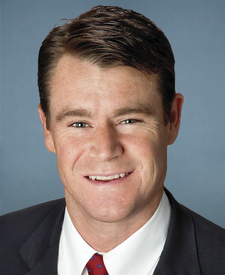
Todd Young
R-IN | Primary Sponsor
Legislative Progress
Passed SenateHeld at the desk.
Received in the House.
Message on Senate action sent to the House.
Passed Senate with an amendment by Unanimous Consent. (consideration: CR …
Passed/agreed to in Senate: Passed Senate with an amendment by …
Reported by Mr. Cruz, with an amendment
Placed on Senate Legislative Calendar under General Orders. Calendar No. …
Committee on Commerce, Science, and Transportation. Reported by Senator Cruz …
Committee on Commerce, Science, and Transportation. Ordered to be reported …
Mr. Young (for himself and Mr. Peters) introduced the following …
Stakeholder Effects
cui bono?How this legislation distributes effects. Mention counts reflect frequency, not effect magnitude.
Chinese Communist Party-linked entities, Chinese state-owned and state-backed enterprises, Foreign investors from allied/non-adversary countries
Positive-direction: Foreign investors from allied/non-adversary countries, Foreign investors from trusted countries
Negative-direction: Chinese Communist Party-linked entities, Chinese state-owned and state-backed enterprises
Department of Commerce, Government Accountability Office
U.S. businesses seeking foreign investment from allied countries
Bill Structure & Actor Mappings
Who is "The Secretary" in each section?
- "secretary"
- → Secretary or agency head identified in the operative section
- "administrator"
- → Administrator identified in the operative section
Key Definitions
Terms defined in this bill
An entity the Secretary determines is not organized under, owned by, controlled by, or otherwise influenced by a foreign adversary or country of concern.
We use a combination of our own taxonomy and classification in addition to large language models to assess meaning and potential beneficiaries. High confidence means strong textual evidence. Always verify with the original bill text.
Learn more about our methodology