To improve student and exchange visitor visa programs.
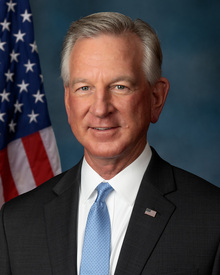
Legislative Progress
IntroducedMr. Tuberville introduced the following bill; which was read twice …
Summary
What This Bill Does
The Student Visa Integrity Act of 2025 dramatically overhauls the F, M, and J student and exchange visitor visa programs by requiring accreditation of educational institutions, increasing penalties for visa fraud, mandating disclosure of Chinese government ties, imposing extensive background checks on school officials, and completely barring students from adversarial nations including China, Russia, Cuba, Iran, North Korea, and Venezuela from studying in the United States.
Who Benefits and How
Immigration enforcement agencies and DHS benefit from stronger enforcement tools, clearer tracking requirements, and a modernized SEVIS II system to monitor international students. Accredited educational institutions gain a competitive advantage as non-accredited competitors are barred from hosting international students. U.S. workers benefit from new requirements that employers hiring international students must use E-Verify and attest they are not displacing American workers. FAA-certified flight schools benefit as non-certified competitors lose access to international students. Government IT contractors will see revenue opportunities from the mandated SEVIS II deployment.
Who Bears the Burden and How
US universities and colleges face significant revenue losses as students from China (the largest source of international students), Russia, and other adversarial countries are completely banned. Graduate STEM programs particularly dependent on international enrollment will be heavily impacted. Educational institutions face new compliance burdens including mandatory disclosure of Chinese government ties, tuition payment tracking, background checks for school officials, and restrictions on online learning for international students. Employers hiring international students must register with E-Verify, file attestations under penalty of perjury, and report employment changes within 48 hours. Non-accredited schools and language programs lose eligibility to host international students entirely. International students face restrictions on changing majors, transferring schools, taking online courses, and definite visa duration limits.
Key Provisions
- Completely bars citizens of China, Russia, Cuba, Iran, North Korea, and Venezuela from obtaining student visas to study in the US
- Prohibits nationals from terror-sponsor states (Afghanistan, Iran, Iraq, Libya, Syria) from flight training or nuclear studies
- Requires mandatory accreditation for all institutions hosting F/M/J visa students
- Mandates disclosure of all Chinese government funding, contracts, and contributions to educational institutions
- Requires background checks, citizenship/permanent resident status, and training for all school officials with SEVIS access
- Limits online education to 10% of credits for international students
- Imposes employer requirements including E-Verify registration and attestations against worker displacement
- Sets definite visa duration limits (max 4 years, 2 years for language study)
- Increases criminal penalties for visa fraud from 10 to 15 years for school officials
Evidence Chain:
This summary is derived from the structured analysis below. See "Detailed Analysis" for per-title beneficiaries/burden bearers with clause-level evidence links.
Primary Purpose
Strengthens student and exchange visitor visa programs (F, M, J visas) by requiring accreditation of educational institutions, increasing criminal penalties for visa fraud, mandating disclosure of ties to China, enhancing eligibility reviews for school officials, and imposing new requirements on employers of international students.
Policy Domains
Legislative Strategy
"Increase oversight and integrity controls on student visa programs through accreditation requirements, enhanced background checks for school officials, mandatory disclosure of Chinese government ties, stricter penalties for fraud, and new employer requirements for hiring international students."
Likely Beneficiaries
- Accredited educational institutions (competitive advantage over unaccredited schools)
- U.S. workers (protection from displacement by international students)
- National security interests (enhanced vetting and disclosure requirements)
- Immigration enforcement agencies (more enforcement tools and penalties)
Likely Burden Bearers
- Non-accredited or smaller educational institutions (must obtain accreditation or lose F/M visa eligibility)
- Educational institutions with Chinese government ties (mandatory disclosure requirements)
- School officials (DSOs, principals, responsible officers) - mandatory background checks, eligibility reviews, training
- Employers of international students (new registration, reporting, and attestation requirements)
- International students (restrictions on changing majors, transferring, employment)
- Educational institution recruiters and promoters (new registration and compliance requirements)
Bill Structure & Actor Mappings
Who is "The Secretary" in each section?
- "SEVP"
- → Student and Exchange Visitor Program of DHS
- "SEVIS"
- → Student and Exchange Visitor Information System of DHS
- "the_secretary"
- → Secretary of Homeland Security (primary), Secretary of State (for certain visa and designation functions), Secretary of Labor (for employment attestations), Secretary of Education (for accreditation recognition)
Note: The Secretary refers to Secretary of Homeland Security for most SEVP administration, but Secretary of State for certain exchange visitor program designations, and Secretary of Labor for employment attestation enforcement.
Key Definitions
Terms defined in this bill
Student and Exchange Visitor Information System of the Department of Homeland Security
Student and Exchange Visitor Program of the Department of Homeland Security
An individual who is considered to be an owner or in a position of substantive authority to make policy, operational, or managerial decisions affecting academic programs or the entire institution or program at an approved institution of higher education, other approved educational institution, or designated exchange visitor program
Accreditation by an accrediting agency recognized by the Secretary of Education
The individual serves as an administrator, officer, board member, manager, executive, general partner, fiduciary, or in a similar position
We use a combination of our own taxonomy and classification in addition to large language models to assess meaning and potential beneficiaries. High confidence means strong textual evidence. Always verify with the original bill text.
Learn more about our methodology