To require the United States Trade Representative to regularly monitor industrial subsidies provided by the Government of the People’s Republic of China and submit a report on the risks posed by those subsidies, and for other purposes.
Analysis under review: This bill has generated analysis that may be too generic or incomplete. Clause-level evidence remains available below.
Summary
What This Bill Does
The Strengthen American Competitiveness Against Harmful Subsidies Act of 2023 requires the U.S. Trade Representative (USTR) to continuously monitor industrial subsidies provided by the Chinese government, including plans for new or expanded subsidies. The USTR must then submit annual reports to Congress identifying which Chinese subsidies pose significant risks to American jobs and manufacturing, particularly in strategically critical industries.
Who Benefits and How
U.S. manufacturers and workers in strategic industries benefit from increased government attention to unfair foreign competition. By systematically tracking Chinese subsidies that threaten American competitiveness, this bill positions the government to take protective action before domestic industries are harmed. Congress gains regular, actionable intelligence on economic threats, along with specific recommendations for legislative or administrative responses.
Who Bears the Burden and How
The U.S. Trade Representative and multiple federal agencies must dedicate resources to ongoing monitoring and annual reporting. The USTR must coordinate with the Departments of State, Commerce, Agriculture, Labor, Transportation, Energy, and other agencies to compile comprehensive intelligence on Chinese subsidies. These agencies face new administrative requirements without explicitly allocated funding.
Key Provisions
- Mandatory Monitoring: USTR must regularly track current Chinese industrial subsidies and planned expansions
- Annual Reports to Congress: Within one year and annually thereafter, USTR must report to the Senate Finance Committee and House Ways and Means Committee
- Risk Assessment: Reports must identify subsidies posing significant risk to U.S. employment and manufacturing, especially in "strategically critical industries"
- Actionable Recommendations: Each report must include recommended legislative, administrative, or other actions to mitigate identified risks
- Multi-Agency Coordination: Requires collaboration among at least 10 federal departments and agencies, with presidential discretion to add more
Evidence Chain:
This summary is generated from the full bill text using AI analysis. Expand "Detailed Analysis" below for identified beneficiaries/burden bearers.
At a Glance
What This Bill Does
This bill requires the U.S. Trade Representative to monitor industrial subsidies provided by China and report on risks posed to U.S. employment and manufacturing.
Key Policy Areas
Trade, Economy
Primary Purpose
This bill requires the U.S. Trade Representative to monitor industrial subsidies provided by China and report on risks posed to U.S. employment and manufacturing.
Policy Domains
Sponsors
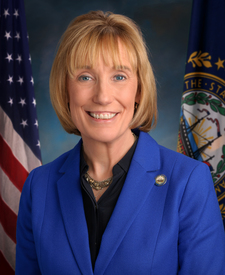

Legislative Progress
IntroducedMs. Hassan (for herself and Mr. Cassidy) introduced the following …
Stakeholder Effects
cui bono?How this legislation distributes effects. Mention counts reflect frequency, not effect magnitude.
Federal agencies involved in coordination (Commerce, State, Labor, Energy, SBA, Transportation, USAID), Foreign Agricultural Service, Department of Agriculture, International Trade Administration, Department of Commerce
U.S. manufacturers in strategically critical industries
Chinese companies receiving government subsidies
Bill Structure & Actor Mappings
Who is "The Secretary" in each section?
- "the_united_states_trade_representative"
- → United States Trade Representative
Key Definitions
Terms defined in this bill
An industry critical for the national security or economic security of the United States, considering key technology focus areas and critical infrastructure.
We use a combination of our own taxonomy and classification in addition to large language models to assess meaning and potential beneficiaries. High confidence means strong textual evidence. Always verify with the original bill text.
Learn more about our methodology