To improve the reproductive assistance provided by the Department of Defense and the Department of Veterans Affairs to certain members of the Armed Forces, veterans, and their spouses or partners, and for other purposes.
Summary
What This Bill Does
The bill defines key terms for Title I: 'active duty' (per 10 USC 101(d)(1)) and 'Armed Forces' (per 10 USC 101(a)(4)), requires the Secretary of Defense to make available fertility treatment and counseling to Armed Forces members and their spouses, partners, and gestational surrogates, without regard to sex, gender identity, sexual, and requires the Secretary of Defense, acting through the Assistant Secretary of Defense for Health Affairs, to establish procedures for retrieval of reproductive genetic material (sperm or oocytes) as soon as medically. It relies on compliance mandates, appropriations, exemptions, and definition changes. The main policy areas are Defense, Healthcare, Veterans Affairs, and Social Welfare.
Who Benefits and How
Fertility clinics and IVF providers could gain revenue opportunities, Enrolled veterans could see lower costs, and Private cryopreservation facilities could gain revenue opportunities.
Who Bears the Burden and How
Department of Defense could face higher costs, VA healthcare system could face higher costs, and Department of Veterans Affairs could face higher costs.
Key Provisions
- Defines key terms for Title I: 'active duty' (per 10 USC 101(d)(1)) and 'Armed Forces' (per 10 USC 101(a)(4)).
- Requires the Secretary of Defense to make available fertility treatment and counseling to Armed Forces members and their spouses, partners, and gestational surrogates, without regard to sex, gender identity, sexual...
- Requires the Secretary of Defense, acting through the Assistant Secretary of Defense for Health Affairs, to establish procedures for retrieval of reproductive genetic material (sperm or oocytes) as soon as medically...
- Requires the Secretary of Defense to provide cryopreservation and storage of reproductive genetic material (sperm or oocytes) for active-duty members prior to deployment to a combat zone or hazardous duty assignment...
- Requires the Secretary of Defense and the Secretary of Veterans Affairs to share best practices and facilitate referrals on fertility treatment and counseling.
Evidence Chain:
This summary is generated from the full bill text using AI analysis. Expand "Detailed Analysis" below for identified beneficiaries/burden bearers with clause-level evidence links.
At a Glance
What This Bill Does
The bill defines key terms for Title I: 'active duty' (per 10 USC 101(d)(1)) and 'Armed Forces' (per 10 USC 101(a)(4)), requires the Secretary of Defense to make available fertility treatment and counseling to Armed Forces members and their spouses, partners, and gestational surrogates, without regard to sex, gender identity, sexual, and requires the Secretary of Defense, acting through the Assistant Secretary of Defense for Health Affairs, to establish procedures for retrieval of reproductive genetic material (sperm or oocytes) as soon as medically.
Key Policy Areas
Defense, Healthcare, Veterans Affairs, Social Welfare
Primary Purpose
The bill defines key terms for Title I: 'active duty' (per 10 USC 101(d)(1)) and 'Armed Forces' (per 10 USC 101(a)(4)), requires the Secretary of Defense to make available fertility treatment and counseling to Armed Forces members and their spouses, partners, and gestational surrogates, without regard to sex, gender identity, sexual, and requires the Secretary of Defense, acting through the Assistant Secretary of Defense for Health Affairs, to establish procedures for retrieval of reproductive genetic material (sperm or oocytes) as soon as medically.
Policy Domains
Title I — Department of Defense Matters
Identified Gains
- Fertility clinics and IVF providers
- Enrolled veterans
- Private cryopreservation facilities
- Enrolled veterans seeking to adopt
- Cryopreservation and storage facilities
Identified Costs
- Department of Defense
- VA healthcare system
- Department of Veterans Affairs
- Military medical facilities
- Veterans Health Administration
Sponsors
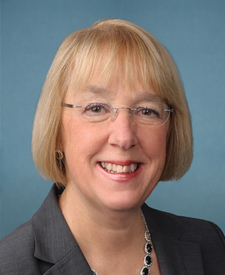
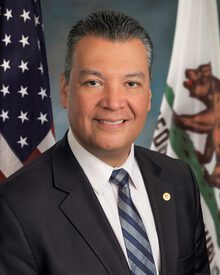

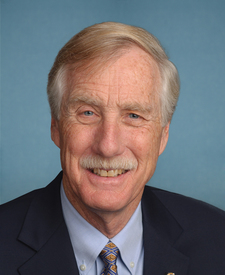
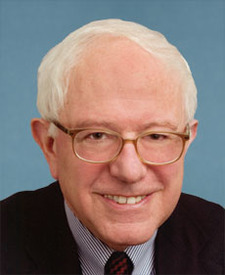
Legislative Progress
IntroducedMrs. Murray (for herself, Ms. Duckworth, Mr. Booker, Mr. Schumer, …
Stakeholder Effects
cui bono?How this legislation distributes effects. Mention counts reflect frequency, not effect magnitude.
Cryopreservation and storage facilities, Fertility clinics and IVF providers, Fertility preservation service providers
Positive-direction: Cryopreservation and storage facilities, Fertility clinics and IVF providers, Fertility preservation service providers, Gamete donation agencies, Gamete donation agencies and surrogacy agencies, Private cryopreservation facilities, Reproductive health researchers
Negative-direction: Military medical facilities
Department of Defense, Department of Veterans Affairs, States with restrictive surrogacy laws
Active-duty service members, Active-duty service members deploying to combat zones, Active-duty service members with fertility-threatening injuries
Enrolled veterans, Enrolled veterans seeking to adopt, Veterans with reproductive health conditions
Spouses, partners, and gestational surrogates of service members, Spouses, partners, and gestational surrogates of veterans
Reproductive medicine pharmaceutical companies
Bill Structure & Actor Mappings
Who is "The Secretary" in each section?
- "the_secretary"
- → Secretary of Defense
- "assistant_secretary"
- → Assistant Secretary of Defense for Health Affairs
- "the_secretary"
- → Secretary of Veterans Affairs
- "secretary_of_hhs"
- → Secretary of Health and Human Services (for research coordination)
- "secretary_of_defense"
- → Secretary of Defense (for research coordination)
Note: 'The Secretary' refers to Secretary of Defense in Title I (Secs. 101-107) but Secretary of Veterans Affairs in Title II (Secs. 201-206)
Key Definitions
Terms defined in this bill
Has the meaning given in section 101(d)(1) of title 10, USC
Includes preservation of oocytes/sperm/embryos, artificial insemination (intravaginal, intracervical, intrauterine), ART including IVF, genetic testing of embryos, fertility medications, gamete donation, and other treatments as Secretary determines appropriate
A veteran enrolled in the system of annual patient enrollment established under section 1705(a) of title 38
Has the meaning given the term 'armed forces' in section 101(a)(4) of title 10, USC
An adult, not the intended parent, who enters into a surrogacy agreement to become pregnant through IVF using gametes that are not the gametes of that individual
An individual selected by the service member who agrees to be a parent, with the member, of a child born as a result of fertility treatment
An individual selected by the covered veteran who agrees to be a parent, with the veteran, of a child born as a result of fertility treatment
We use a combination of our own taxonomy and classification in addition to large language models to assess meaning and potential beneficiaries. High confidence means strong textual evidence. Always verify with the original bill text.
Learn more about our methodology