Keep Call Centers in America Act of 2025
Analysis under review: This bill has generated analysis that may be too generic or incomplete. Clause-level evidence remains available below.
Summary
This bill creates penalties for companies that move call center jobs overseas. Employers with 50+ call center employees must give 120 days notice before relocating call centers abroad or contracting call center work overseas. The Department of Labor will maintain a public list of offshoring employers, who become ineligible for federal grants and guaranteed loans for 5 years. Companies must also receive existing federal grants and loans clawed back if they offshore. The bill requires customer service agents to disclose their physical location and whether they are AI, and consumers can request transfer to a U.S.-based human agent. The FTC enforces these disclosure rules. All call center work under federal contracts must be performed in the United States. The bill protects workers by ensuring offshoring does not affect their federal unemployment or retraining benefits.
Evidence Chain:
This summary is generated from the full bill text using AI analysis. Expand "Detailed Analysis" below for identified beneficiaries/burden bearers.
At a Glance
What This Bill Does
Discourage offshoring of call center jobs by requiring employer notification before relocating or contracting call center work overseas, making offshoring employers ineligible for federal grants and loans, requiring customer service communications to disclose agent location and AI usage, and mandating that federal contract call center work be performed in the United States.
Who Benefits
- U.S.-based call center workers
- Consumers (location and AI disclosure)
- Domestic call center operators
Who Bears Costs
- Large employers who offshore call center operations
- Business entities subject to customer service disclosure requirements
- Federal Trade Commission (enforcement)
Key Policy Areas
{'domain': 'Labor', 'evidence': ['101', '102']}, {'domain': 'Trade', 'evidence': ['101']}, {'domain': 'Consumer Protection', 'evidence': ['201', '202']}, {'domain': 'Government Procurement', 'evidence': ['104']}
Primary Purpose
Discourage offshoring of call center jobs by requiring employer notification before relocating or contracting call center work overseas, making offshoring employers ineligible for federal grants and loans, requiring customer service communications to disclose agent location and AI usage, and mandating that federal contract call center work be performed in the United States.
Policy Domains
Legislative Strategy
"Create a multi-layered deterrent against call center offshoring through public shaming (DOL list), financial penalties (grant/loan ineligibility and clawbacks), consumer transparency requirements, and federal procurement restrictions."
Sponsors

Legislative Progress
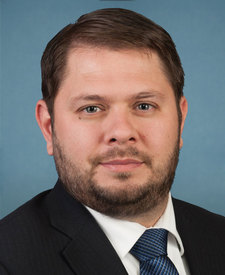
In CommitteeMr. Gallego (for himself and Mr. Justice) introduced the following …
Read twice and referred to the Committee on Commerce, Science, …
Introduced in Senate
Stakeholder Effects
cui bono?How this legislation distributes effects. Mention counts reflect frequency, not effect magnitude.
Department of Labor, Federal Trade Commission, Federal agencies
Business entities using offshore customer service agents, Business entities violating disclosure requirements, Domestic call center operators
Positive-direction: Domestic call center operators
Negative-direction: Business entities using offshore customer service agents, Business entities violating disclosure requirements, Employers who offshore call center operations, Federal contractors using offshore call centers
Federal call center workers potentially displaced by AI, U.S.-based call center workers, U.S.-based customer service agents
Overseas call center providers serving federal contracts, Overseas call center service providers
Consumers receiving customer service communications
Bill Structure & Actor Mappings
Who is "The Secretary" in each section?
- "the_secretary"
- → Secretary of Labor
Key Definitions
Terms defined in this bill
An operation in which employees receive incoming telephone calls, emails, or other electronic communication for the purpose of providing customer assistance or other service
Closure or cessation of a call center or 30%+ of its volume, and transferring operations to a location outside the United States
Transferring 30%+ of call center volume through a contract to another entity who performs that work outside the United States
A business with 50+ call center employees or 50+ employees working 1,500+ aggregate weekly hours
A machine-based system that can infer from input how to generate outputs such as predictions, recommendations, or decisions
We use a combination of our own taxonomy and classification in addition to large language models to assess meaning and potential beneficiaries. High confidence means strong textual evidence. Always verify with the original bill text.
Learn more about our methodology