To amend chapter 131 of title 5, United States Code, and the STOCK Act to require certain senior officials to report payments received from the Federal Government, to improve the filing and disclosure of financial disclosures, to ban stock ownership for certain senior Government officials, and for other purposes.
Analysis under review: This bill has generated analysis that may be too generic or incomplete. Clause-level evidence remains available below.
Summary
What This Bill Does
This bill bans stock trading and individual stock ownership by the President, Vice President, Members of Congress, senior executive officials (SES-level and above), high-ranking military officers (O-7 and above), and their spouses and dependent children. Covered individuals must divest individual stocks within 180 days and can only hold diversified mutual funds, ETFs, and Treasury securities.
Who Benefits and How
The general public benefits from reduced conflicts of interest and increased trust in government decisions being made for public good rather than personal financial gain. Good-government advocates and ethics watchdogs benefit from stronger disclosure requirements and enforcement mechanisms. The Treasury receives disgorgement of profits from violations plus fines.
Who Bears the Burden and How
Covered government officials and their families face significant restrictions on personal investments, requiring divestiture of individual stocks within 180 days. Members of Congress and spouses cannot serve on corporate boards. Violators face fines up to $10,000 or the amount of compensation received (whichever is greater) for executive branch violations, and at least 10% of the transaction value for congressional violations, plus mandatory profit disgorgement.
Key Provisions
- Bans holding, buying, or selling individual stocks, securities, commodities, and derivatives by covered officials
- Applies to President, VP, Congress, SES officials, O-7+ military, and their spouses/dependent children
- Allows diversified mutual funds, ETFs, and Treasury securities
- Requires 180-day divestiture period for existing holdings
- Imposes $500 fine for failing to file STOCK Act transaction reports
- Mandates searchable online databases of financial disclosures
Evidence Chain:
This summary is generated from the full bill text using AI analysis. Expand "Detailed Analysis" below for identified beneficiaries/burden bearers.
At a Glance
What This Bill Does
Prohibits stock trading and holding of covered financial interests by the President, Vice President, Members of Congress, senior executive branch officials, and their spouses and dependent children, with civil penalties for violations and requirements for divestiture.
Key Policy Areas
Government Ethics, Financial Disclosure, Conflict of Interest, Securities
Primary Purpose
Prohibits stock trading and holding of covered financial interests by the President, Vice President, Members of Congress, senior executive branch officials, and their spouses and dependent children, with civil penalties for violations and requirements for divestiture.
Policy Domains
Title I - Executive Branch Trading Ban
Identified Gains
Contextual inference, no direct clause citation- General public (reduced conflicts of interest)
- Good-government advocates
- Treasury (collects fines and disgorgement)
Contextual inference, no direct clause citation
Identified Costs
Contextual inference, no direct clause citation- President and Vice President
- Senior Executive Service officials
- Senior military officers (O-7+)
- Spouses and dependent children of covered officials
Contextual inference, no direct clause citation
Title II - STOCK Act 2.0 (Congressional Trading Ban)
Identified Gains
Contextual inference, no direct clause citation- General public (transparency)
- Ethics watchdog organizations
- Treasury (fines)
Contextual inference, no direct clause citation
Identified Costs
Contextual inference, no direct clause citation- Members of Congress
- Congressional spouses and dependent children
- Congressional staff who file disclosures
Contextual inference, no direct clause citation
Sponsors

Legislative Progress
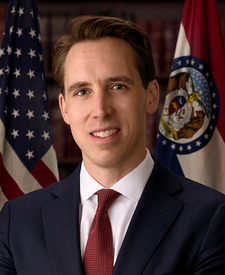
IntroducedMrs. Gillibrand (for herself and Mr. Hawley) introduced the following …
Stakeholder Effects
cui bono?How this legislation distributes effects. Mention counts reflect frequency, not effect magnitude.
Congressional ethics offices, Department of Justice, Executive branch covered individuals
Positive-direction: Treasury (receives disgorgement and fines), Treasury (receives fines), Treasury Department (receives disgorgement)
Negative-direction: Congressional ethics offices, Department of Justice, Executive branch covered individuals, Executive branch violators of trading ban, Federal officials failing to file STOCK Act reports, Federal officials receiving government payments, Members of Congress, Members of Congress who violate trading ban, Office of Government Ethics, Officials who fail to file transaction reports, President and Vice President, Senate and House administrative offices, Senior Executive Service officials, Senior military officers (O-7 and above)
Congressional spouses and dependent children, General public and watchdog organizations, Spouses and dependent children of covered officials
Positive-direction: General public and watchdog organizations
Negative-direction: Congressional spouses and dependent children, Spouses and dependent children of covered officials
Businesses owned by federal officials, Corporations (lose congressional board members), Corporations with Members of Congress on boards
Bill Structure & Actor Mappings
Who is "The Secretary" in each section?
- "the_director"
- → Director of the Office of Government Ethics
- "the_special_counsel"
- → Special Counsel of the United States
- "the_attorney_general"
- → Attorney General
- "supervising_ethics_office"
- → Supervising ethics office (Senate Ethics Committee, House Ethics Committee, or Office of Government Ethics as applicable)
Key Definitions
Terms defined in this bill
Any investment in a security, security future, or commodity, or any economic interest acquired through synthetic means such as derivatives - excludes diversified mutual funds, diversified ETFs, Treasury securities, and primary occupation compensation
The President, Vice President, or their spouse or dependent child
Senior Executive Service officers, military O-7 and above, equivalent positions as determined by Special Counsel, and their spouses and dependent children
A Member of Congress or a spouse or dependent child of a Member of Congress
We use a combination of our own taxonomy and classification in addition to large language models to assess meaning and potential beneficiaries. High confidence means strong textual evidence. Always verify with the original bill text.
Learn more about our methodology