Promotion and Expansion of Private Employee Ownership Act of 2025
Analysis under review: This bill has generated analysis that may be too generic or incomplete. Clause-level evidence remains available below.
Summary
This bill promotes employee ownership of S corporations through Employee Stock Ownership Plans (ESOPs). It makes permanent the tax deferral for selling employer stock to an S corporation ESOP (which was set to expire in 2027). It directs the Treasury Department to create an office that helps companies set up S corporation ESOPs, and ensures that small businesses do not lose their small-business status simply because an ESOP acquires a majority stake. The bill also creates an Advocate for Employee Ownership within the Department of Labor to serve as a liaison, provide education, and recommend policy changes to expand employee ownership.
Evidence Chain:
This summary is generated from the full bill text using AI analysis. Expand "Detailed Analysis" below for identified beneficiaries/burden bearers.
At a Glance
What This Bill Does
Expand and promote employee stock ownership plans (ESOPs) for S corporations by extending tax deferral provisions, establishing government support offices, preserving small business status for ESOP-owned firms, and creating an Advocate for Employee Ownership within the Department of Labor.
Who Benefits
- S corporation owners selling to ESOPs (tax deferral)
- Employees of S corporations (retirement savings via ESOP)
- ESOP-owned small businesses (preserved SBA eligibility)
Who Bears Costs
- Federal revenue (foregone tax from deferral expansion)
- Treasury and Labor departments (new administrative offices)
Key Policy Areas
{'domain': 'Tax Policy', 'evidence': ['3']}, {'domain': 'Small Business', 'evidence': ['5']}, {'domain': 'Labor', 'evidence': ['6']}, {'domain': 'Retirement Security', 'evidence': ['2', '3']}
Primary Purpose
Expand and promote employee stock ownership plans (ESOPs) for S corporations by extending tax deferral provisions, establishing government support offices, preserving small business status for ESOP-owned firms, and creating an Advocate for Employee Ownership within the Department of Labor.
Policy Domains
Legislative Strategy
"Remove regulatory and tax barriers to encourage private-sector adoption of ESOPs, particularly for S corporations, to broaden employee retirement savings and ownership stakes."
Sponsors



Legislative Progress
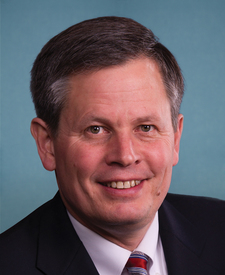
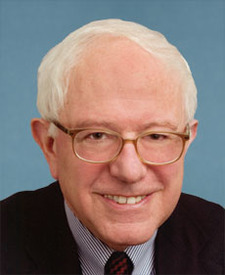
In CommitteeMr. Daines (for himself, Ms. Hassan, Mrs. Blackburn, Ms. Smith, …
Read twice and referred to the Committee on Finance.
Introduced in Senate
Stakeholder Effects
cui bono?How this legislation distributes effects. Mention counts reflect frequency, not effect magnitude.
Department of Labor, Department of the Treasury, Federal tax revenue
ESOP-owned small businesses, S corporation owners selling stock to ESOPs, S corporations considering ESOPs
ESOP plan sponsors and participants, S corporation ESOP employees
Bill Structure & Actor Mappings
Who is "The Secretary" in each section?
- "the_secretary"
- → Secretary of the Treasury
- "the_secretary"
- → Secretary of Labor
Note: The Secretary refers to the Secretary of the Treasury in Section 4 and the Secretary of Labor in Section 6
Key Definitions
Terms defined in this bill
Employee stock ownership plan as defined in section 4975(e)(7) of the Internal Revenue Code of 1986
A business concern that was a small business concern eligible for SBA programs before the date on which more than 49% was acquired by an ESOP
We use a combination of our own taxonomy and classification in addition to large language models to assess meaning and potential beneficiaries. High confidence means strong textual evidence. Always verify with the original bill text.
Learn more about our methodology