Domestic Terrorism Prevention Act of 2025
Summary
What This Bill Does
The bill authorizes dedicated domestic terrorism offices in DHS (Domestic Terrorism Unit), DOJ (Domestic Terrorism Office), and FBI (Domestic Terrorism Section), with 10-year sunset, mandatory staffing, civil rights compliance, requires DHS, DOJ, and FBI to review and enhance anti-terrorism training for federal, state, local, and tribal law enforcement, focusing on the most significant threats, with semiannual reports to Congress including, and establishes an interagency task force within 180 days to analyze and combat White supremacist and neo-Nazi infiltration of the uniformed services and federal law enforcement, with a joint report to Congress within 1 year. It relies on compliance mandates, reporting requirements, exemptions, and appropriations. The main policy areas are Criminal Justice, Defense, and Immigration.
Who Benefits and How
Individuals exercising First Amendment rights could face reduced risk, DOJ, FBI, DHS, and DOD could gain revenue opportunities, and Communities affected by hate crimes with domestic terrorism nexus could face reduced risk.
Who Bears the Burden and How
Federal Bureau of Investigation would take on compliance duties, Department of Justice would take on compliance duties, and Department of Homeland Security would take on compliance duties.
Key Provisions
- Authorizes dedicated domestic terrorism offices in DHS (Domestic Terrorism Unit), DOJ (Domestic Terrorism Office), and FBI (Domestic Terrorism Section), with 10-year sunset, mandatory staffing, civil rights compliance...
- Requires DHS, DOJ, and FBI to review and enhance anti-terrorism training for federal, state, local, and tribal law enforcement, focusing on the most significant threats, with semiannual reports to Congress including...
- Establishes an interagency task force within 180 days to analyze and combat White supremacist and neo-Nazi infiltration of the uniformed services and federal law enforcement, with a joint report to Congress within 1 year.
- Requires allows Community Relations Service to support communities where DOJ has brought hate crime charges with a domestic terrorism nexus, and requires a dedicated FBI hate crimes liaison or special agent in each...
- Prohibits any construction of the Act as authorizing infringement of First Amendment rights.
Evidence Chain:
This summary is generated from the full bill text using AI analysis. Expand "Detailed Analysis" below for identified beneficiaries/burden bearers with clause-level evidence links.
At a Glance
What This Bill Does
The bill authorizes dedicated domestic terrorism offices in DHS (Domestic Terrorism Unit), DOJ (Domestic Terrorism Office), and FBI (Domestic Terrorism Section), with 10-year sunset, mandatory staffing, civil rights compliance, requires DHS, DOJ, and FBI to review and enhance anti-terrorism training for federal, state, local, and tribal law enforcement, focusing on the most significant threats, with semiannual reports to Congress including, and establishes an interagency task force within 180 days to analyze and combat White supremacist and neo-Nazi infiltration of the uniformed services and federal law enforcement, with a joint report to Congress within 1 year.
Key Policy Areas
Criminal Justice, Defense, Immigration
Primary Purpose
The bill authorizes dedicated domestic terrorism offices in DHS (Domestic Terrorism Unit), DOJ (Domestic Terrorism Office), and FBI (Domestic Terrorism Section), with 10-year sunset, mandatory staffing, civil rights compliance, requires DHS, DOJ, and FBI to review and enhance anti-terrorism training for federal, state, local, and tribal law enforcement, focusing on the most significant threats, with semiannual reports to Congress including, and establishes an interagency task force within 180 days to analyze and combat White supremacist and neo-Nazi infiltration of the uniformed services and federal law enforcement, with a joint report to Congress within 1 year.
Policy Domains
Domestic Terrorism Prevention Act of 2025
Identified Gains
- Individuals exercising First Amendment rights
- DOJ, FBI, DHS, and DOD
- Communities affected by hate crimes with domestic terrorism nexus
- Communities targeted by domestic terrorism
Identified Costs
- Federal Bureau of Investigation
- Department of Justice
- Department of Homeland Security
- Department of Defense
- FBI field offices
Legislative Progress
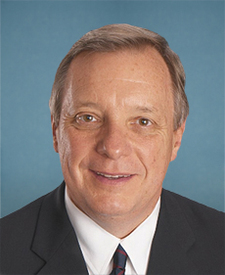
In CommitteeMr. Durbin introduced the following bill; which was read twice …
Read twice and referred to the Committee on the Judiciary. …
Introduced in Senate
Stakeholder Effects
cui bono?How this legislation distributes effects. Mention counts reflect frequency, not effect magnitude.
DHS, DOJ, and FBI training programs, DOJ, FBI, DHS, and DOD, Department of Defense
Positive-direction: DOJ, FBI, DHS, and DOD
Negative-direction: DHS, DOJ, and FBI training programs, Department of Defense, Department of Homeland Security, Department of Justice, FBI field offices, Federal Bureau of Investigation
Communities affected by hate crimes with domestic terrorism nexus, Communities targeted by domestic terrorism, Individuals exercising First Amendment rights
Federal law enforcement agencies, Federal, state, local, and tribal law enforcement agencies
Bill Structure & Actor Mappings
Who is "The Secretary" in each section?
- "director"
- → Director of the Federal Bureau of Investigation
- "secretary"
- → Secretary of Homeland Security
- "attorney_general"
- → Attorney General
- "secretary_of_defense"
- → Secretary of Defense
Key Definitions
Terms defined in this bill
We use a combination of our own taxonomy and classification in addition to large language models to assess meaning and potential beneficiaries. High confidence means strong textual evidence. Always verify with the original bill text.
Learn more about our methodology