Partnership for Indo-Pacific Industrial Resilience Authorization Act
Analysis under review: This bill has generated analysis that may be too generic or incomplete. Clause-level evidence remains available below.
Summary
What This Bill Does
The bill requires the Secretary of Defense to establish a security cooperation initiative (Partnership for Indo-Pacific Industrial Resilience) to strengthen defense industrial base cooperation with allied and partner countries. It relies on compliance mandates, appropriations, and reporting requirements. The main policy areas are Defense, Technology, Transportation, and Education.
Who Benefits and How
US defense contractors and manufacturers participating in Indo-Pacific partnerships could gain revenue opportunities, Defense industrial base companies in Australia, Japan, South Korea, India, Philippines, and New Zealand could gain revenue opportunities, and US technology and R&D companies in defense sector could gain revenue opportunities.
Who Bears the Burden and How
Department of Defense procurement and international cooperation offices would take on compliance duties and US taxpayers could face higher costs.
Key Provisions
- Requires the Secretary of Defense to establish a security cooperation initiative (Partnership for Indo-Pacific Industrial Resilience) to strengthen defense industrial base cooperation with allied and partner countries...
Evidence Chain:
This summary is generated from the full bill text using AI analysis. Expand "Detailed Analysis" below for identified beneficiaries/burden bearers with clause-level evidence links.
At a Glance
What This Bill Does
The bill requires the Secretary of Defense to establish a security cooperation initiative (Partnership for Indo-Pacific Industrial Resilience) to strengthen defense industrial base cooperation with allied and partner countries.
Key Policy Areas
Defense, Technology, Transportation, Education
Primary Purpose
The bill requires the Secretary of Defense to establish a security cooperation initiative (Partnership for Indo-Pacific Industrial Resilience) to strengthen defense industrial base cooperation with allied and partner countries.
Policy Domains
Section 1 - Short Title
Identified Gains
- US defense contractors and manufacturers participating in Indo-Pacific partnerships
- Defense industrial base companies in Australia, Japan, South Korea, India, Philippines, and New Zealand
- US technology and R&D companies in defense sector
Identified Costs
- Department of Defense procurement and international cooperation offices
- US taxpayers
Sponsors
Legislative Progress
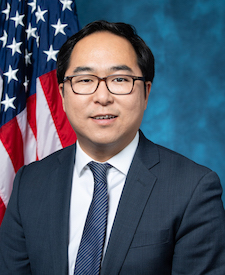
In CommitteeMr. Kim introduced the following bill; which was read twice …
Read twice and referred to the Committee on Foreign Relations.
Introduced in Senate
Stakeholder Effects
cui bono?How this legislation distributes effects. Mention counts reflect frequency, not effect magnitude.
Defense industrial base companies in Australia, Japan, South Korea, India, Philippines, and New Zealand, US defense contractors and manufacturers participating in Indo-Pacific partnerships
Department of Defense procurement and international cooperation offices
Bill Structure & Actor Mappings
Who is "The Secretary" in each section?
- "the_president"
- → President of the United States
- "the_secretary"
- → Secretary of Defense
- "senior_official"
- → Senior civilian official of Department of Defense at Assistant Secretary level or above
- "the_secretary_of_state"
- → Secretary of State
Note: No scope conflicts identified - "The Secretary" consistently refers to Secretary of Defense throughout the bill
Key Definitions
Terms defined in this bill
The security cooperation initiative established to strengthen cooperation among the defense industrial bases of the United States and allied and partner countries in the Indo-Pacific region
As defined in section 101 of title 10, United States Code
Allies and partners of the United States to be determined through a process, explicitly including Australia, Japan, Republic of Korea, India, the Philippines, and New Zealand
We use a combination of our own taxonomy and classification in addition to large language models to assess meaning and potential beneficiaries. High confidence means strong textual evidence. Always verify with the original bill text.
Learn more about our methodology