To extend the period for filing claims under the Radiation Exposure Compensation Act and to provide for compensation under such Act for claims relating to Manhattan Project waste, and to improve compensation for workers involved in uranium mining.
Analysis under review: This bill has generated analysis that may be too generic or incomplete. Clause-level evidence remains available below.
Summary
What This Bill Does
This bill reauthorizes and dramatically expands the Radiation Exposure Compensation Act (RECA), which provides federal payments to individuals who developed cancer or other diseases after exposure to radiation from U.S. nuclear weapons activities. The bill has two titles:
Title I (Radiation Exposure Compensation Expansion Act) creates an entirely new category of claimants -- residents of communities near Manhattan Project waste sites in Missouri, Tennessee, Alaska, and Kentucky who lived in affected ZIP codes for at least 2 years after 1949 and developed specified cancers. Living claimants receive at least $50,000 plus documented medical expenses; surviving spouses or children of deceased claimants receive $25,000. Title I also directs the Secretary of Energy to award a cooperative agreement to support environmental monitoring at the Amchitka, Alaska nuclear test site, incorporating Indigenous knowledge.
Title II (Radiation Exposure Compensation Act Amendments of 2025) extends the compensation trust fund for 6 years, significantly expands the geographic and temporal scope of atmospheric testing claims (adding New Mexico, Guam, and extending dates to November 1962), increases compensation to $100,000, expands uranium mining claims to cover workers through 1990 (up from 1971) and adds core drillers and workers with combined work histories, adds renal cancer as a covered disease, allows affidavits for employment history and physical presence documentation (with special provisions for Indian tribes), extends the claims filing period from 2 to 5 years, allows previously denied claimants to resubmit up to three times, allows previously compensated claimants to seek increased benefits, creates a $3M/year grant program for epidemiological research on uranium mining health effects, amends the Energy Employees Occupational Illness Compensation Program to cover uranium miners through 1990, and mandates a GAO study on unmet medical benefits.
Who Benefits and How
- Downwinder communities near nuclear test sites gain access to $100,000 compensation (up from $50,000-$75,000), with an expanded geographic area (adding Idaho, Montana, Colorado, Guam, New Mexico) and extended time periods
- Manhattan Project waste site communities in Missouri, Tennessee, Alaska, and Kentucky gain an entirely new compensation pathway ($50,000+ for living claimants, $25,000 for survivors)
- Uranium miners, millers, core drillers, and ore transporters benefit from extended eligibility through 1990, coverage of combined work histories, and recognition of renal cancer as a compensable disease
- Previously denied claimants can resubmit claims up to three times
- Previously compensated claimants can seek additional benefits under the expanded compensation amounts
- Indian tribes receive accommodations for their documentation customs, including acceptance of tribal leader letters and grazing permits as proof
- Amchitka, Alaska communities and local Indian tribes benefit from environmental monitoring and workforce development at the nuclear test site
- Health researchers gain access to $9M in grant funding over 3 years for uranium mining epidemiology
Who Bears the Burden and How
- The federal government (Department of Justice) bears the primary cost burden of significantly expanded compensation obligations, including new categories of claimants, higher payment amounts, and reopened claims
- The Attorney General faces increased administrative burden from processing new claim categories, resubmitted claims, supplemental payment requests, and revised regulations within 180 days
- The Department of Energy must fund and administer the Amchitka cooperative agreement through the Office of Legacy Management
- The GAO must conduct a study on unmet medical benefits within 1 year
Key Provisions
- Creates new Section 5A of RECA for Manhattan Project waste site claims
- Extends RECA trust fund for 6 years
- Expands 'affected area' for atmospheric testing to include Idaho, Montana, Colorado, New Mexico, and Guam
- Extends atmospheric testing period to November 6, 1962
- Increases downwinder compensation to $100,000
- Extends uranium mining eligibility through December 31, 1990
- Adds core drillers and combined work history provisions
- Adds renal cancer as compensable disease for uranium workers
- Extends claims filing period from 2 to 5 years
- Allows 3 claim resubmissions for denied claimants
- Requires Attorney General to accept affidavits for employment/presence proof
- Authorizes $3M/year for epidemiological research grants
- Links uranium miners to Energy Employees Occupational Illness Compensation
- Mandates GAO study on unmet medical benefits for radiation-exposed individuals
Evidence Chain:
This summary is generated from the full bill text using AI analysis. Expand "Detailed Analysis" below for identified beneficiaries/burden bearers.
At a Glance
What This Bill Does
Reauthorizes and dramatically expands the Radiation Exposure Compensation Act by extending the trust fund for 6 years, creating new claims for Manhattan Project waste site communities, expanding geographic and temporal eligibility for atmospheric testing and uranium mining claims, increasing compensation amounts, easing evidentiary requirements, and establishing epidemiological research and environmental monitoring programs.
Key Policy Areas
Healthcare, Nuclear Energy & Radiation, Government Operations, Environment, Indigenous Affairs
Primary Purpose
Reauthorizes and dramatically expands the Radiation Exposure Compensation Act by extending the trust fund for 6 years, creating new claims for Manhattan Project waste site communities, expanding geographic and temporal eligibility for atmospheric testing and uranium mining claims, increasing compensation amounts, easing evidentiary requirements, and establishing epidemiological research and environmental monitoring programs.
Policy Domains
Title I: Radiation Exposure Compensation Expansion Act
Identified Gains
Contextual inference, no direct clause citation- Residents near Manhattan Project waste sites who developed specified cancers
- Surviving spouses and children of deceased claimants
- Alaska Native communities near Amchitka nuclear test site
Contextual inference, no direct clause citation
Identified Costs
Contextual inference, no direct clause citation- Federal government (Radiation Exposure Compensation Trust Fund)
- Attorney General (expanded claims administration)
Contextual inference, no direct clause citation
Title II: Radiation Exposure Compensation Act Amendments of 2025
Identified Gains
Contextual inference, no direct clause citation- Downwinder communities in expanded geographic areas (adding ID, MT, CO, Guam, NM)
- Uranium miners, millers, core drillers, and ore transporters (through 1990)
- Previously denied or compensated claimants seeking resubmission or increases
- Indian tribes (documentation accommodations)
- Health researchers (epidemiology grants)
Contextual inference, no direct clause citation
Identified Costs
Contextual inference, no direct clause citation- Federal treasury / Radiation Exposure Compensation Trust Fund
- Attorney General (new regulations within 180 days, expanded claims processing)
- Department of Energy (Amchitka cooperative agreement, EEOICPA expansion)
Contextual inference, no direct clause citation
Sponsors
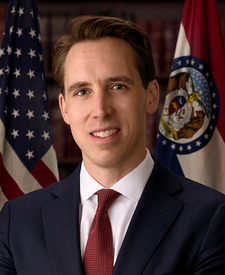
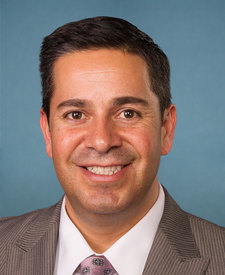
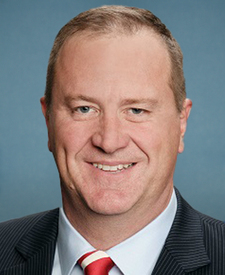

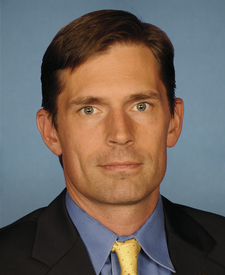
Legislative Progress
IntroducedMr. Hawley (for himself, Mr. Luján, Mr. Schmitt, Mr. Heinrich, …
Stakeholder Effects
cui bono?How this legislation distributes effects. Mention counts reflect frequency, not effect magnitude.
All RECA-eligible claimants, Atmospheric nuclear test radiation exposure victims, Family members of uranium miners and millers
Attorney General, Department of Energy / Office of Legacy Management, Department of Justice / Attorney General
Core drillers in uranium and vanadium mining, Uranium miners employed between 1971 and 1990, Workers with combined mining/milling/drilling/transport histories
Alaska Native tribes near Amchitka nuclear test site, Indian tribe members seeking RECA compensation
Alaska-based universities and nonprofits, Universities and nonprofits conducting environmental health research
Bill Structure & Actor Mappings
Who is "The Secretary" in each section?
- "the_attorney_general"
- → Attorney General of the United States
- "the_secretary_of_energy"
- → Secretary of Energy, acting through the Director of the Office of Legacy Management
- "the_president"
- → President of the United States (Special Exposure Cohort designation)
- "the_secretary"
- → Secretary of Health and Human Services (for grant program)
- "the_attorney_general"
- → Attorney General of the United States
- "the_comptroller_general"
- → Comptroller General of the United States
Key Definitions
Terms defined in this bill
For Manhattan Project waste claims, affected area means specific ZIP codes in Missouri (21 ZIP codes around St. Louis), Tennessee (14 ZIP codes around Oak Ridge), Alaska (2 ZIP codes around Amchitka), and Kentucky (3 ZIP codes around Paducah). Physical presence requires 2+ years after January 1, 1949.
For atmospheric testing claims, affected area is expanded to mean Arizona, Colorado, Idaho, Montana, Nevada, New Mexico, Utah, and Guam (with New Mexico only for certain pre-1944 claims and Guam only for certain 1962 claims).
Any individual employed to obtain cylindrical rock samples of uranium or vanadium by means of a borehole drilling machine for the purpose of mining uranium or vanadium. A new worker category added to RECA uranium mining eligibility.
For Manhattan Project waste claims, specified disease includes leukemia (excluding CLL, onset 2+ years after exposure), multiple myeloma, lymphoma (excluding Hodgkin's), and primary cancer of 18 specified organs including thyroid, breast, lung, colon, and others.
We use a combination of our own taxonomy and classification in addition to large language models to assess meaning and potential beneficiaries. High confidence means strong textual evidence. Always verify with the original bill text.
Learn more about our methodology