To amend the Small Business Investment Act of 1958 to establish the Scale-Up Manufacturing Investment Company (SUMIC) Program.
Analysis under review: This bill has generated analysis that may be too generic or incomplete. Clause-level evidence remains available below.
Summary
What This Bill Does
This bill creates a new federal program called the Scale-Up Manufacturing Investment Company (SUMIC) Program to help small American manufacturers grow. The program provides government-backed matching funds to private investment funds that invest in small manufacturers trying to scale up from prototypes to full commercial production.
Who Benefits and How
Small and emerging manufacturers receive access to capital they currently struggle to obtain, with investment funds able to provide up to 50% of project costs from government-backed leverage. Private investment fund managers benefit from up to $500 million in government leverage per fund (1:1 match on private capital raised), making manufacturing investments more attractive. Banks can invest up to 5% of their capital in these funds. Small businesses owned by socially and economically disadvantaged individuals, women, veterans, and people with disabilities receive priority outreach for investments.
Who Bears the Burden and How
The federal government (and by extension taxpayers) bears the risk of the loan guarantees, with full faith and credit backing debentures and preferred securities. Investment funds must pay leverage fees of 3-5.5% and examination costs. They face regulatory compliance requirements including semi-annual reporting, valuations, and audited financial statements. The Small Business Administration must administer the program, conduct examinations, and manage leverage of up to $1 billion annually.
Key Provisions
- Private investment funds can receive up to $1 in government leverage for every $1 of private capital raised, with a minimum fund size of $250 million and maximum leverage of $500 million per fund
- Up to $1 billion total in leverage can be issued annually across all participating funds
- At least 70% of leverage must be issued as debentures and no more than 30% as preferred securities
- Not more than 50% of any single investment in a manufacturer can come from government leverage
Evidence Chain:
This summary is generated from the full bill text using AI analysis. Expand "Detailed Analysis" below for identified beneficiaries/burden bearers with clause-level evidence links.
At a Glance
What This Bill Does
Establishes the Scale-Up Manufacturing Investment Company (SUMIC) Program to provide government-backed leverage to private investment funds for investing in small and emerging manufacturers scaling up to commercial production in the United States.
Key Policy Areas
Manufacturing, Small Business, Finance/Investment, Economic Development
Primary Purpose
Establishes the Scale-Up Manufacturing Investment Company (SUMIC) Program to provide government-backed leverage to private investment funds for investing in small and emerging manufacturers scaling up to commercial production in the United States.
Policy Domains
Section 2 - Congressional Findings
Identified Gains
- Small and emerging manufacturers
- Technology-intensive manufacturing startups
Section 3 - Scale-Up Manufacturing Investment Program (Part G)
Identified Gains
- Small and emerging manufacturers
- Private equity/investment fund managers
- Banks investing in funds
- Disadvantaged small business owners
Identified Costs
- Federal government/taxpayers
- SBA Administration
- Participating investment funds (compliance)
Legislative Progress
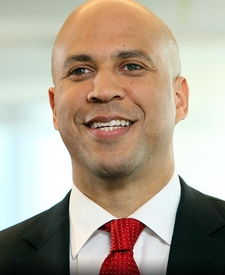
IntroducedMr. Booker introduced the following bill; which was read twice …
Stakeholder Effects
cui bono?How this legislation distributes effects. Mention counts reflect frequency, not effect magnitude.
National banks and Federal Reserve member banks, Participating investment fund managers and officials, Participating investment fund owners, officers, directors, and employees
Participating investment funds faces effects in multiple directions
Positive-direction: National banks and Federal Reserve member banks, Private equity firms with manufacturing investment experience, Private investment fund managers, Private investment fund managers meeting $250M minimum, Private investment funds
Negative-direction: Participating investment fund managers and officials, Participating investment fund owners, officers, directors, and employees, Private equity and investment fund managers seeking SUMIC participation
Small and emerging manufacturers, Small and emerging manufacturers in the United States, Veteran-owned small manufacturers
Federal Financing Bank, Small Business Administration
Positive-direction: Federal Financing Bank
Negative-direction: Small Business Administration
Certified public accountants, Private sector examination contractors
Bill Structure & Actor Mappings
Who is "The Secretary" in each section?
- "the_administrator"
- → Administrator of the Small Business Administration
- "the_associate_administrator"
- → Associate Administrator described in section 201 of the Small Business Investment Act
Key Definitions
Terms defined in this bill
The Associate Administrator described in section 201 of the Small Business Investment Act
The Scale-Up Manufacturing Investment Company Credit Council that may be established under section 399K
A privately managed investment fund licensed under section 399C to operate under the program
Has the meaning given the term in section 103(9) of the Small Business Investment Act
The scale-up manufacturing investment company program established under section 399B
An investment in a small and emerging manufacturer for the purposes of building first commercial production facilities, novel manufacturing capabilities, or the introduction into production of emerging manufacturing technologies
Any advanced manufacturer that does not exceed the size standard established by the Administrator for the applicable NAICS code under section 3 of the Small Business Act
Has the meaning given the term in section 8(d)(3)(C) of the Small Business Act (15 U.S.C. 637(d)(3)(C))
We use a combination of our own taxonomy and classification in addition to large language models to assess meaning and potential beneficiaries. High confidence means strong textual evidence. Always verify with the original bill text.
Learn more about our methodology