To amend the Higher Education Act of 1965 to provide for teacher and school leader quality enhancement and to enhance institutional aid.
Analysis under review: This bill has generated analysis that may be too generic or incomplete. Clause-level evidence remains available below.
Summary
What This Bill Does
This bill completely rewrites Title II of the Higher Education Act to reform how teachers and school leaders are trained. It creates competitive grant programs for partnerships between universities, school districts, and early childhood programs to prepare educators, with emphasis on teacher residency models and addressing shortage areas like STEM, special education, and English learner instruction.
Who Benefits and How
Colleges and universities with teacher preparation programs benefit through new federal grant funding and technical assistance. High-need school districts and early childhood programs benefit by receiving better-prepared teachers through residency partnerships. Prospective teachers and school leaders benefit from improved preparation programs with clinical residency experiences. Minority-serving institutions (HBCUs, HSIs, Tribal Colleges) benefit through dedicated Hawkins Centers of Excellence grants.
Who Bears the Burden and How
Teacher preparation programs face new accountability requirements including annual reporting on outcomes, pass rates, and graduate effectiveness. Low-performing programs risk losing state approval and becoming ineligible for federal funding. States must conduct assessments to identify low-performing programs and provide public lists. Institutions must match federal grant funds 100% with non-federal resources.
Key Provisions
- Creates competitive partnership grants for teacher/school leader preparation with 5-year terms
- Establishes Hawkins Centers of Excellence at minority-serving institutions
- Requires annual accountability reporting on teacher preparation program outcomes
- Mandates states identify and provide technical assistance to low-performing programs
- Prioritizes teacher residency models and programs addressing shortage areas
Evidence Chain:
This summary is generated from the full bill text using AI analysis. Expand "Detailed Analysis" below for identified beneficiaries/burden bearers.
At a Glance
What This Bill Does
Amends Title II of the Higher Education Act to reform teacher and school leader preparation programs, establish new grant programs for teacher residencies, create accountability measures for preparation programs, and address teacher shortages in high-need areas.
Key Policy Areas
Education, Higher Education, Teacher Preparation, Workforce Development
Primary Purpose
Amends Title II of the Higher Education Act to reform teacher and school leader preparation programs, establish new grant programs for teacher residencies, create accountability measures for preparation programs, and address teacher shortages in high-need areas.
Policy Domains
Title II - Teacher and School Leader Quality Enhancement
Identified Gains
Contextual inference, no direct clause citation- Higher education institutions with teacher preparation programs
- Minority-serving institutions
- High-need school districts
- Prospective teachers and school leaders
- Early childhood education programs
Contextual inference, no direct clause citation
Identified Costs
Contextual inference, no direct clause citation- Low-performing teacher preparation programs
- State educational agencies
- Teacher preparation programs (accountability reporting)
Contextual inference, no direct clause citation
Sponsors
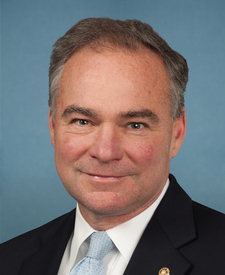

Legislative Progress
IntroducedMr. Kaine (for himself and Ms. Collins) introduced the following …
Stakeholder Effects
cui bono?How this legislation distributes effects. Mention counts reflect frequency, not effect magnitude.
Colleges and universities with teacher preparation programs, Eligible partnerships receiving grants, HBCUs with teacher preparation programs
Positive-direction: HBCUs with teacher preparation programs, High-need school districts, Hispanic-Serving Institutions, Minority-serving institutions, Schools in teacher shortage areas, Teacher preparation programs, Tribal Colleges and Alaska/Native Hawaiian-serving institutions, Tribal Colleges and Universities, Universities with teacher preparation programs
Negative-direction: Colleges and universities with teacher preparation programs, Eligible partnerships receiving grants, Low-performing teacher preparation programs, Teacher preparation partnerships receiving grants, Teacher preparation programs at higher education institutions, Teacher preparation programs at universities
Prospective teachers and education students, Prospective teachers and school leaders, Rural and urban partnerships
Positive-direction: Prospective teachers and education students, Prospective teachers and school leaders, Rural and urban partnerships, Teacher candidates from underrepresented groups
Negative-direction: Students enrolled in terminated programs
Bill Structure & Actor Mappings
Who is "The Secretary" in each section?
- "the_secretary"
- → Secretary of Education
Key Definitions
Terms defined in this bill
A partnership between a community college and 4-year institution where teacher candidates begin preparation at the community college and transfer credits to complete preparation at the 4-year institution
An entity including a State educational agency, high-need local educational agency or school, and a partner institution of higher education
A local educational agency serving a high percentage of students from low-income families or that has a shortage of effective teachers
The ability to effectively convey and explain academic content, manage classrooms, design curriculum, assess student learning, and collaborate with families and colleagues
An educator with specialized credentials in early childhood education and demonstrated knowledge of content and pedagogy for young children
We use a combination of our own taxonomy and classification in addition to large language models to assess meaning and potential beneficiaries. High confidence means strong textual evidence. Always verify with the original bill text.
Learn more about our methodology