Commerce, Justice, Science, and Related Agencies Appropriations Act, 2026
Summary
What This Bill Does
The Commerce, Justice, Science, and Related Agencies Appropriations Act, 2026 is an annual spending bill with detailed operating conditions. It funds the Commerce Department, DOJ, NASA, NSF, and related agencies, then controls how those agencies may transfer money, post grant notices, pay salaries, handle information technology projects, run NOAA grants and National Weather Service staffing, use unobligated balances, promote exports, and report spending. DOJ provisions cap reception spending, restrict federal abortion funding for prisoners, limit prison cable and audiovisual expenses, require notices for major IT projects, control U.S. Trustee fees, permit OJP fiscal-hardship waivers, constrain certain gun-control or school-board-protest activity, require preservation and reporting around Epstein-related records, and impose public posting rules for grant opportunities. Government-wide CJS provisions bar propaganda, require Made in America labels and Buy American compliance, cap travel and conferences, require inspector general reports and contract certifications above $5 million, limit torture support and improper national security letters, deem intelligence spending authorized for the year, restrict NASA and OSTP bilateral activity with China or Russia in specified ways, block pornography on agency networks, control award fees, address hemp and marijuana enforcement, preserve shotgun import policy and Arms Trade Treaty limits, continue Guantanamo transfer and facility restrictions, allocate CHIPS Defense Fund money for Commerce, and preserve negotiated indirect cost rates.
Who Benefits and How
Commerce Department bureaus benefit from appropriations, transfer authority, NOAA grant administration, National Weather Service staffing provisions, CHIPS allocation authority, and continued program support. DOJ benefits from funded salaries, U.S. Attorney dual-responsibility support, U.S. Trustee fee rules, OJP waiver authority, IT notification rules, and crime-victim account controls. NASA benefits from annual funding and program rules, although its foreign collaboration and reporting obligations are constrained. National Science Foundation benefits from appropriations and reporting rules that keep its science programs funded while visible to Congress. NOAA grant recipients and coastal-zone partners benefit from grant, cooperative-agreement, land, service, equipment, personnel, and cost-share-waiver authority. National Weather Service staff benefit from alternative personnel-system and staffing-level provisions that protect operational capacity. Crime Victims Fund recipients benefit from controlled use of the fund and required reporting on balances and obligations. Religious institutions and school board parents benefit from restrictions on using DOJ funds for certain investigations or prosecutions tied to religion or school board protest activity.
Who Bears the Burden and How
Commerce Department budget offices must comply with transfer caps, unobligated-balance rescissions, CHIPS allocation limits, grant postings, and recurring reports. DOJ must follow abortion-funding, prisoner-transport, IT-project, U.S. Trustee, grant, school-board, religious-institution, gun, and Epstein-records restrictions. NASA and science policy offices must navigate China, Russia, signage, reporting, network, and award-fee limitations. NOAA and National Weather Service managers must administer staffing, grant, cost-share, and operating conditions set in the bill. Federal contractors and grant recipients must meet certifications, Buy American labels, indirect-cost-rate rules, pornography-network blocking, and reporting requirements. Federal taxpayers bear the appropriated costs but benefit from rescissions, travel limits, conference caps, and oversight controls intended to reduce waste.
Key Provisions
- Appropriates fiscal year 2026 money for Commerce Department bureaus, DOJ, NASA, NSF, and related agencies.
- Limits transfers, reprogramming, reception spending, IT projects, conference travel, award fees, contract certifications, national security letters, and propaganda.
- Requires NOAA grant and cost-share administration, National Weather Service staffing protections, NTIS reporting, and Commerce unobligated-balance rescissions.
- Restricts DOJ spending for prisoner abortions, certain school-board protest matters, certain religious-institution investigations, gun-control advocacy, prison media, and selected grant practices.
- Requires preservation and reporting related to Epstein records and evidence.
- Provides Crime Victims Fund controls, U.S. Trustee fee treatment, OJP fiscal-hardship waivers, and public grant-notice requirements.
- Restricts NASA, OSTP, and related activity involving China or Russia while allocating CHIPS-related funds and preserving negotiated indirect cost rates.
Evidence Chain:
This summary is generated from the full bill text using AI analysis. Expand "Detailed Analysis" below for identified beneficiaries/burden bearers with clause-level evidence links.
At a Glance
What This Bill Does
Appropriates fiscal year 2026 funding for Commerce, Justice, NASA, NSF, and related agencies while imposing transfer limits, grant rules, DOJ spending restrictions, NOAA and National Weather Service requirements, Crime Victims Fund controls, CHIPS allocation language, China-related limits, and recurring oversight reports.
Key Policy Areas
Appropriations, Commerce, Justice, Science, Government Oversight
Primary Purpose
Appropriates fiscal year 2026 funding for Commerce, Justice, NASA, NSF, and related agencies while imposing transfer limits, grant rules, DOJ spending restrictions, NOAA and National Weather Service requirements, Crime Victims Fund controls, CHIPS allocation language, China-related limits, and recurring oversight reports.
Policy Domains
Bill provisions
Identified Gains
- Commerce Department bureaus
- DOJ
- NASA
- National Science Foundation
- NOAA grant recipients
- National Weather Service staff
- Crime Victims Fund recipients
- Religious institutions
- School board parents
Identified Costs
- Commerce Department budget offices
- DOJ
- NASA
- NOAA
- National Weather Service managers
- Federal contractors
- Grant recipients
- Federal taxpayers
- Congressional appropriations committees
Sponsors
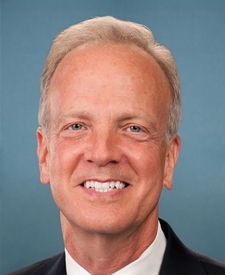
Legislative Progress
ReportedMr. Moran, from the Committee on Appropriations, reported the following …
Placed on Senate Legislative Calendar under General Orders. Calendar No. …
Committee on Appropriations. Original measure reported to Senate by Senator …
Introduced in Senate
Stakeholder Effects
cui bono?How this legislation distributes effects. Mention counts reflect frequency, not effect magnitude.
Commerce Department bureaus, Congressional appropriations committees, DOJ
Positive-direction: Commerce Department bureaus, Congressional appropriations committees
Negative-direction: DOJ, NOAA
NOAA grant recipients, National Science Foundation
Bill Structure & Actor Mappings
Who is "The Secretary" in each section?
- "secretary"
- → Secretary of Commerce
- "administrator"
- → NASA Administrator
- "attorney_general"
- → Attorney General
We use a combination of our own taxonomy and classification in addition to large language models to assess meaning and potential beneficiaries. High confidence means strong textual evidence. Always verify with the original bill text.
Learn more about our methodology