Pensions for All Act
Analysis under review: This bill has generated analysis that may be too generic or incomplete. Clause-level evidence remains available below.
Summary
This bill would require every employer in the country to either provide a retirement plan comparable to the Federal Employees Retirement System (FERS) or enroll their employees directly in FERS. Self-employed individuals face the same requirement. To help with costs, small employers with gross receipts under $25 million and self-employed individuals earning under $75,000 would receive a tax credit of up to 50% of their pension contributions. Employers who fail to comply face an excise tax of $10 per employee per day of noncompliance (adjusted for inflation after 2026). The bill also prohibits employers from reducing employee compensation to offset the new retirement benefit costs.
Evidence Chain:
This summary is generated from the full bill text using AI analysis. Expand "Detailed Analysis" below for identified beneficiaries/burden bearers.
At a Glance
What This Bill Does
Mandates that every employer provide retirement benefits comparable to the Federal Employees Retirement System (FERS), or allow employees to participate directly in FERS, with tax credits for small employers and penalties for noncompliance.
Who Benefits
- Private sector workers without retirement plans
- Self-employed individuals
- Small employers (via tax credits up to 50% of contributions)
Who Bears Costs
- All employers (mandatory contribution requirement)
- Federal government (FERS expansion costs, tax credit revenue loss)
- Office of Personnel Management (massive expansion of FERS administration)
Key Policy Areas
Labor, Tax, Retirement Security
Primary Purpose
Mandates that every employer provide retirement benefits comparable to the Federal Employees Retirement System (FERS), or allow employees to participate directly in FERS, with tax credits for small employers and penalties for noncompliance.
Policy Domains
Legislative Strategy
"Extend the federal FERS retirement system to the entire private sector workforce as a universal retirement mandate, with tax credits to offset costs for small employers and excise tax penalties to enforce compliance."
Legislative Progress
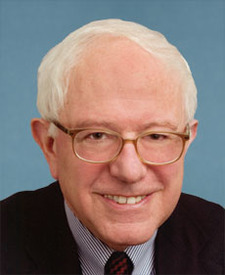
In CommitteeMr. Sanders introduced the following bill; which was read twice …
Read twice and referred to the Committee on Finance.
Introduced in Senate
Stakeholder Effects
cui bono?How this legislation distributes effects. Mention counts reflect frequency, not effect magnitude.
All employers, All private sector employers, Employers failing to provide retirement plans
FERS / Thrift Savings Plan, Federal Treasury, Federal government (tax revenue)
Self-employed individuals earning under $75K, Self-employed individuals making pension contributions, Self-employed individuals without retirement plans
Positive-direction: Self-employed individuals earning under $75K, Self-employed individuals making pension contributions, Small employers making pension contributions, Small employers with gross receipts under $25M
Negative-direction: Self-employed individuals without retirement plans
Existing employees, Non-federal employees at companies without comparable plans, Self-employed individuals without retirement plans
Bill Structure & Actor Mappings
Who is "The Secretary" in each section?
- "the_secretary"
- → Secretary of Labor
- "opm_director"
- → Director of the Office of Personnel Management
- "the_secretary"
- → Secretary of Labor
- "the_secretary"
- → Secretary of the Treasury
Note: "The Secretary" refers to the Secretary of Labor in sections 2-3, but to the Secretary of the Treasury in sections 5-6 (tax code provisions).
Key Definitions
Terms defined in this bill
A retirement program other than FERS that the Secretary of Labor determines provides benefits comparable to FERS.
As defined in section 3 of ERISA (29 U.S.C. 1002).
The Federal Employees Retirement System under chapter 84 of title 5, United States Code.
An employer not part of the Federal Government that does not have a retirement plan the Secretary of Labor determines is comparable to FERS.
A self-employed individual not enrolled in a retirement plan comparable to FERS.
We use a combination of our own taxonomy and classification in addition to large language models to assess meaning and potential beneficiaries. High confidence means strong textual evidence. Always verify with the original bill text.
Learn more about our methodology