To improve the provision of benefits and services to members of the Ready Reserve Corps of the Public Health Service, and for other purposes.
Analysis under review: This bill has generated analysis that may be too generic or incomplete. Clause-level evidence remains available below.
Summary
What This Bill Does
This bill, To improve the provision of benefits and services to members of the Ready Reserve Corps of the Public Health Service, and for other purposes., changes federal law or congressional policy affecting defense agencies, service members, and defense contractors. The main policy domain is Defense, Healthcare, Labor.
Who Benefits and How
defense agencies, service members, and defense contractors may benefit from new authority, funding, eligibility, regulatory clarity, or reduced risk created by the bill.
Who Bears the Burden and How
federal implementing agencies, defense agencies, service members, and defense contractors may take on implementation duties, reporting obligations, compliance costs, or oversight responsibilities.
Key Provisions
- Section S1: 1. Short title This Act may be cited as the Parity for Public Health Service Ready Reserve Act.
- Section id385468F097044040AEA67BDCB70C03DA: 2. Public Health Service Ready Reserve Corps (PHS RRC) Section 10141 of title 10, United States Code, is amended— in subsection (a), by striking in each armed...
- Section id899026D18DB8429EB0741C5D7B3DF089: 3. Dual compensation parity for Ready Reserve Corps of the Public Health Service Section 5534 of title 5, United States Code, is amended— by inserting , a...
- Section id8ea6518a40b04e5b8873df012440741d: 4. Clarification of entitlement to Post-9/11 Educational Assistance for service on active duty in the uniformed services Section 3301(1) of title 38, United...
- Section id8832CDB01568487E8A3C2CBE7A9546E1: 5. Extension of certain educational benefits to members of the Public Health Service Ready Reserve Corps Section 16131 of title 10, United States Code, is...
Evidence Chain:
This summary is generated from the full bill text using AI analysis. Expand "Detailed Analysis" below for identified beneficiaries/burden bearers with clause-level evidence links.
At a Glance
What This Bill Does
This bill, To improve the provision of benefits and services to members of the Ready Reserve Corps of the Public Health Service, and for other purposes., changes federal law or congressional policy affecting defense agencies, service members, and defense contractors.
Key Policy Areas
Defense, Healthcare, Labor
Primary Purpose
This bill, To improve the provision of benefits and services to members of the Ready Reserve Corps of the Public Health Service, and for other purposes., changes federal law or congressional policy affecting defense agencies, service members, and defense contractors.
Policy Domains
Whole bill
Identified Gains
- defense agencies, service members, and defense contractors
Identified Costs
- federal implementing agencies
- defense agencies, service members, and defense contractors
Sponsors

Tammy Duckworth
D-IL | Primary Sponsor
Legislative Progress
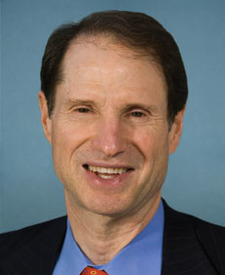
IntroducedMs. Duckworth (for herself and Mr. Wyden) introduced the following …
Impact analysis is available but no clear stakeholder effects identified. View clause-level analysis →
Bill Structure & Actor Mappings
Who is "The Secretary" in each section?
- "the_commission"
- → The commission identified in the operative section
- "secretary_of_defense"
- → Secretary of Defense
- "secretary_of_homeland_security"
- → Secretary of Homeland Security
- "secretary_of_health_and_human_services"
- → Secretary of Health and Human Services
We use a combination of our own taxonomy and classification in addition to large language models to assess meaning and potential beneficiaries. High confidence means strong textual evidence. Always verify with the original bill text.
Learn more about our methodology