To increase the quality and supply of child care and lower child care costs for families.
Analysis under review: This bill has generated analysis that may be too generic or incomplete. Clause-level evidence remains available below.
Summary
What This Bill Does
The Child Care for Working Families Act creates a comprehensive federal child care and early learning system. It establishes an entitlement to subsidized child care for children from birth through age 5, creates a universal free preschool program for 3- and 4-year-olds, and provides billions in stabilization grants to child care providers. The bill aims to make child care affordable for working families while improving quality and raising wages for child care workers.
Who Benefits and How
Working families with young children benefit the most. Families earning up to 85% of state median income pay nothing for child care; those earning up to 150% of median income pay no more than 7% of their income. This could save families thousands of dollars annually.
Child care workers and teachers receive mandated wage increases. The bill requires that child care workers be paid wages equivalent to elementary school teachers with similar credentials. Head Start staff receive .7 billion annually specifically for wage increases.
Child care centers, family child care providers, and Head Start agencies receive substantial new funding through BASE Grants ( billion/year), direct service payments at rates that cover their full costs, and expanded Head Start grants for full-day, full-year services.
Indian Tribes, Tribal organizations, and U.S. territories receive dedicated set-asides and tailored programs for child care and preschool services.
Who Bears the Burden and How
Federal taxpayers bear the primary cost. The bill appropriates tens of billions of dollars annually in mandatory spending through 2031, including unlimited appropriations for the child care entitlement program.
State governments must meet extensive compliance requirements, including developing tiered quality systems, submitting detailed plans, maintaining effort on existing spending, and providing annual reports. States must contribute matching funds after initial years of 100% federal funding.
Unlicensed child care providers may be excluded from the program after 3.5 years if they cannot meet new licensing standards, though the bill provides a pathway and funding to help providers achieve licensure.
Key Provisions
- Creates an entitlement to child care assistance for eligible children under age 6, with sliding scale copayments capped at 7% of family income
- Appropriates billion annually for BASE (Building and Sustaining Excellence) Grants to stabilize child care providers, with at least 70% required for personnel costs including wages
- Establishes universal preschool for 3- and 4-year-olds with 100% federal funding for the first 3 years
- Requires child care worker wages equivalent to elementary school teachers with similar credentials
- Mandates States implement tiered quality systems aligned with Head Start standards
- Appropriates .7 billion annually for Head Start wage increases and extends Head Start to full-day, full-year services
- Prioritizes access for underserved populations including children with disabilities, children experiencing homelessness, and children in foster care
Evidence Chain:
This summary is generated from the full bill text using AI analysis. Expand "Detailed Analysis" below for identified beneficiaries/burden bearers.
At a Glance
What This Bill Does
Establishes a comprehensive federal child care and early learning entitlement program providing subsidized care for children from birth through age 5, creates a universal preschool program, and provides stabilization funding for child care providers.
Who Benefits
- Working families with children under 6 (especially low- and middle-income families)
- Child care workers (mandated wage increases to match elementary educators)
- Child care centers and family child care providers (stabilization grants and higher payment rates)
Who Bears Costs
- Federal taxpayers (appropriations of tens of billions annually)
- State governments (matching funds required, administrative burden)
- Unlicensed child care providers (may be excluded from program)
Key Policy Areas
Child Care, Early Childhood Education, Social Welfare, Labor, Health and Human Services
Primary Purpose
Establishes a comprehensive federal child care and early learning entitlement program providing subsidized care for children from birth through age 5, creates a universal preschool program, and provides stabilization funding for child care providers.
Policy Domains
Legislative Strategy
"Create an entitlement-based federal child care system with income-based copayments, quality requirements tied to payment rates, and provider stabilization funding."
Identified Gains
- Working families with children under 6 (especially low- and middle-income families)
- Child care workers (mandated wage increases to match elementary educators)
- Child care centers and family child care providers (stabilization grants and higher payment rates)
- Children with disabilities and vulnerable populations (prioritized access)
- Head Start agencies (expansion funding)
Identified Costs
- Federal taxpayers (appropriations of tens of billions annually)
- State governments (matching funds required, administrative burden)
- Unlicensed child care providers (may be excluded from program)
- Higher-income families (7% copayment above 150% SMI)
Sponsors

Legislative Progress
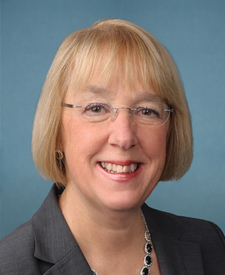
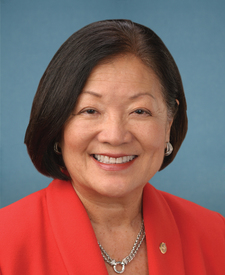
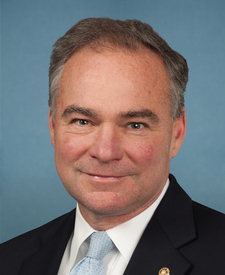
IntroducedMrs. Murray (for herself, Mr. Kaine, Ms. Hirono, and Mr. …
Stakeholder Effects
cui bono?How this legislation distributes effects. Mention counts reflect frequency, not effect magnitude.
Child care providers, Child care providers serving underserved populations, Child care workers
Child care providers faces effects in multiple directions
Local governments in non-participating States, State governments, State lead agencies
State governments faces effects in multiple directions
Positive-direction: Local governments in non-participating States
Negative-direction: State lead agencies
Families with 3-4 year old children, Low-income families with young children, Working families using Head Start
Department of Health and Human Services, Indian Tribes and Tribal organizations, U.S. territories
Department of Health and Human Services faces effects in multiple directions
Local educational agencies, Preschool teachers and staff
Bill Structure & Actor Mappings
Who is "The Secretary" in each section?
- "lead_agency"
- → State-designated agency to administer child care program
- "the_secretary"
- → Secretary of Health and Human Services
- "lead_agency"
- → State lead agency under Child Care and Development Block Grant Act
- "the_secretary"
- → Secretary of Health and Human Services
- "the_secretary"
- → Secretary of Health and Human Services
- "secretary_of_education"
- → Secretary of Education (collaborative role)
- "the_secretary"
- → Secretary of Health and Human Services
Key Definitions
Terms defined in this bill
Terms from Child Care and Development Block Grant Act apply; 'BASE Grant' means building and sustaining excellence grant.
A certificate (check or disbursement) issued by State/Tribal/territorial/local government directly to a parent for payment of child care services. Considered indirect Federal financial assistance.
An individual who is a homeless child or youth under section 725 of the McKinney-Vento Homeless Assistance Act.
Activities including employment, job search, education, health treatment, child abuse prevention, workforce training, and FMLA leave.
An individual under 6 years of age, not yet in kindergarten, residing with parents in eligible activities or identified as vulnerable.
Licensed center-based, family, or other child care provider participating in the State tiered quality system.
Federal medical assistance percentage as defined in section 1905(b) of the Social Security Act.
Care that reflects prevalence of children with disabilities and provides full participation alongside non-disabled children.
We use a combination of our own taxonomy and classification in addition to large language models to assess meaning and potential beneficiaries. High confidence means strong textual evidence. Always verify with the original bill text.
Learn more about our methodology