Healthy Moms and Babies Act
Analysis under review: This bill has generated analysis that may be too generic or incomplete. Clause-level evidence remains available below.
Summary
What This Bill Does
The bill defines key terms for the bill including CHIP, Medicaid, Secretary (HHS), State, Comptroller General, and group/individual health insurance coverage terms by reference to existing statutes, mandates State Medicaid programs to report adult health care quality measures for maternal and perinatal health, adding these to the existing behavioral health reporting requirements under Section 1139B, and requires States to submit annual reports on low-risk cesarean rates through 2037, requires Medicare hospitals to report NTSV C-section data, incorporates C-section measure into hospital quality programs, and directs GAO. It relies on compliance mandates, reporting requirements, grants, and definition changes. The main policy areas are Healthcare, Finance, and Education.
Who Benefits and How
Pregnant and postpartum women would be affected, Midwives and doulas could face fewer barriers, and State Medicaid programs would be affected.
Who Bears the Burden and How
State Medicaid programs would take on compliance duties, HHS/CMS would take on compliance duties, and HHS (guidance development) would take on compliance duties.
Key Provisions
- Defines key terms for the bill including CHIP, Medicaid, Secretary (HHS), State, Comptroller General, and group/individual health insurance coverage terms by reference to existing statutes.
- Mandates State Medicaid programs to report adult health care quality measures for maternal and perinatal health, adding these to the existing behavioral health reporting requirements under Section 1139B.
- Requires States to submit annual reports on low-risk cesarean rates through 2037, requires Medicare hospitals to report NTSV C-section data, incorporates C-section measure into hospital quality programs, and directs GAO...
- Creates state option to establish maternity health homes (Section 1945B) providing coordinated pregnancy and postpartum care services for 365 days postpartum, with flexible payment methodologies and planning grants...
- Establishes Section 1945B creating maternity health homes with standards for designated providers, payment methodologies (per-member-per-month, prospective, or alternative), hospital notification requirements, provider...
Evidence Chain:
This summary is generated from the full bill text using AI analysis. Expand "Detailed Analysis" below for identified beneficiaries/burden bearers with clause-level evidence links.
At a Glance
What This Bill Does
The bill defines key terms for the bill including CHIP, Medicaid, Secretary (HHS), State, Comptroller General, and group/individual health insurance coverage terms by reference to existing statutes, mandates State Medicaid programs to report adult health care quality measures for maternal and perinatal health, adding these to the existing behavioral health reporting requirements under Section 1139B, and requires States to submit annual reports on low-risk cesarean rates through 2037, requires Medicare hospitals to report NTSV C-section data, incorporates C-section measure into hospital quality programs, and directs GAO.
Key Policy Areas
Healthcare, Finance, Education
Primary Purpose
The bill defines key terms for the bill including CHIP, Medicaid, Secretary (HHS), State, Comptroller General, and group/individual health insurance coverage terms by reference to existing statutes, mandates State Medicaid programs to report adult health care quality measures for maternal and perinatal health, adding these to the existing behavioral health reporting requirements under Section 1139B, and requires States to submit annual reports on low-risk cesarean rates through 2037, requires Medicare hospitals to report NTSV C-section data, incorporates C-section measure into hospital quality programs, and directs GAO.
Policy Domains
General Provisions
Identified Gains
- Pregnant and postpartum women
- Midwives and doulas
- State Medicaid programs
- States implementing telehealth demonstrations
- Pregnant and postpartum women in rural/underserved areas
Identified Costs
- State Medicaid programs
- HHS/CMS
- HHS (guidance development)
- Hospitals participating in Medicare
- HHS (establishing advisory committee and guidance)
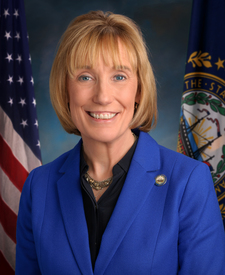
Sponsors

Legislative Progress
In CommitteeCommittee on Health, Education, Labor, and Pensions. Hearings held.
Mr. Grassley (for himself and Ms. Hassan) introduced the following …
Read twice and referred to the Committee on Finance.
Introduced in Senate
Stakeholder Effects
cui bono?How this legislation distributes effects. Mention counts reflect frequency, not effect magnitude.
CMS Administrator, Federal government (reducing improper payments), GAO
Positive-direction: Federal government (reducing improper payments)
Negative-direction: CMS Administrator, GAO, HHS, HHS (administering expert group), HHS (establishing advisory committee and guidance), HHS (establishing expert group), HHS (grant administration and reporting), HHS (guidance and learning collaboratives), HHS (guidance development), HHS (standards and oversight), HHS/CMS, MACPAC
Community health workers, Hospitals (notification requirements), Hospitals and clinical teams
Positive-direction: Community health workers, Hospitals and clinical teams, Hospitals and freestanding birth centers, Maternal care providers, Maternity care providers (OB-GYNs, midwives, doulas), Midwives and doulas, Midwives, doulas, and community-based maternal health organizations, Perinatal quality collaboratives, Remote physiologic monitoring device manufacturers, Telehealth providers (primary care, specialists, behavioral health)
Negative-direction: Hospitals (notification requirements), Hospitals participating in Medicare, Maternity health home providers
State Medicaid programs, States (planning grants), States implementing maternity health homes
State Medicaid programs faces effects in multiple directions
Positive-direction: States (planning grants), States implementing maternity health homes, States implementing telehealth demonstrations
Negative-direction: States with maternity health homes
Eligible pregnant and postpartum women, Pregnant Medicaid beneficiaries, Pregnant and postpartum women
Graduate medical education programs, Medical education institutions
Bill Structure & Actor Mappings
Who is "The Secretary" in each section?
- "the_secretary"
- → Secretary of Health and Human Services
- "the_comptroller_general"
- → Comptroller General of the United States
- "the_secretary"
- → Secretary of Health and Human Services
- "the_secretary"
- → Secretary of Health and Human Services
Key Definitions
Terms defined in this bill
Children's Health Insurance Program established under title XXI of the Social Security Act
The Medicaid program established under title XIX of the Social Security Act
Individual eligible for Medicaid who is pregnant or had a pregnancy end within the last 365 days
A designated provider or health team selected by an eligible woman to provide pregnancy and postpartum coordinated care services
Items and services related to coordination of care including medical assistance, care management, care coordination, transitional care, and referrals to community services
We use a combination of our own taxonomy and classification in addition to large language models to assess meaning and potential beneficiaries. High confidence means strong textual evidence. Always verify with the original bill text.
Learn more about our methodology