Border Water Quality Restoration and Protection Act
Analysis under review: This bill has generated analysis that may be too generic or incomplete. Clause-level evidence remains available below.
Summary
What This Bill Does
The Border Water Quality Restoration and Protection Act creates two new EPA geographic programs to address severe water pollution flowing from Mexico into Southern California via the Tijuana River and New River. Both rivers carry untreated sewage, industrial waste, trash, and agricultural runoff that has caused over 1,000 consecutive days of beach closures and poses serious public health risks.
Who Benefits and How
- Southern California coastal communities (Imperial Beach, San Diego, Calexico) benefit from reduced sewage contamination, restored beach access, and improved public health through $100 million annually in federal water infrastructure funding.
- Environmental Protection Agency gains authority to coordinate federal, state, tribal, and Mexican entities through new Geographic Programs and management conferences.
- Construction and engineering firms benefit from $1.1 billion in authorized infrastructure spending over 11 years (2026-2036) for wastewater treatment plants, stormwater systems, and green infrastructure projects.
- North American Development Bank may receive grant management contracts to administer implementation.
Who Bears the Burden and How
- Federal taxpayers bear the cost of $100 million annually in new appropriations ($50 million each for Tijuana River and New River programs).
- Federal agencies (EPA, State Department, IBWC, DHS, Interior, Agriculture) face new coordination and reporting requirements, including annual budget plans and biennial progress reports to Congress.
- Project recipients may face Federal cost-sharing requirements established by EPA on a project-by-project basis.
Key Provisions
- Establishes the Tijuana River Public Health and Water Quality Restoration Program and California New River Public Health and Water Quality Restoration Program as EPA Geographic Programs
- Authorizes $50 million per year for each program from FY2026 through FY2036
- Creates priority project lists for water quality restoration developed in coordination with federal, state, tribal, local, and Mexican entities
- Empowers the International Boundary and Water Commission to study, design, construct, and maintain transboundary water projects
Evidence Chain:
This summary is generated from the full bill text using AI analysis. Expand "Detailed Analysis" below for identified beneficiaries/burden bearers with clause-level evidence links.
At a Glance
What This Bill Does
Establishes comprehensive programs to address transboundary water pollution from the Tijuana River and New River flowing from Mexico into the United States, authorizing $50 million annually for each program through 2036.
Key Policy Areas
Environment, Water Quality, Public Health, International Relations, Infrastructure
Primary Purpose
Establishes comprehensive programs to address transboundary water pollution from the Tijuana River and New River flowing from Mexico into the United States, authorizing $50 million annually for each program through 2036.
Policy Domains
Title I - Tijuana River Public Health and Water Quality Restoration
Identified Gains
- Southern California coastal communities
- Environmental Protection Agency
- Water/wastewater infrastructure contractors
- North American Development Bank
Identified Costs
- Federal taxpayers
- Federal agencies with reporting requirements
Title II - California New River Public Health and Water Quality Restoration
Identified Gains
- Imperial Valley communities
- Environmental Protection Agency
- Water/wastewater infrastructure contractors
- Salton Sea ecosystem
Identified Costs
- Federal taxpayers
- Federal agencies with reporting requirements
Title IV - Role of the Commissioner and International Agreements
Identified Gains
- International Boundary and Water Commission
- US-Mexico diplomatic relations
Identified Costs
- Federal taxpayers funding international projects
Title III - United States-Mexico Border Water Infrastructure Program
Identified Gains
- Border region communities
- Water/wastewater districts
- State and local governments
- Indian Tribes in border region
Identified Costs
- Federal taxpayers
- Project recipients facing cost-sharing requirements
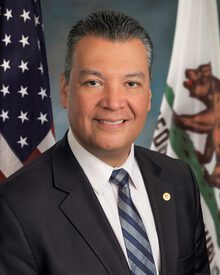
Sponsors
Legislative Progress
In CommitteeMr. Padilla introduced the following bill; which was read twice …
Read twice and referred to the Committee on Environment and …
Introduced in Senate
Stakeholder Effects
cui bono?How this legislation distributes effects. Mention counts reflect frequency, not effect magnitude.
Congress, Environmental Protection Agency, Executive Office of the President
Positive-direction: Congress, Indian Tribes in border region, International Boundary and Water Commission, Tribal governments, Tribal governments in Tijuana River watershed, Tribal governments within Tijuana River watershed
Negative-direction: Environmental Protection Agency, Executive Office of the President, Federal agencies (State Dept, IBWC, DHS, Interior, Agriculture, NOAA, USFWS), Federal agencies participating in New River program, Federal agencies participating in Tijuana River program
New River watershed stakeholders, Southern California coastal communities, State and local governments (City of Imperial Beach, City of San Diego, County of San Diego)
Construction and engineering firms, Construction contractors for transboundary projects, Water infrastructure project developers
Calexico and Mexicali communities, Southern California coastal communities (Imperial Beach, San Diego, Coronado)
Bill Structure & Actor Mappings
Who is "The Secretary" in each section?
- "the_secretary"
- → Secretary of State
- "the_commissioner"
- → Commissioner of the United States Section of the International Boundary and Water Commission
- "the_administrator"
- → Administrator of the Environmental Protection Agency
- "program_director"
- → Program Director of the Tijuana River Public Health and Water Quality Restoration Program
- "the_administrator"
- → Administrator of the Environmental Protection Agency
- "the_administrator"
- → Administrator of the Environmental Protection Agency
- "the_administrator"
- → Administrator of the Environmental Protection Agency
- "the_secretary"
- → Secretary of State
- "the_commissioner"
- → Commissioner of the United States Section of the International Boundary and Water Commission
Key Definitions
Terms defined in this bill
The Administrator of the Environmental Protection Agency
The Tijuana River Public Health and Water Quality Restoration Program established under section 103(a)(1)
The river that starts in Mexicali, Mexico, flows north into the United States through Calexico, passes through the Imperial Valley, and drains into the Salton Sea
The Secretary of State
The California New River Public Health and Water Quality Restoration Program established under section 203(a)
Has the meaning given the term in the EPA document entitled 'National Water Reuse Action Plan Collaborative Implementation (Version 1)' dated February 2020
The Commissioner of the United States Section of the International Boundary and Water Commission
Has the meaning given the term 'Indian tribe' in section 102 of the Federally Recognized Indian Tribe List Act of 1994 (25 U.S.C. 5130)
The river that rises in the Sierra de Juarez in Mexico, flows through the City of Tijuana and then north into the United States, passes through the Tijuana River estuary, and drains into the Pacific Ocean
The IBWC, a State, local government, Indian Tribe, or water/wastewater district with jurisdiction over any area within 100 kilometers of the US-Mexico border
A project for construction of drinking water treatment/distribution, wastewater management, or stormwater management infrastructure that addresses existing human health or ecological issues and has an effect in the United States
We use a combination of our own taxonomy and classification in addition to large language models to assess meaning and potential beneficiaries. High confidence means strong textual evidence. Always verify with the original bill text.
Learn more about our methodology