Disaster Assistance Improvement and Decentralization Act
Analysis under review: This bill has generated analysis that may be too generic or incomplete. Clause-level evidence remains available below.
Summary
What This Bill Does
The Disaster Assistance Improvement and Decentralization Act ("Disaster AID Act") overhauls federal disaster relief programs to give state and local governments more funding, flexibility, and control over disaster response and recovery. It addresses the problem of under-resourced communities struggling to navigate FEMA's complex grant processes by creating a two-tiered system that provides extra support to "low-capacity jurisdictions" while streamlining procedures for all.
Who Benefits and How
State hazard mitigation offices receive a new $100 million annual funding stream starting in 2027, distributed with minimum 1% floor per state. Low-capacity jurisdictions (communities with limited staffing and resources) benefit most substantially: they receive up to 85% federal cost-share for hazard mitigation (versus the standard 75%), mandatory advance funding of 25-75% for disaster recovery projects, and $500 million annually in technical assistance from FEMA. Small communities (under 5,000 population) experiencing catastrophic damage that exceeds their annual budget qualify for mandatory advance payments to start recovery work immediately. Construction contractors, government consultants, and disaster recovery service providers also benefit from the increased and faster-flowing federal funds. FEMA retirees gain the ability to return to work during emergencies without pension reductions, and federal disaster relief workers get extended tax deductions for travel expenses.
Who Bears the Burden and How
Federal taxpayers bear the primary financial burden through increased appropriations totaling at least $600 million annually in new authorized spending. FEMA faces significant new compliance requirements including multiple rulemaking deadlines, annual reporting to Congress, mandatory training programs within 30 days of disaster declarations, and new transparency requirements for any funding pauses. The Government Accountability Office (GAO) must conduct audits and regulatory reviews. The Executive Branch gains new public disclosure obligations if disaster funds are paused for 26+ business days.
Key Provisions
- Creates "low-capacity" and "high-capacity" jurisdiction designations, with low-capacity areas receiving higher federal cost shares (up to 85%) and priority technical assistance
- Authorizes $100 million annually for state hazard mitigation offices and $500 million annually for a 5-year technical assistance pilot program
- Mandates predisaster mitigation funding (changing "may" to "shall") with at least $500 million obligated annually (CPI-adjusted)
- Requires mandatory training within 30 days of disaster declaration for local officials
- Allows states to combine multiple concurrent FEMA grants and retain excess management cost funds for future disaster preparedness
- Establishes transparency requirements for any prolonged (26+ days) pause in federal disaster fund disbursement
- Expands simplified project procedures threshold to $1 million (with pilot program for projects up to $10 million for high-capacity jurisdictions)
Evidence Chain:
This summary is generated from the full bill text using AI analysis. Expand "Detailed Analysis" below for identified beneficiaries/burden bearers.
At a Glance
What This Bill Does
Reforms disaster assistance programs to enhance local capacity, expand local control over disaster response and recovery, increase federal funding for state hazard mitigation offices, streamline public assistance procedures, and ensure stable federal funding streams for disaster-impacted communities.
Who Benefits
- State and local governments (receive more federal funding and flexibility)
- Low-capacity jurisdictions (receive up to 85% federal cost share vs standard 75%)
- State hazard mitigation offices (new M annual funding stream)
Who Bears Costs
- Federal Emergency Management Agency (must develop new regulations, guidance, and reporting)
- Comptroller General/GAO (multiple mandatory audits and reports)
- Federal taxpayers (increased appropriations and higher cost-sharing ratios)
Key Policy Areas
Emergency Management, Disaster Relief, Federal Grants, State/Local Government, Tax Policy
Primary Purpose
Reforms disaster assistance programs to enhance local capacity, expand local control over disaster response and recovery, increase federal funding for state hazard mitigation offices, streamline public assistance procedures, and ensure stable federal funding streams for disaster-impacted communities.
Policy Domains
Legislative Strategy
"Decentralize disaster management by giving states and local governments more funding, flexibility, and direct control while reducing FEMA administrative burdens; creates tiered support favoring low-capacity jurisdictions"
Identified Gains
- State and local governments (receive more federal funding and flexibility)
- Low-capacity jurisdictions (receive up to 85% federal cost share vs standard 75%)
- State hazard mitigation offices (new M annual funding stream)
- FEMA retirees (can return to work without pension reduction during emergencies)
- Federal disaster relief workers (extended tax deduction for travel expenses)
- Construction and infrastructure contractors (more streamlined project approvals and advance funding)
Identified Costs
- Federal Emergency Management Agency (must develop new regulations, guidance, and reporting)
- Comptroller General/GAO (multiple mandatory audits and reports)
- Federal taxpayers (increased appropriations and higher cost-sharing ratios)
Sponsors
Legislative Progress
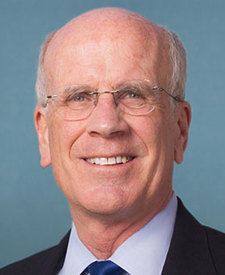
In CommitteeMr. Welch introduced the following bill; which was read twice …
Read twice and referred to the Committee on Finance. (Sponsor …
Introduced in Senate
Stakeholder Effects
cui bono?How this legislation distributes effects. Mention counts reflect frequency, not effect magnitude.
High-capacity jurisdictions, High-capacity jurisdictions (well-resourced local governments), Low-capacity jurisdictions (potential beneficiaries of streamlined regulations)
Congressional oversight committees, Executive Branch (President/FEMA), FEMA (must provide training)
Positive-direction: Congressional oversight committees, Federal disaster relief workers deployed on temporary duty status, Indian tribal government hazard mitigation offices, Indian tribal governments with multiple concurrent grants
Negative-direction: Executive Branch (President/FEMA), FEMA (must provide training), Federal Emergency Management Agency, Federal Emergency Management Agency (must provide training), Federal agencies that might have diverted mitigation funds, Government Accountability Office
Construction contractors for infrastructure projects, Construction contractors for larger disaster projects, Construction contractors for public facility restoration
Disaster-impacted communities and residents, Federal taxpayers (higher federal share means higher federal costs), Taxpayers
Positive-direction: Disaster-impacted communities and residents
Negative-direction: Federal taxpayers (higher federal share means higher federal costs), Taxpayers
Disaster preparedness and mitigation service providers, Government contractors and consultants providing disaster assistance services
Operators of critical infrastructure (power, water, sewer, communications, medical, fire, emergency services)
Bill Structure & Actor Mappings
Who is "The Secretary" in each section?
- "the_president"
- → The President of the United States (executive authority over disaster declarations)
- "the_administrator"
- → Administrator of the Federal Emergency Management Agency (FEMA)
- "the_president"
- → The President of the United States (authorizes public assistance grants)
- "the_administrator"
- → Administrator of the Federal Emergency Management Agency (FEMA)
- "the_president"
- → The President of the United States
- "the_administrator"
- → Administrator of the Federal Emergency Management Agency (FEMA)
- "the_comptroller_general"
- → Comptroller General of the United States (GAO)
Note: 'The President' appears throughout as the executive authority but in most provisions, FEMA Administrator implements the actual programs
Key Definitions
Terms defined in this bill
The Administrator of the Federal Emergency Management Agency
Any action to pause, freeze, cancel, suspend, terminate, or otherwise impede the disbursement of appropriated Federal funds to States and Indian tribal governments
A facility that provides critical services, including power, water, sewer, wastewater treatment, communications, medical care, fire response, and other emergency rescue services
A cumulative period of not less than 26 business days during any fiscal year
Assistance awarded under the programs under section 403, 406, 407, and 502 of the Robert T. Stafford Disaster Relief and Emergency Assistance Act
A jurisdiction that faces structural barriers to planning for, securing, implementing, or sustaining public investments in disaster resilience due to limited staffing, institutional partnerships, fiscal resources, or access to technical expertise
A jurisdiction that has sufficient resources to administer projects funded with assistance under the Robert T. Stafford Disaster Relief and Emergency Assistance Act with minimal support, as determined by the Governor or Chief Executive and based on criteria established by the Administrator
The Committee on Homeland Security and Governmental Affairs of the Senate, the Committee on Appropriations of the Senate, the Committee on Transportation and Infrastructure of the House of Representatives, and the Committee on Appropriations of the House of Representatives
We use a combination of our own taxonomy and classification in addition to large language models to assess meaning and potential beneficiaries. High confidence means strong textual evidence. Always verify with the original bill text.
Learn more about our methodology