Break the Cycle of Violence Act
Summary
What This Bill Does
The Break the Cycle of Violence Act creates a federal grant program to fund community-based violence intervention strategies, particularly in neighborhoods disproportionately affected by gun violence. It establishes an Office of Community Violence Intervention within the Department of Health and Human Services to administer grants, an Advisory Committee, and a National Community Violence Response Center. A second title creates IMPACT (Improving Approaches for Communities to Thrive) grants through the Department of Labor to provide job training and workforce programs for opportunity youth in violence-affected communities.
Who Benefits and How
- Community-based nonprofit organizations receive federal grants (90% federal share) to expand violence intervention programs, including outreach, hospital-based programs, and crisis management services
- Opportunity youth (ages 16-24) in violence-affected communities gain access to job training, apprenticeships, and workforce programs through IMPACT grants
- Communities of color disproportionately impacted by gun violence, especially young Black and Brown men and boys, benefit from targeted violence reduction strategies and wraparound services
- Hospital-based violence intervention programs (HVIPs) receive dedicated funding to serve gunshot wound survivors and break cycles of reinjury
- Violence intervention and prevention specialists see the expansion of their professional field through training, certification, and federal recognition
Who Bears the Burden and How
- Federal taxpayers bear the cost of $300M (FY2026), $500M (FY2027), $700M/year (FY2028-2033) for HHS grants, plus $1.5B for DOL IMPACT grants over FY2026-2033 -- a total authorization of approximately $7.1 billion
- Grantees face reporting requirements, data collection mandates, and must demonstrate evidence-informed approaches to be eligible for continued funding
- Units of local government receiving grants must distribute at least 75% of funds to community-based organizations and must establish community steering committees
Key Provisions
- Authorizes HHS grants for community-based violence intervention (Section 101), with preference for applicants likely to reduce violence without contributing to mass incarceration
- Creates an Office of Community Violence Intervention within HHS (Section 102)
- Establishes a Community Violence Intervention Advisory Committee (Section 103)
- Creates a National Community Violence Response Center for technical assistance, data collection, research coordination, and biennial conferences (Section 104)
- Authorizes $1.5 billion for Department of Labor IMPACT grants for job training and workforce programs for opportunity youth (Section 201)
- Defines "community violence" to exclude politically motivated violence and "eligible unit of local government" based on homicide thresholds (Section 3)
Evidence Chain:
This summary is generated from the full bill text using AI analysis. Expand "Detailed Analysis" below for identified beneficiaries/burden bearers with clause-level evidence links.
At a Glance
What This Bill Does
Establishes a comprehensive federal framework for community-based violence intervention, creating HHS grants for violence reduction programs and DOL grants for job training for opportunity youth in violence-affected communities, with total authorized funding of approximately $7.1 billion over fiscal years 2026-2033.
Key Policy Areas
Public Safety, Healthcare, Labor & Employment, Social Welfare
Primary Purpose
Establishes a comprehensive federal framework for community-based violence intervention, creating HHS grants for violence reduction programs and DOL grants for job training for opportunity youth in violence-affected communities, with total authorized funding of approximately $7.1 billion over fiscal years 2026-2033.
Policy Domains
Title I -- Community Violence Intervention
Identified Gains
- Community-based nonprofit organizations (grant recipients)
- Communities of color disproportionately impacted by gun violence
- Hospital-based violence intervention programs (HVIPs)
- Violence intervention and prevention specialists
- Survivors of community violence
Identified Costs
- Federal taxpayers ($300M-$700M/year FY2026-2033)
- Grant recipients (reporting, data collection, evidence requirements)
- Local governments (75% pass-through requirement, steering committee mandate)
Title II -- IMPACT Grants (Job Training)
Identified Gains
- Opportunity youth (ages 16-24) in violence-affected communities
- Community-based workforce training organizations
- Apprenticeship programs and community colleges
Identified Costs
- Federal taxpayers ($1.5B over FY2026-2033)
- Grantees (reporting requirements on training outcomes)
Sponsors
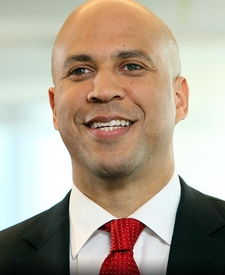
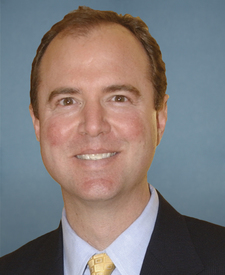
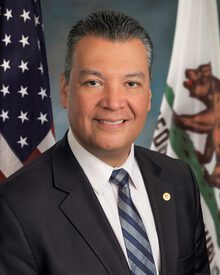
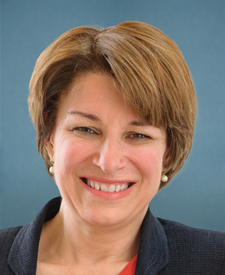

Legislative Progress
In CommitteeMr. Booker (for himself, Ms. Blunt Rochester, Mr. Blumenthal, Mr. …
Read twice and referred to the Committee on the Judiciary.
Introduced in Senate
Stakeholder Effects
cui bono?How this legislation distributes effects. Mention counts reflect frequency, not effect magnitude.
Community violence intervention field practitioners, Community violence intervention programs (funding recipients), Community-based nonprofit organizations serving violence-affected communities
Positive-direction: Community violence intervention field practitioners, Community violence intervention programs (funding recipients), Community-based nonprofit organizations serving violence-affected communities, Community-based workforce training organizations, Violence intervention grantees (technical assistance recipients)
Negative-direction: Grant recipients (compliance obligations), Grant recipients (data collection mandates)
Department of Health and Human Services (new office), Eligible units of local government, Units of local government seeking grant eligibility
Positive-direction: Eligible units of local government
Negative-direction: Department of Health and Human Services (new office), Units of local government seeking grant eligibility
Apprenticeship programs and community colleges, Community violence researchers
Hospital-based violence intervention programs (HVIPs)
Opportunity youth (ages 16-24) in violence-affected communities
Bill Structure & Actor Mappings
Who is "The Secretary" in each section?
- "the_center"
- → National Community Violence Response Center
- "the_office"
- → Office of Community Violence Intervention (within HHS)
- "the_secretary"
- → Secretary of Health and Human Services
- "the_advisory_committee"
- → Community Violence Intervention Advisory Committee
- "the_secretary"
- → Secretary of Labor
Note: 'The Secretary' refers to the Secretary of Health and Human Services in Title I but the Secretary of Labor in Title II (Section 201).
Key Definitions
Terms defined in this bill
Nonfatal firearm injuries, aggravated assaults, homicides, and other acts of life-threatening interpersonal violence committed outside the context of a familial or romantic relationship; excludes politically motivated violence.
Individuals aged 16-24 who are not enrolled in education/training and not employed on a full-time or part-time basis.
A municipality or local government that experienced 35+ homicides/year in 2 of 3 preceding years, or 20+ homicides at double the national rate, or has compelling need as determined by the Secretary.
We use a combination of our own taxonomy and classification in addition to large language models to assess meaning and potential beneficiaries. High confidence means strong textual evidence. Always verify with the original bill text.
Learn more about our methodology