To amend title 10, United States Code, to limit the authority of the Department of Defense and other Federal law enforcement personnel to support civilian law enforcement activities, and for other purposes.
Summary
What This Bill Does
The bill requires amendment to Chapter 15 of title 10 USC inserting new section limiting DoD support to civilian law enforcement to four emergency circumstances requiring presidential justification to Congress, requires new section 274a of title 10 restricting Secretary of Defense support under sections 272-274 to four enumerated circumstances: humanitarian crisis, natural disaster, public health emergency, and drug, and requires amendment to Chapter 49 of title 10 prohibiting individuals serving in any DoD capacity from simultaneously serving in civilian law enforcement, with exception for reserve component members in their civilian. It relies on compliance mandates and liability protections. The main policy areas are Defense and Criminal Justice.
Who Benefits and How
Persons aggrieved by military law enforcement overreach could face reduced risk, State and local governments could face reduced risk, and Communities affected by militarized policing could face reduced risk.
Who Bears the Burden and How
Secretary of Defense would take on compliance duties, DoD personnel with dual law enforcement roles would take on compliance duties, and DoD personnel would take on compliance duties.
Key Provisions
- Requires amendment to Chapter 15 of title 10 USC inserting new section limiting DoD support to civilian law enforcement to four emergency circumstances requiring presidential justification to Congress.
- Requires new section 274a of title 10 restricting Secretary of Defense support under sections 272-274 to four enumerated circumstances: humanitarian crisis, natural disaster, public health emergency, and drug...
- Requires amendment to Chapter 49 of title 10 prohibiting individuals serving in any DoD capacity from simultaneously serving in civilian law enforcement, with exception for reserve component members in their civilian...
- Requires new section 990 of title 10 codifying the prohibition on simultaneous DoD and civilian law enforcement service with the reserve component exception and active duty recusal requirement.
- Requires amendment to section 723(a) of title 10 expanding requirements for Armed Forces and federal law enforcement personnel assisting civil authorities beyond civil disturbances to all situations.
Evidence Chain:
This summary is generated from the full bill text using AI analysis. Expand "Detailed Analysis" below for identified beneficiaries/burden bearers with clause-level evidence links.
At a Glance
What This Bill Does
The bill requires amendment to Chapter 15 of title 10 USC inserting new section limiting DoD support to civilian law enforcement to four emergency circumstances requiring presidential justification to Congress, requires new section 274a of title 10 restricting Secretary of Defense support under sections 272-274 to four enumerated circumstances: humanitarian crisis, natural disaster, public health emergency, and drug, and requires amendment to Chapter 49 of title 10 prohibiting individuals serving in any DoD capacity from simultaneously serving in civilian law enforcement, with exception for reserve component members in their civilian.
Key Policy Areas
Defense, Criminal Justice
Primary Purpose
The bill requires amendment to Chapter 15 of title 10 USC inserting new section limiting DoD support to civilian law enforcement to four emergency circumstances requiring presidential justification to Congress, requires new section 274a of title 10 restricting Secretary of Defense support under sections 272-274 to four enumerated circumstances: humanitarian crisis, natural disaster, public health emergency, and drug, and requires amendment to Chapter 49 of title 10 prohibiting individuals serving in any DoD capacity from simultaneously serving in civilian law enforcement, with exception for reserve component members in their civilian.
Policy Domains
Military-Civilian Law Enforcement Separation
Identified Gains
- Persons aggrieved by military law enforcement overreach
- State and local governments
- Communities affected by militarized policing
- Civil liberties organizations
Identified Costs
- Secretary of Defense
- DoD personnel with dual law enforcement roles
- DoD personnel
- Department of Defense
- Federal law enforcement agencies using military support
Sponsors
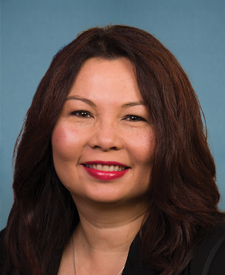
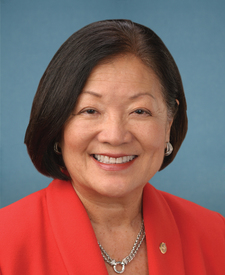
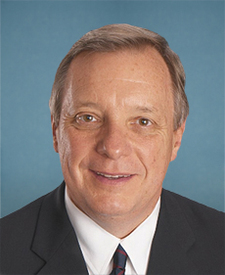
Legislative Progress
IntroducedMs. Duckworth (for herself, Ms. Hirono, and Mr. Durbin) introduced …
Stakeholder Effects
cui bono?How this legislation distributes effects. Mention counts reflect frequency, not effect magnitude.
Armed Forces personnel assisting civil authorities, Department of Defense, DoD personnel
Civilian law enforcement relying on military support, Federal law enforcement agencies using military support, Federal law enforcement personnel
Communities affected by militarized policing, Persons aggrieved by military law enforcement overreach
Bill Structure & Actor Mappings
Who is "The Secretary" in each section?
- "the_president"
- → President of the United States
- "the_secretary_of_defense"
- → Secretary of Defense
We use a combination of our own taxonomy and classification in addition to large language models to assess meaning and potential beneficiaries. High confidence means strong textual evidence. Always verify with the original bill text.
Learn more about our methodology