To authorize the Secretary of the Interior to carry out watershed pilots, and for other purposes.
Analysis under review: This bill has generated analysis that may be too generic or incomplete. Clause-level evidence remains available below.
Summary
What This Bill Does
This bill, To authorize the Secretary of the Interior to carry out watershed pilots, and for other purposes., changes federal law or congressional policy affecting federal agencies and legislative administrators. The main policy domain is Government Operations, Finance, Environment.
Who Benefits and How
federal agencies and legislative administrators may benefit from new authority, funding, eligibility, regulatory clarity, or reduced risk created by the bill.
Who Bears the Burden and How
federal implementing agencies may take on implementation duties, reporting obligations, compliance costs, or oversight responsibilities.
Key Provisions
- Section S1: 1. Short title This Act may be cited as the Watershed Results Act.
- Section id48274ea58438420e957dd2a47fa5fb8f: 2. Definitions In this Act: The term advance watershed analytics means the technical analysis that is— conducted before making funding available for a...
- Section id1b3fbc87e8654872bb1811baadd80882: 3. Watershed pilots Not later than 180 days after the date of enactment of this Act and subject to subsection (h), the Secretary shall establish a total of not...
- Section idb794ae97dfb444b1b3ab7c3b256593ae: 4. Financing and funding of watershed pilots In carrying out a watershed pilot, the Secretary shall enter into a pay-for-performance contract to achieve...
- Section id0997a4316a1d49f286d23ed410b42014: 5. Reports In this section, the term appropriate committees of Congress means— of the Senate— the Committee on Appropriations; and the Committee on Energy and...
Evidence Chain:
This summary is generated from the full bill text using AI analysis. Expand "Detailed Analysis" below for identified beneficiaries/burden bearers.
At a Glance
What This Bill Does
This bill, To authorize the Secretary of the Interior to carry out watershed pilots, and for other purposes., changes federal law or congressional policy affecting federal agencies and legislative administrators.
Key Policy Areas
Government Operations, Finance, Environment
Primary Purpose
This bill, To authorize the Secretary of the Interior to carry out watershed pilots, and for other purposes., changes federal law or congressional policy affecting federal agencies and legislative administrators.
Policy Domains
Whole bill
Identified Gains
Contextual inference, no direct clause citation- federal agencies and legislative administrators
Contextual inference, no direct clause citation
Identified Costs
Contextual inference, no direct clause citation- federal implementing agencies
Contextual inference, no direct clause citation
Sponsors
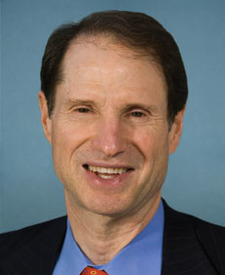
Legislative Progress
ReportedReported by Mr. Manchin, with an amendment and an amendment …
Mr. Wyden introduced the following bill; which was read twice …
Stakeholder Effects
cui bono?How this legislation distributes effects. Mention counts reflect frequency, not effect magnitude.
Bureau of Reclamation, Congressional oversight committees, Federal Treasury
Positive-direction: Congressional oversight committees, Tribal communities in Reclamation States
Negative-direction: Bureau of Reclamation, Federal Treasury, Reclamation Fund (federal)
Watershed pilot project participants, Western state water and irrigation districts, Western state water managers
Environmental conservation organizations, Environmental project implementers
Bill Structure & Actor Mappings
Who is "The Secretary" in each section?
- "the_commission"
- → The commission identified in the operative section
- "secretary_of_treasury"
- → Secretary of the Treasury
Key Definitions
Terms defined in this bill
the management team for a watershed pilot designated under section 3(b)(2). The term outcome means— a quantifiable increase in surface water or groundwater
the technical analysis that— is conducted before providing funding for a watershed outcomes project
We use a combination of our own taxonomy and classification in addition to large language models to assess meaning and potential beneficiaries. High confidence means strong textual evidence. Always verify with the original bill text.
Learn more about our methodology