Algorithmic Accountability Act of 2025
Analysis under review: This bill has generated analysis that may be too generic or incomplete. Clause-level evidence remains available below.
Summary
What This Bill Does
The bill defines key terms including automated decision system, augmented critical decision process, covered entity (companies over $50M or handling 1M+ consumer records), and critical decision categories (employment, credit, requires makes it unlawful for covered entities to violate FTC regulations on impact assessments; requires FTC to promulgate regulations within 2 years requiring impact assessments before and after deployment, and requires specifies impact assessment requirements including evaluation of existing processes, stakeholder consultation documentation, ongoing testing for bias and discrimination, performance metrics, and privacy risk. It relies on compliance mandates, reporting requirements, definition changes, and product standards. The main policy areas are Technology, Finance, Labor, and Science & Space.
Who Benefits and How
Federal Trade Commission could gain revenue opportunities, Technology policy professionals could gain revenue opportunities, and State attorneys general would be affected.
Who Bears the Burden and How
Federal Trade Commission would take on compliance duties, Companies violating AI accountability requirements could face increased risk, and Companies deploying AI for critical decisions would take on compliance duties.
Key Provisions
- Defines key terms including automated decision system, augmented critical decision process, covered entity (companies over $50M or handling 1M+ consumer records), and critical decision categories (employment, credit...
- Requires makes it unlawful for covered entities to violate FTC regulations on impact assessments; requires FTC to promulgate regulations within 2 years requiring impact assessments before and after deployment...
- Requires specifies impact assessment requirements including evaluation of existing processes, stakeholder consultation documentation, ongoing testing for bias and discrimination, performance metrics, and privacy risk...
- Requires specifies contents of summary reports to FTC including entity information, decision categories, testing documentation, performance metrics, data sources, privacy measures, and procedures for addressing...
- Requires FTC to publish annual report summarizing AI impact assessments and create publicly accessible, machine-readable repository of deployed AI systems for consumer protection and research.
Evidence Chain:
This summary is generated from the full bill text using AI analysis. Expand "Detailed Analysis" below for identified beneficiaries/burden bearers with clause-level evidence links.
At a Glance
What This Bill Does
The bill defines key terms including automated decision system, augmented critical decision process, covered entity (companies over $50M or handling 1M+ consumer records), and critical decision categories (employment, credit, requires makes it unlawful for covered entities to violate FTC regulations on impact assessments; requires FTC to promulgate regulations within 2 years requiring impact assessments before and after deployment, and requires specifies impact assessment requirements including evaluation of existing processes, stakeholder consultation documentation, ongoing testing for bias and discrimination, performance metrics, and privacy risk.
Key Policy Areas
Technology, Finance, Labor, Science & Space
Primary Purpose
The bill defines key terms including automated decision system, augmented critical decision process, covered entity (companies over $50M or handling 1M+ consumer records), and critical decision categories (employment, credit, requires makes it unlawful for covered entities to violate FTC regulations on impact assessments; requires FTC to promulgate regulations within 2 years requiring impact assessments before and after deployment, and requires specifies impact assessment requirements including evaluation of existing processes, stakeholder consultation documentation, ongoing testing for bias and discrimination, performance metrics, and privacy risk.
Policy Domains
Algorithmic Accountability Act of 2025
Identified Gains
- Federal Trade Commission
- Technology policy professionals
- State attorneys general
- Consumers subject to algorithmic decisions
- AI testing and auditing firms
Identified Costs
- Federal Trade Commission
- Companies violating AI accountability requirements
- Companies deploying AI for critical decisions
- Large technology companies using AI
- Covered entities deploying AI systems
Sponsors


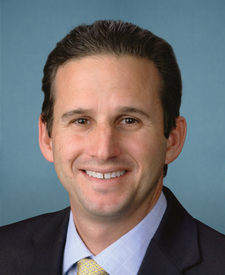
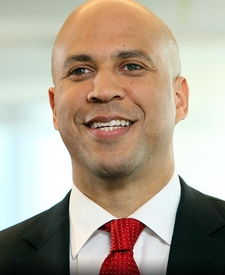

Legislative Progress
In CommitteeMr. Wyden (for himself, Ms. Warren, Mr. Booker, Mr. Heinrich, …
Read twice and referred to the Committee on Commerce, Science, …
Introduced in Senate
Stakeholder Effects
cui bono?How this legislation distributes effects. Mention counts reflect frequency, not effect magnitude.
Companies deploying AI for critical decisions, Companies facing potential enforcement, Companies seeking compliance clarity
Positive-direction: Companies seeking compliance clarity, Regulated companies seeking consistent rules, Smaller AI developers below thresholds
Negative-direction: Companies deploying AI for critical decisions, Companies facing potential enforcement, Companies violating AI accountability requirements, Companies with proprietary AI systems, Covered entities deploying AI systems, Large technology companies using AI
Federal Trade Commission, NIST and OSTP, Other federal regulators (SEC, CFPB, HUD, etc.)
Federal Trade Commission faces effects in multiple directions
AI compliance consultants and lawyers, AI testing and auditing firms, Technology policy professionals
Consumers harmed by AI systems, Consumers subject to algorithmic decisions
Civil rights advocates and stakeholder groups, Consumer advocacy groups
Companies handling large consumer datasets
Companies using AI for employment decisions
Bill Structure & Actor Mappings
Who is "The Secretary" in each section?
- "the_chair"
- → Chair of the Federal Trade Commission
- "covered_entity"
- → Companies over $50M revenue or handling 1M+ consumer records that deploy automated decision systems
- "the_commission"
- → Federal Trade Commission
Key Definitions
Terms defined in this bill
Any information representing biological, physiological, or behavioral attributes of a consumer
Companies over $50M revenue OR handling 1M+ consumer records that deploy augmented critical decision processes; also includes smaller AI developers over $5M
Decisions affecting access to housing, employment, credit, education, healthcare, insurance, legal services, or essential utilities
Any system, software, or process (including ML, statistics, or AI) that uses computation to serve as basis for a decision or judgment
A process that employs an automated decision system to make a critical decision
We use a combination of our own taxonomy and classification in addition to large language models to assess meaning and potential beneficiaries. High confidence means strong textual evidence. Always verify with the original bill text.
Learn more about our methodology